




Meet the Doctor I’ve Been Waiting For My Whole Life
Sep 30, 2026News
Premature Ejaculation and Hormonal Imbalance
- Jun 28, 2026
- 0 Comments
231
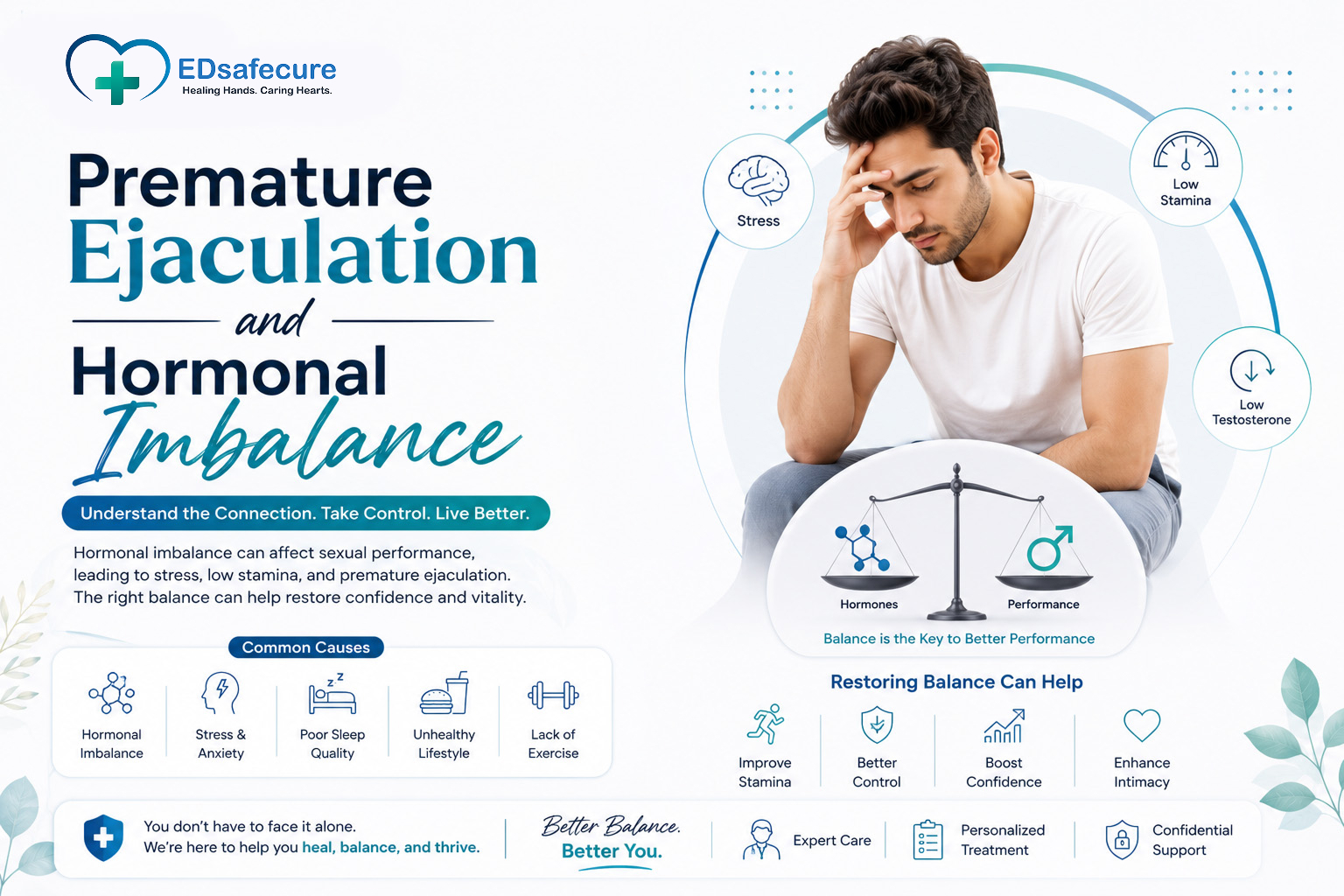
Navigating the world of men’s sexual health can be confusing, especially when terms are often used interchangeably. Two of the most common concerns men face are premature ejaculation (PE) and erectile dysfunction (ED). While both can cause significant distress and impact intimacy, they are fundamentally different conditions with distinct causes and treatments. Understanding this difference is the first and most crucial step toward finding the right solution.
This article will break down the comparison of premature ejaculation vs. erectile dysfunction, clarifying what each condition is, how they differ, how they can be connected, and what treatment options are available.
What is Premature Ejaculation (PE)?
Premature ejaculation is a condition characterized by a persistent or recurrent pattern of ejaculation with minimal sexual stimulation before, on, or shortly after penetration, and before the person wishes it. In simple terms, it’s about a lack of control over the timing of ejaculation.
The primary symptoms of PE include:
- Consistently ejaculating within one to three minutes of penetration.
- An inability to delay ejaculation during nearly all sexual encounters.
- Feelings of frustration, distress, and a tendency to avoid sexual intimacy as a result.
PE is often rooted in psychological factors like anxiety, stress, or relationship problems, but it can also have biological causes, such as abnormal hormone levels or inherited traits.
What is Erectile Dysfunction (ED)?
Erectile dysfunction is the inability to get or maintain an erection firm enough for satisfactory sexual intercourse. Unlike PE, which is about timing, ED is about the physical ability to achieve and sustain an erection. It’s a problem of blood flow and physical function.
The main symptoms of ED include:
- Difficulty getting an erection.
- Trouble keeping an erection during sexual activity.
- A reduced desire for sex (libido), which can sometimes accompany ED.
While psychological factors can contribute, ED is very often linked to underlying physical health conditions. These can include heart disease, high blood pressure, diabetes, obesity, and hormonal imbalances. For this reason, experiencing ED can sometimes be an early warning sign of a more serious health issue.
The Core Difference: Timing vs. Firmness
The easiest way to understand the difference between PE and ED is to focus on the core problem each presents.
Premature Ejaculation (PE) is a problem of TIMING. A man with PE can typically get a firm erection without issue, but he cannot control when he ejaculates.
Erectile Dysfunction (ED) is a problem of FIRMNESS. A man with ED struggles to get or keep an erection in the first place, making intercourse difficult or impossible, regardless of the timing of ejaculation.
To put it another way: with PE, the engine starts, but the race ends too quickly. With ED, there’s trouble getting the engine to start or stay running at all.
The Vicious Cycle: Can You Have Both PE and ED?
Yes, it is possible to experience both conditions, and they can often influence each other in a frustrating cycle, primarily driven by performance anxiety.
Here’s how it can happen: A man who experiences ED may become incredibly anxious about his ability to perform during his next sexual encounter. If he manages to get an erection, the fear of losing it can cause him to rush and focus intensely on finishing, leading to premature ejaculation. This experience then adds another layer of anxiety, worsening both the ED and the PE over time.
In these cases, treating the primary issue—often the ED—can reduce performance anxiety, which may in turn help resolve the secondary PE.
Understanding Causes and Treatment Options
Because PE and ED are different conditions, their treatments are also different. An accurate diagnosis from a healthcare professional is essential for finding the right path forward.
Treatments for Premature Ejaculation
Treatment for PE often focuses on behavioral techniques and psychological support. Common approaches include:
- Behavioral Techniques: Methods like the “start-stop” and “squeeze” techniques help men learn to recognize and control the sensations leading to ejaculation.
- Counseling or Therapy: Addressing underlying anxiety, stress, or relationship issues with a therapist can be highly effective.
- Medications: Certain antidepressants (SSRIs) can be prescribed off-label to delay ejaculation. Topical numbing creams or sprays can also reduce sensation and help delay orgasm.
Treatments for Erectile Dysfunction
Treatment for ED often starts by addressing underlying health conditions and lifestyle factors.
- Lifestyle Changes: Improving diet, increasing exercise, losing weight, quitting smoking, and reducing alcohol intake can all have a significant positive impact on erectile function.
- Oral Medications: PDE5 inhibitors like sildenafil (Viagra), tadalafil (Cialis), and others are highly effective at improving blood flow to the penis.
- Counseling: If stress, depression, or anxiety are contributing factors, therapy can be a vital part of treatment.
- Other Medical Treatments: For more severe cases, options like vacuum erection devices, penile injections, or surgery may be considered.
Breaking the Silence: When to See a Doctor
Both premature ejaculation and erectile dysfunction are incredibly common medical conditions. There is nothing to be ashamed of. The most important takeaway is that you don’t have to live with the frustration and distress these conditions can cause. Effective treatments are available.
If you are struggling with symptoms of PE, ED, or both, the best course of action is to speak with a doctor or a men’s health specialist. They can provide an accurate diagnosis, rule out any underlying health concerns, and create a personalized treatment plan that works for you.
Taking control of your sexual health is a sign of strength. Don’t let confusion or embarrassment stop you from seeking the help you deserve and reclaiming a healthy, satisfying sex life.
Disclaimer: This story is auto-aggregated by a computer program and has not been created or edited by menshealthfits.
Publisher: Source link
Publisher: Source link