
When The World Feels Overwhelming, You Need Someone You Can Trust
Nov 9, 2026News
When The World Feels Overwhelming, You Need Someone You Can Trust
- Nov 9, 2026
- 0 Comments
7
“Exposure to trauma has become a near-constant feature of modern life,”
says Dr. Jon R. Conte, Professor Emeritus, University of Washington.
“Whether it involves war and political violence, encounters with crime, the dire consequences of oppression and supremacy, or the suffering caused by the climate crisis, poverty, and injustice, trauma exposure is no longer mediated or buffered.”
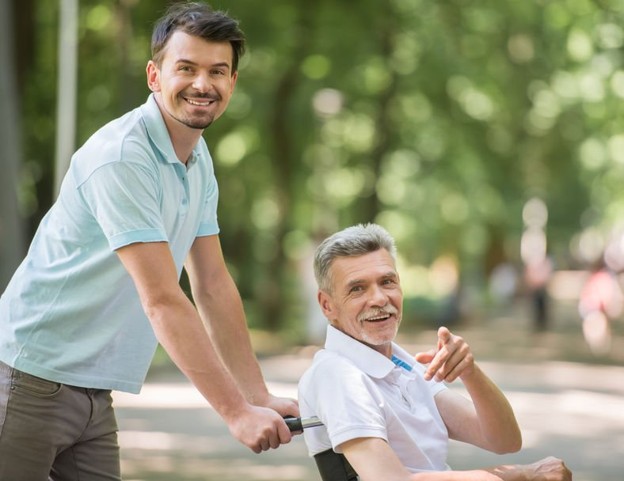
These words resonate deeply with me. For more than fifty years, I have been a psychotherapist and healer working with people who have experienced various degrees of trauma in their lives. I’ve also experienced the challenges of caring for my own children as they have gone through various stages of their lives. I have been a caregiver for aging parents in later years of their lives. My wife, Carlin, celebrated her 88th birthday in July and I will hit number 83 in December. At times I feel overwhelmed taking care of her needs and my own.
I believe we all feel some degree of overwhelm as we deal with the personal and societal changes of living in the world today. I recently had the good fortune of interviewing Laura Van Dernoot Lipsky and discussing her book, Trauma Stewardship: An Everyday Guide to Caring for Self While Caring for Others. You can watch our engaging conversation here.
Zen Master and peace activist, Thích Nhất Hạnh, offered this quote for the book:
“Reading this book is like looking into a mirror. We will see ourselves much more clearly, will understand ourselves much better, and will come up with better ways of being and doing.”
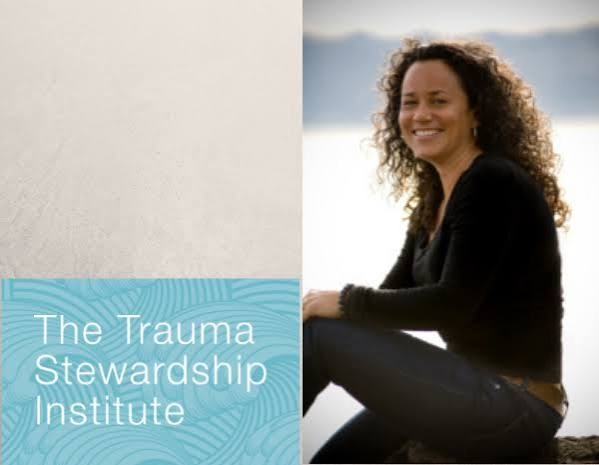
Laura is someone we can trust in a world out of balance. She has helped people navigate overwhelm, crisis, and trauma for nearly 40 years. As a trauma specialist, Laura has worked with almost every field and industry imaginable — from grassroots organizers and government agencies to Hollywood producers and global tech companies; from professional athletes to Supreme Court judges, from climate scientists to the military.
When Laura and I talked, we compared notes on our long history working in the field of personal and community health and wellbeing. This year marks the 20th anniversary since Trauma Stewardship was first published. I asked her for an update on what she had learned and what has changed over the years.
“Trauma Stewardship is as fresh, and urgent, as ever,” she told me. “The pressures that shape our lives whether from the most of stress of daily life, emerging tech, media exposure, political chaos, the climate crisis, or escalating oppression, have only intensified in the two decades since the book was written.”
She went on to say,
“While there is more understanding of the need to care for oneself, the often-heard encouragement of ‘self-care’ is not the same as a comprehensive framework and set of practical tools that make sustaining oneself possible — personally and professionally; individually and collectively; systematically and structurally. This is what Trauma Stewardship has to offer.”
In the book, you’ll find:
- A framework for recognizing the Trauma Exposure Response in yourself and others.
- The 16 warning signs that you may be absorbing more than you realize.
- A powerful model for mapping your own response to trauma exposure.
- Tools for navigating systems shaped by oppression and structural supremacy.
- A set of practical, adaptable strategies for staying present and whole.
- How spirituality, community, and creativity support long-term sustainability.
- Permission to feel and think — and guidance to move forward with purpose.
In a world where Artificial Intelligence (AI) promises to solve many problems created by humanity, it can also create more problems than it solves. Jeremy Rifkin, author of the book Rescuing the Future: Reimaging Artificial Intelligence in a World on the Edge, says,
“AI is best understood as a sophisticated zombie and cannot replace the living intelligence of humanity and the more-than-human world.”
The real caregivers of the world are not artificial. They include the entire living community on planet Earth that has been here for nearly 4 billion years. They also include members of the human community that Laura Lipsky reminds us are health care workers, ecologists, case workers, advocates, activists, first responders, researchers, teachers, journalists, cultural workers, attorneys, disaster relief workers, healers, clergy, service members, law enforcement, and many more.
“Given the magnitude of chaos and pain bearing down on societies around the world, many experience their lives as fuller, messier, and more demanding than in the past,” Laura says. “Whether as Chief Sealth describes the web of life or MLK Jr. describes the single garment of destiny, we live in relationship to each other and are inextricably connected with one another. TRAUMA STEWARDSHIP helps us make sense both of our part of the web and the web as a whole.”
I asked Laura what she hopes people will get from reading her book.
“Threading the needle of caring about how we engage while finding ourselves increasingly numb and disconnected is central to what it means to be human right now,” Laura says. “I hope folks find in Trauma Stewardship, a path to understanding the toll of bearing witness, a language for naming the impact, and tools for reviving our connections to a lush and verdant life.”
If you would like to watch the interview I did with Laura Lipsky you may do so here. You can visit Laura at The Trauma Stewardship Institute.
You can join our community to receive our weekly articles and periodic “New You Can Use” at https://menalive.com/email-newsletter/.
Disclaimer: This story is auto-aggregated by a computer program and has not been created or edited by menshealthfits.
Publisher: Source link
Publisher: Source link