

The Future of MenAlive: From Men’s Health to Relational Healing and Transformation
Apr 7, 2026Fashion & Style
What Men Should Wear During a Cold European Winter
- Feb 18, 2026
- 0 Comments
126
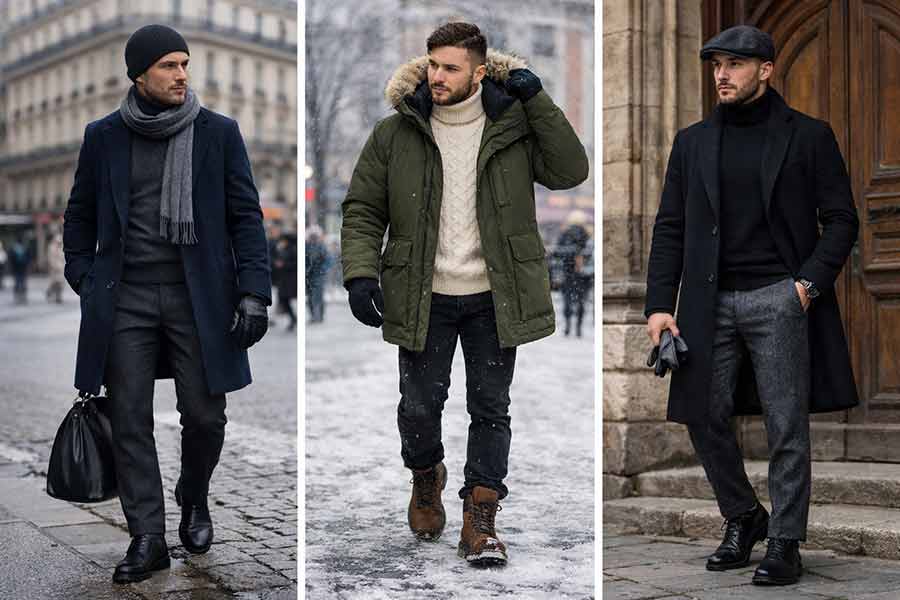
Winter in Europe is not a single look. It ranges from damp Paris mornings to sub-zero Alpine towns, from icy cobblestones in Prague to windy coastal cities like Copenhagen. Dressing well in cold Europe is less about bulky layers and more about smart insulation, weather resistance, and proportion.
If you want to stay warm without looking like you’re on an Arctic expedition, this is the formula:
Layering + quality fabrics + urban silhouettes.
Here’s how to build a winter wardrobe that works from Milan to Munich.
1. Start with the Base Layer (Your Invisible Weapon)
The biggest mistake men make in winter is relying only on outerwear. Warmth starts underneath.
Best base layer materials:
- Merino wool – breathable, warm, doesn’t smell
- Thermal cotton blends – affordable and comfortable
- Heat-tech style synthetics – thin but insulating
A fitted long-sleeve thermal top under your shirt or knit instantly adds 30–40% more warmth without bulk.
Same rule for legs: thermal leggings under trousers are a game-changer in Northern Europe.
Fit rule: snug, not tight.
If it looks like gym wear, it’s too tight.
2. Mid Layers: Where Style Lives
This is where winter outfits actually become interesting.
Best mid-layer options:
- Fine-gauge wool sweaters
- Cashmere or lambswool knits
- Merino roll-necks (turtlenecks)
- Quilted gilets under coats
- Overshirts in wool or flannel
A roll-neck + wool coat instantly looks European.
A crew-neck knit over a shirt works for business and casual.
A quilted gilet under a blazer keeps structure but adds heat.
Avoid thick hoodies unless you’re doing pure streetwear. European winter style leans tailored, even when casual.
3. Outerwear: The Winter Signature Piece
Your coat defines your winter look. It should be warm, weather-proof, and structured.
Best winter coat types for Europe:
- Wool overcoats (knee-length or mid-thigh)
- Parkas with insulated lining
- Puffer jackets (matte finish, minimal branding)
- Technical shell coats for rain + wind
- Peacoats for city wear
Fabric matters more than style:
- Wool blends should be 70%+ wool
- Puffers should use real down or high-fill synthetic
- Parkas should have wind-blocking shells
Colour palette that always works:
- Navy
- Charcoal
- Camel
- Olive
- Black
Avoid bright hiking colours unless you’re in the mountains. Cities prefer muted tones.
4. Trousers: Stop Wearing Summer Weight Denim
Cold Europe punishes thin jeans.
Better winter trouser choices:
- Wool trousers
- Heavy twill chinos
- Corduroy
- Brushed cotton
- Lined jeans
Slim but not skinny is ideal — room for thermal layers without looking baggy.
Dark colours trap heat better and hide winter grime:
- Charcoal
- Chocolate brown
- Deep navy
- Forest green
European winter = rain, snow, slush, cobblestones.
Your trainers will not survive.
Best winter footwear styles:
- Leather Chelsea boots
- Lace-up ankle boots
- Combat boots
- Suede boots with waterproof spray
- Rubber-soled dress boots
Key features:
- Thick rubber sole
- Water-resistant leather
- Good grip
- Slightly higher ankle
Chelsea boots work in Italy and France.
Lace boots dominate in Germany and Eastern Europe.
Avoid thin leather soles unless it’s dry.
6. Accessories Are Not Optional
Accessories are not decoration in winter. They are survival gear.
Essentials:
- Wool scarf (at least 180cm long)
- Leather or wool gloves
- Beanie or flat cap
- Thermal socks
- Sunglasses (snow glare is brutal)
A scarf instantly upgrades any coat and traps heat around your neck — the fastest way to feel warmer.
7. Colour Strategy for Winter Europe
Europeans dress darker in winter, but that doesn’t mean boring.
Smart winter palette:
- Grey
- Navy
- Camel
- Black
- Burgundy
- Olive
- Rust
Avoid neon.
Avoid summer pastels.
Use one lighter tone (camel or beige) to stop outfits feeling heavy.
8. What to Wear by Region
Southern Europe (Italy, Spain, South France):
- Wool coat
- Lightweight knit
- Chinos or wool trousers
- Chelsea boots
Cold but stylish. Less need for parkas.
Central Europe (Germany, Austria, Switzerland):
- Puffer or heavy wool coat
- Thermal base layer
- Wool trousers
- Lace-up boots
Wind + snow = insulation first.
Northern Europe (Scandinavia, Baltics):
- Parka
- Merino base layer
- Thick knit
- Waterproof boots
- Beanie
Function meets minimalism.
Eastern Europe (Poland, Czech Republic, Balkans):
- Long coat
- Roll-neck
- Heavy trousers
- Leather boots
Classic, masculine silhouettes work best.
9. The Ideal Cold Europe Capsule Wardrobe
If you wanted to pack light for a European winter trip:
- 1 wool overcoat
- 1 insulated parka or puffer
- 2 merino sweaters
- 1 roll-neck
- 2 winter-weight trousers
- 1 dark jean
- 1 pair Chelsea boots
- 1 pair lace-up boots
- Scarf, gloves, hat
This gives you:
- Business look
- Casual city look
- Travel look
- Evening look
All warm. All interchangeable.
10. The Biggest Mistakes Men Make in European Winter
❌ Wearing thin summer jackets
❌ Ignoring base layers
❌ Choosing fashion boots with no grip
❌ Bright sportswear colours
❌ Cheap synthetic scarves
❌ Skinny trousers with no insulation
Winter exposes bad quality instantly.
Good wool always wins.
Final Style Rule
European winter style is about quiet confidence.
No logos.
No gimmicks.
No shouting.
Just:
✔ Good fabrics
✔ Proper layers
✔ Neutral colours
✔ Sharp silhouettes
Dress like you belong to the city, not like you’re passing through it.
Because when you’re warm, dry, and comfortable — style comes naturally.
Disclaimer: This story is auto-aggregated by a computer program and has not been created or edited by menshealthfits.
Publisher: Source link
Publisher: Source link