



The Menswear Reset: 2026’s Most Wearable Style Trends Right Now
Apr 8, 2026Fashion & Style
The Essential Guide to Levi’s Slim Fits: 511, 512, and 513
- Dec 18, 2025
- 0 Comments
528
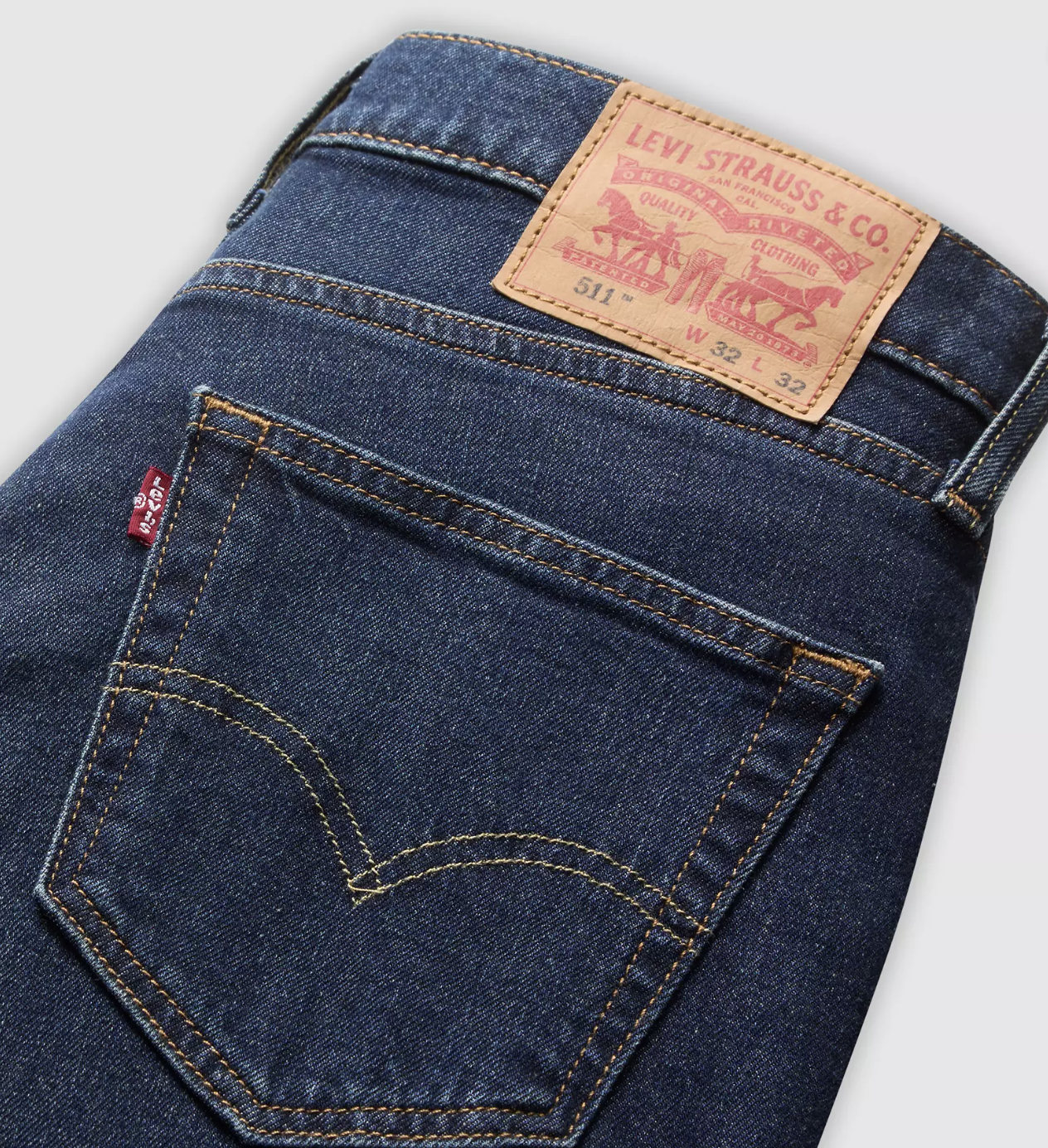
Shoppers often group Levi’s 511, 512, and 513 together because the names fall under the “slim” category, but the patterns tell a different story. The 511 uses a slim straight leg, the 512 adds a sharper taper, and the 513 opens up the hem. Rise height, seat depth, and thigh width also vary in ways most product pages never explain.
Here, the goal is clarity. We focus on the top block first since that determines comfort and stability, then move to leg geometry, stretch behavior, and body-type suitability. The result is a straightforward guide that shows exactly how each fit is cut, where the differences sit in the pattern, and how those differences affect the way the jeans wear over time.
Levi’s 511 vs 512 vs 513: At-a-Glance Fit Comparison
Use this table as a quick reference before we dive into the details. Measurements are typical patterns for men’s jeans in the 30–32″ waist range, but can vary slightly by wash and fabric.
Top-Block Fit: Waist, Rise, Seat and Thigh
In our denim language, the top block is where the fit lives. If the waist, rise, seat and thigh do not work on your body, the leg shape will not save the jeans.
All three of these Levi’s fits sit just below the waist with a low–mid rise, but they handle thigh room differently.
Levi’s 511: Slim Through the Top Block
The 511 is cut as a classic slim. In most washes, the waist is true to tag, the seat is close without being sprayed on, and the thigh is trim. On slimmer and average builds, the 511 gives a clean line through the top block without obvious pulling across the front rise or the back yoke when you stand naturally.
- Rise: low–mid, sits below the waist.
- Seat: close but not painted on if you choose the correct waist.
- Thigh: slim; larger quads will feel contact, especially in rigid denim.
Levi’s 512: Slim Top Block with a Tapered Intention
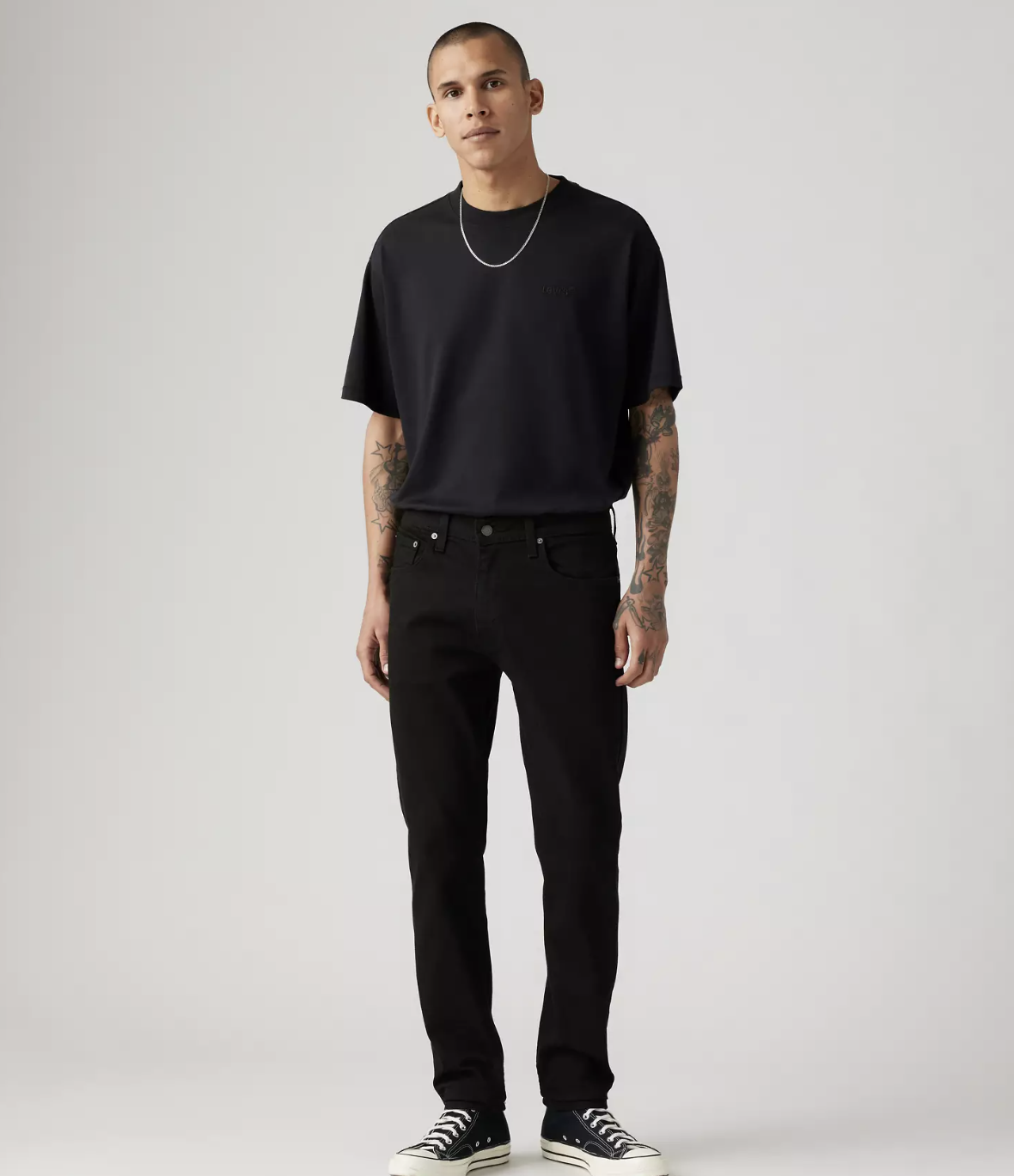
The 512 shares a similar top-block idea with the 511: slim, not skinny. In many size runs, the pattern gives a hair more room in the thigh to keep the jean wearable once the aggressive taper kicks in. On the body, the upper half should feel comparable to a 511 of the same size if you have slimmer legs; thicker thighs will feel the 512 clamp more around mid-thigh than the 513.
- Rise: low–mid, similar to 511.
- Seat: slim, comparable to 511.
- Thigh: slim with just enough allowance to support the taper.
Levi’s 513: The Roomiest Top Block of the Three
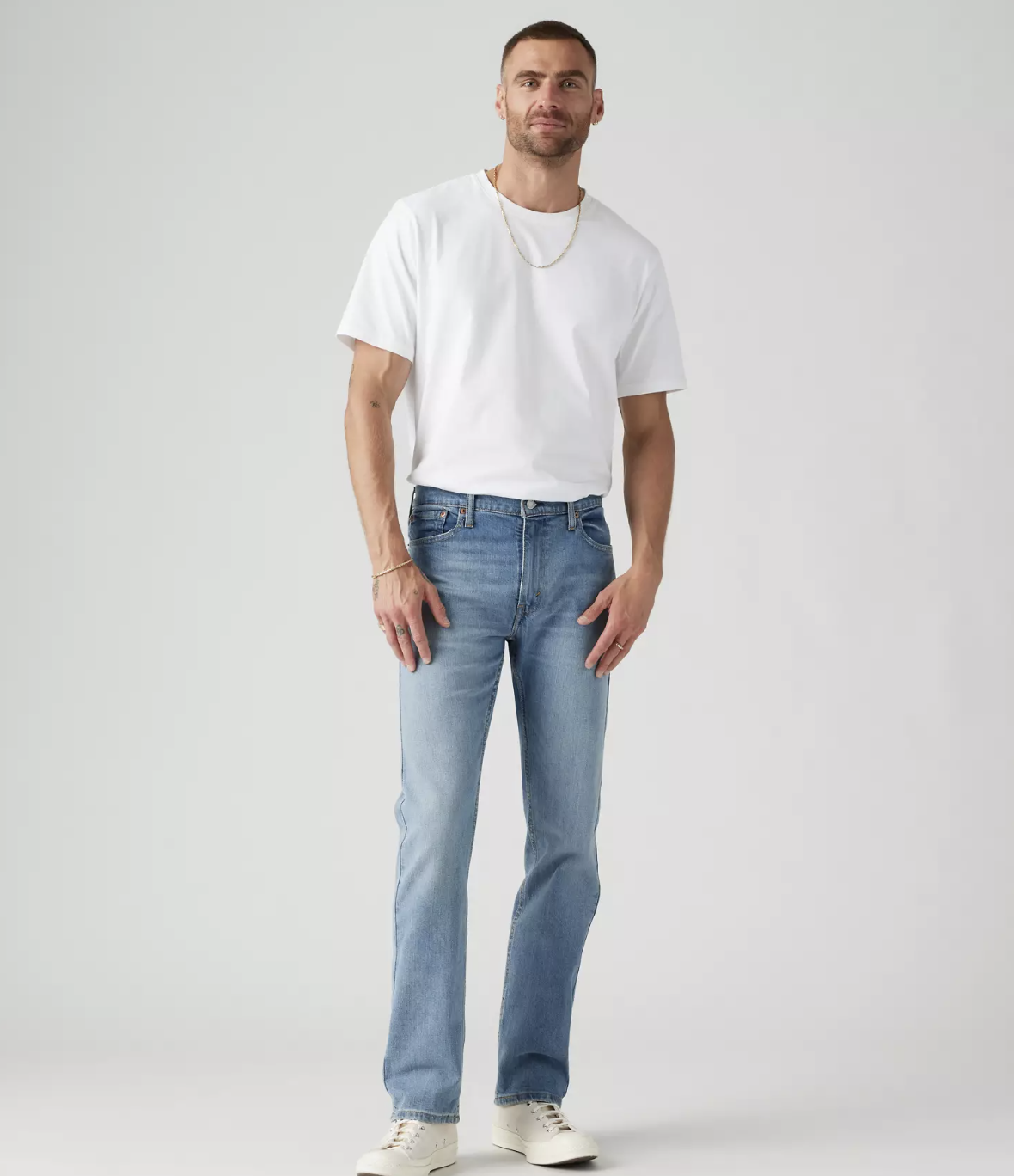
The 513 is a slim straight, which in Levi’s terms means “slim in the seat and thigh, but straighter from the knee down.” Because of that straight drop, the pattern usually allows a fraction more ease in the thigh and knee. On average or slightly athletic legs, this is the one that pinches the least when you sit or climb stairs.
- Rise: low–mid, sits below the waist.
- Seat: still slim, but less restrictive than a tight 511.
- Thigh: slim, with the most forgiveness of the three.
If you ever feel torn between two sizes in any of these fits, work from the top block, not the ankle. Choose the waist that gives a flat front, no gaping at the back, and no hard horizontal stress lines across the thighs. Once that is dialed in, you can decide if you prefer the straighter 513 leg, the even 511, or the sharper taper of the 512.
Leg Shape: Slim vs Slim Straight vs Slim Taper
Once the top block works, leg architecture decides how the jean reads from the knee down. Here is how the three fits differ from the knee to the hem.
Levi’s 511: Slim from Hip to Hem
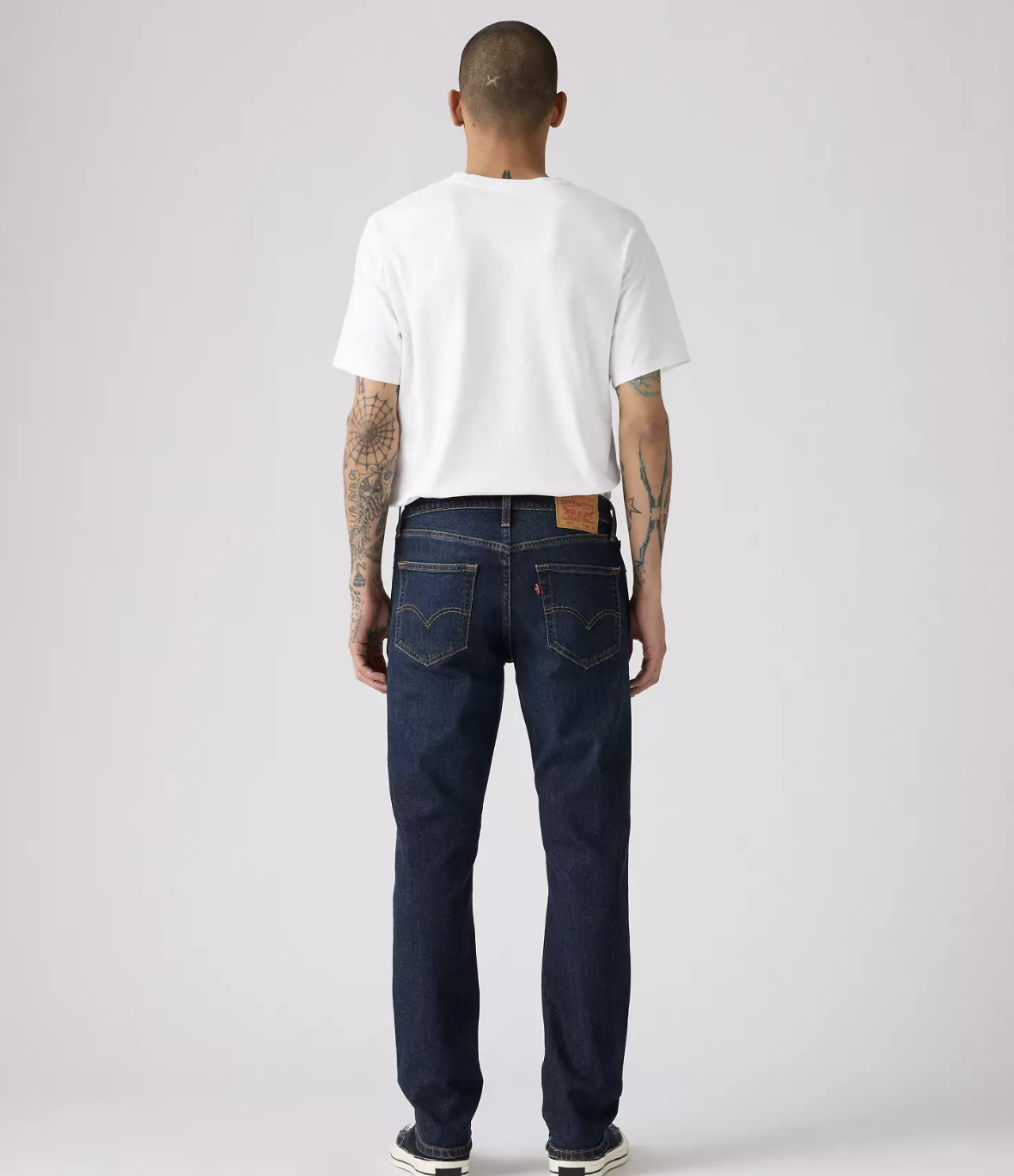
The 511 keeps a consistent slim profile from thigh to ankle. The knee and leg opening are both narrow, but not as aggressive as a skinny fit. On the body, the 511 hugs the leg lightly and pools less around the ankle if you choose a sensible inseam.
- Leg line: slim, consistent from thigh through the hem.
- Break: controlled; excess stacking appears quickly if the inseam is long.
- Footwear pairing: works with slim sneakers, low-profile boots, derby shoes.
Levi’s 512: Slim Taper for a Narrower Opening
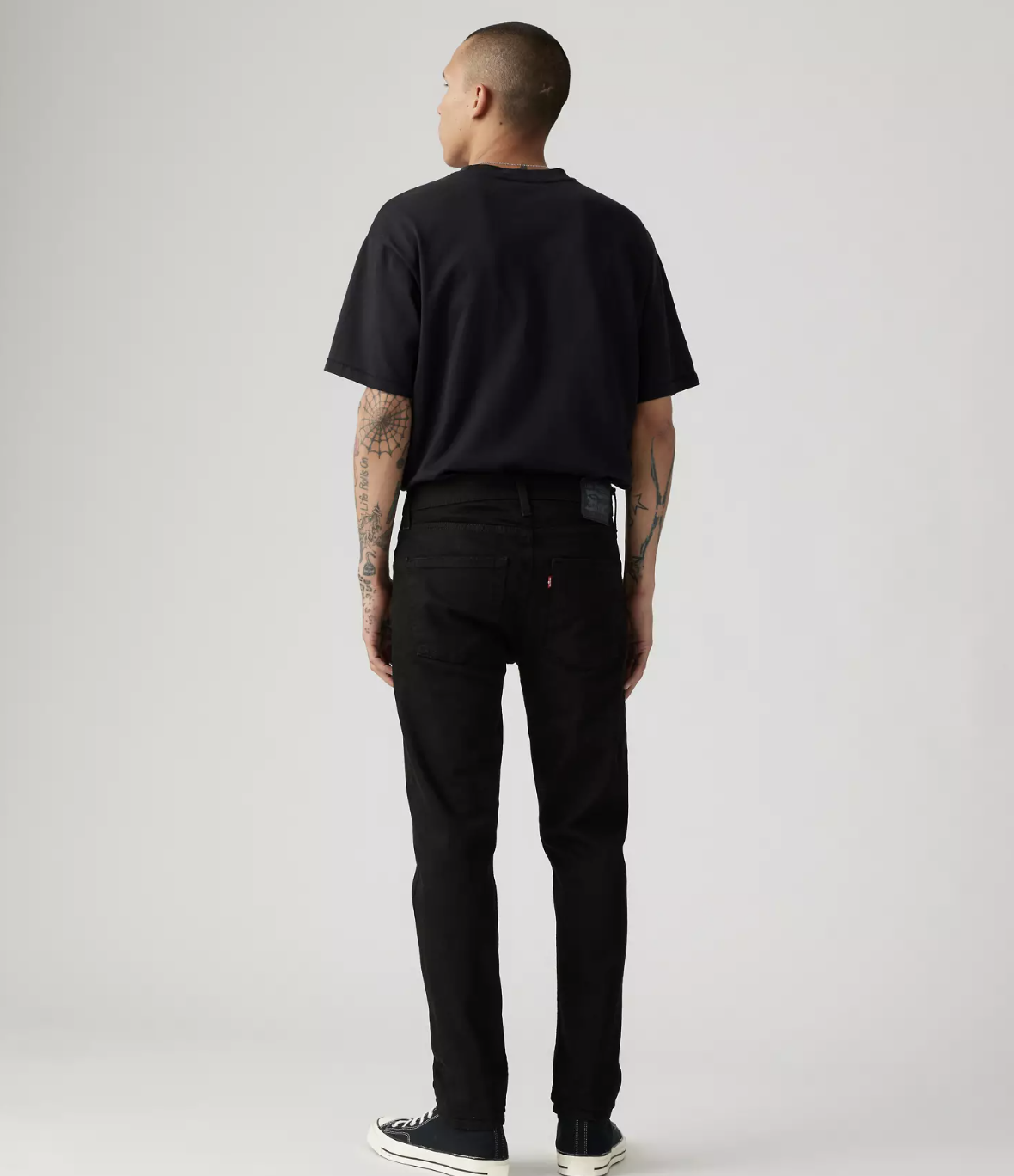
The 512 keeps a similar thigh to the 511 but narrows more from the knee down. The taper creates a more defined ankle and makes the leg opening sit closer to the shoe. This reads as a modern tapered silhouette without crossing into painted-on territory if you size the waist correctly.
- Leg line: slim through thigh, sharper taper from knee to hem.
- Leg opening: the narrowest of the three.
- Footwear pairing: best with slim trainers, Chelsea boots, minimalist sneakers.
Levi’s 513: Slim Straight with a Relaxed Fall
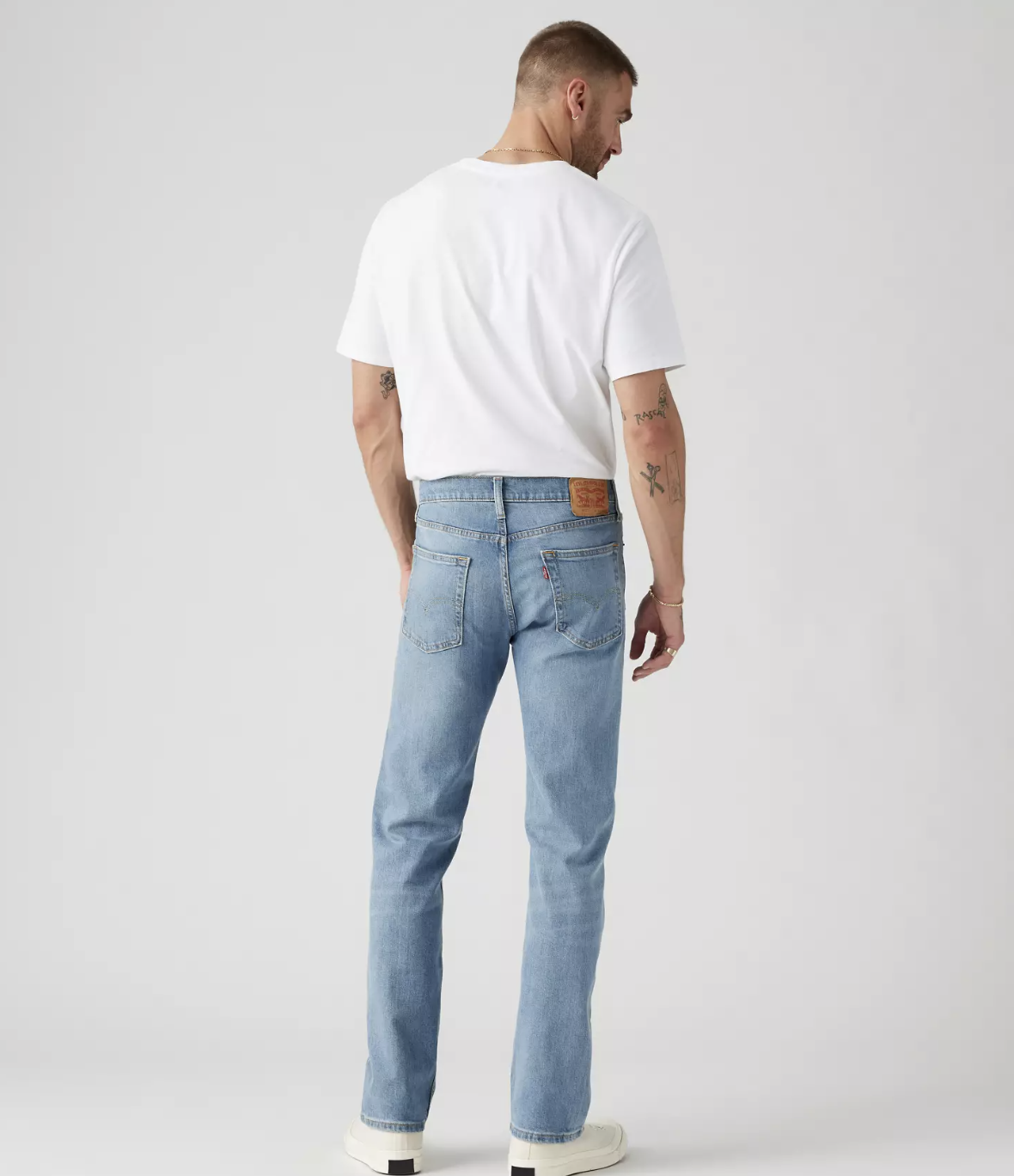
The 513 narrows from the thigh to the knee but then drops more straight to the hem. The leg opening is wider than both the 511 and 512. That extra space around the ankle makes it more forgiving over higher-tongue sneakers or chunkier boots.
- Leg line: slim at the top, straight from the knee down.
- Leg opening: widest of the three.
- Footwear pairing: handles bulkier sneakers, work boots, and high-tops better.
Rise and Where Each Jean Sits on Your Body
All three fits sit below the natural waist with a low–mid rise, but small changes in pattern and body proportions can shift how that feels.
- 511: Low–mid rise that suits most average torsos. On very long torsos the jean can feel lower on the hip.
- 512: Very similar rise to the 511; relative tightness in the thigh can make the rise feel slightly lower when you sit.
- 513: Also a low–mid rise, but because of the easier thigh and straight leg, it can feel a touch more relaxed through the whole top block.
If you are shorter, aim for a rise that does not chop across the widest part of your midsection. If you are taller, avoid fits that sit so low they create a long torso and short leg effect. In all cases, focus on a smooth front with no pulling across the fly.
Fabric, Weight, Stretch and Construction
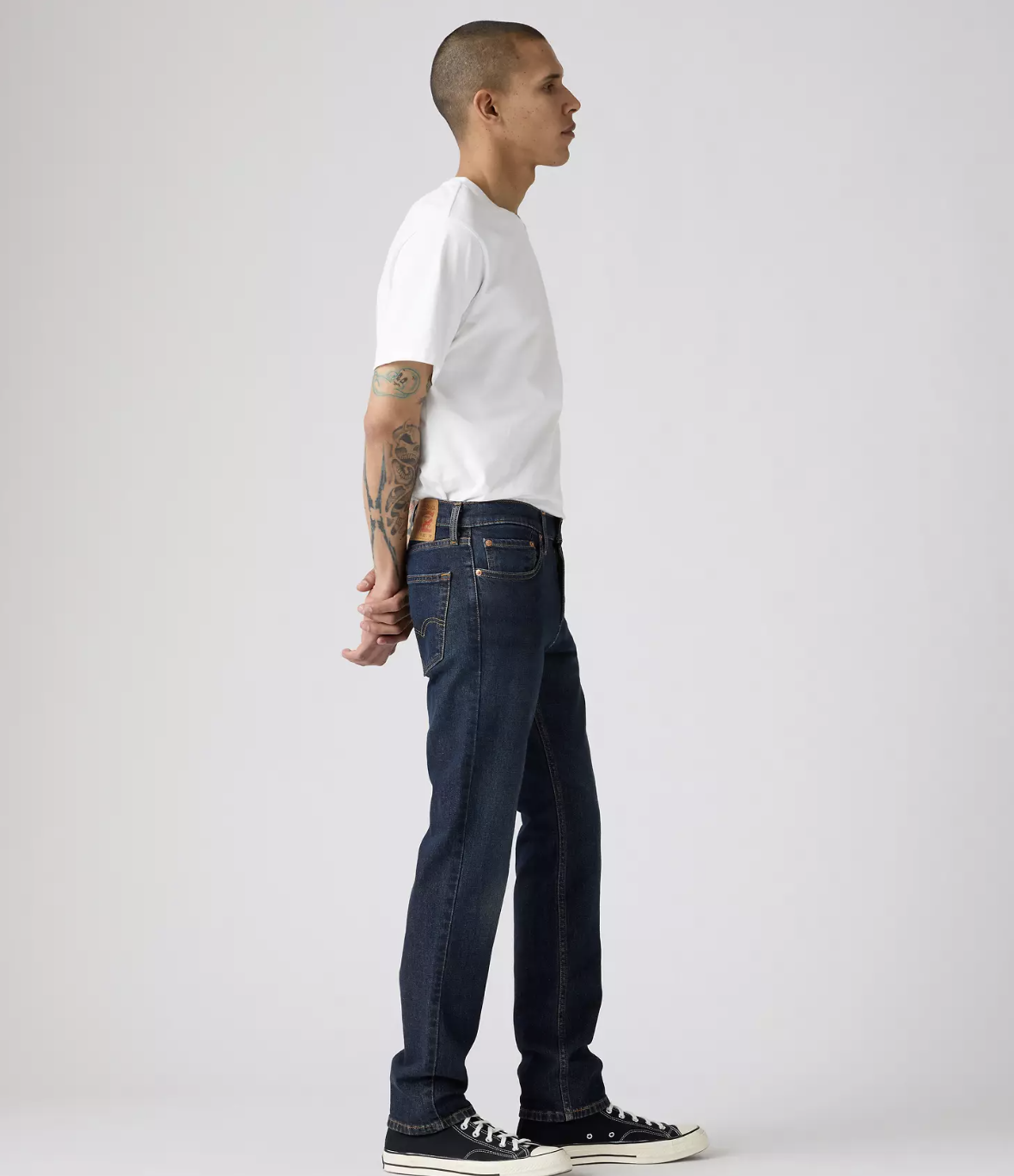
Levi’s offers 511, 512, and 513 in multiple fabrics, from rigid cotton to advanced stretch blends. The fit name tells you the shape, but the fabric decides how that shape feels over a day of wear.
Rigid vs Stretch Options
- 511: Common in both rigid cotton and stretch. Rigid versions feel sharper at first and relax with wear. Stretch versions are easier for daily use but can lose shape if you size too small.
- 512: Often cut in stretch or advanced stretch to keep the aggressive taper wearable. The stretch helps the thigh and knee move without locking.
- 513: Available in rigid and stretch; the straighter leg and slightly easier thigh make rigid options more forgiving than a rigid 511.
Denim Weight and Feel
Most standard 511/512/513 washes sit in the midweight range, which balances durability and comfort. Heavier seasonal or special runs will feel stiffer out of the bag, relax more slowly and hold creases and fades more dramatically. Lightweight versions break in quickly but do not age with the same structure.
Construction Details
Across these fits, Levi’s uses similar construction fundamentals: five-pocket layout, bar tacks at stress points, and riveted front pockets. Higher-priced or selvedge runs can bring heavier pocket bags, tighter stitching and shuttle-loomed selvedge denim. If you care about long-term durability, pay attention to pocket bag weight, stitching density at the crotch and seat, and how clean the inside seams look when you turn the jean inside out.
On-Body Silhouette: How They Actually Look
Here’s how each fit behaves visually once it is on a body and hemmed to a sensible inseam.
Levi’s 511 On-Body
- Top block: slim but not vacuum-packed on slim and average builds.
- Leg: follows the leg line closely without clinging to the calf.
- Overall effect: a clean, modern slim jean that does not draw attention to the opening.
Levi’s 512 On-Body
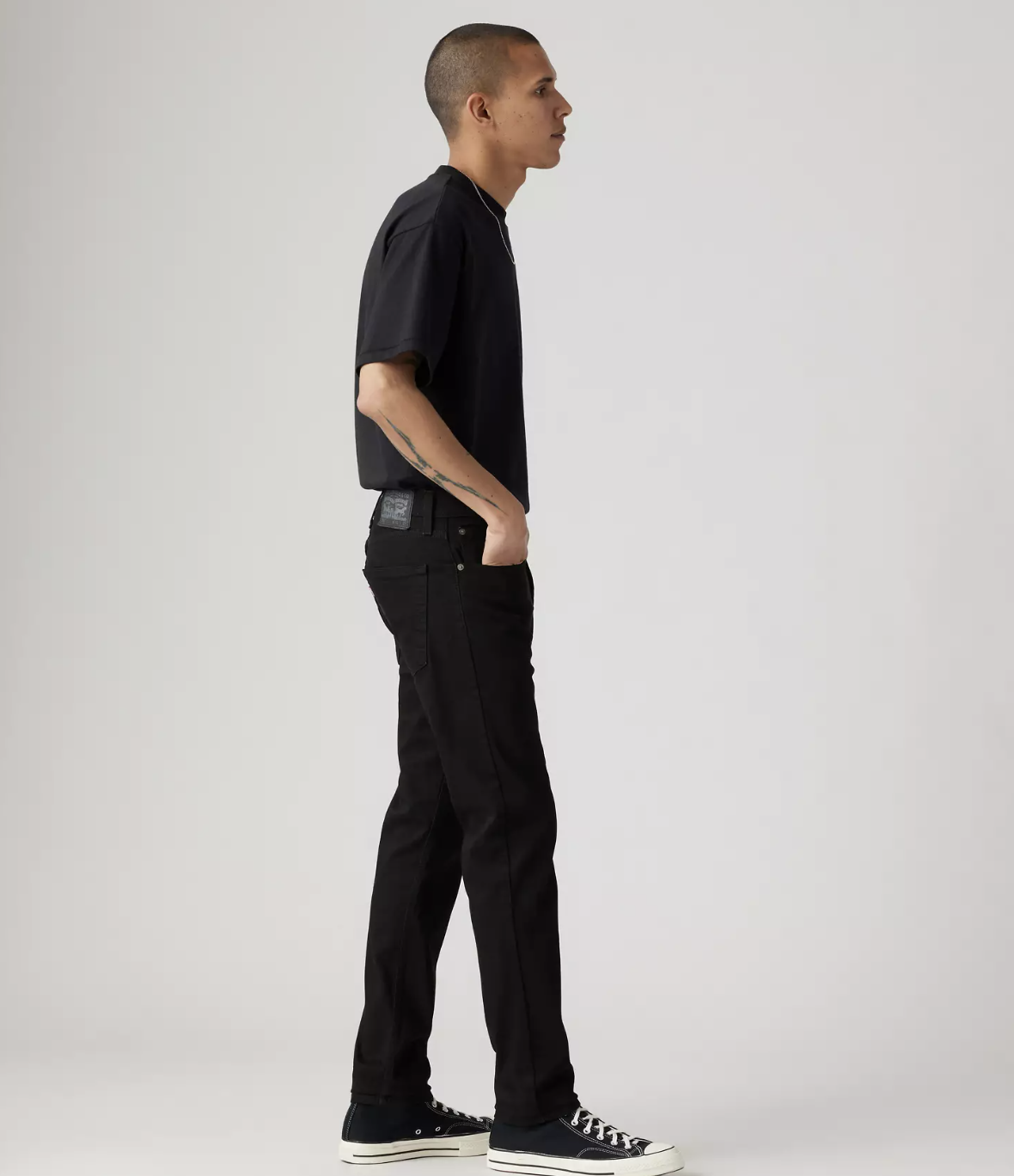
- Top block: similar to 511 when sized correctly.
- Leg: narrower from the knee down, opening frames the ankle and shoe more clearly.
- Overall effect: a sharper tapered profile that works well with slimmer footwear and cropped jackets.
Levi’s 513 On-Body
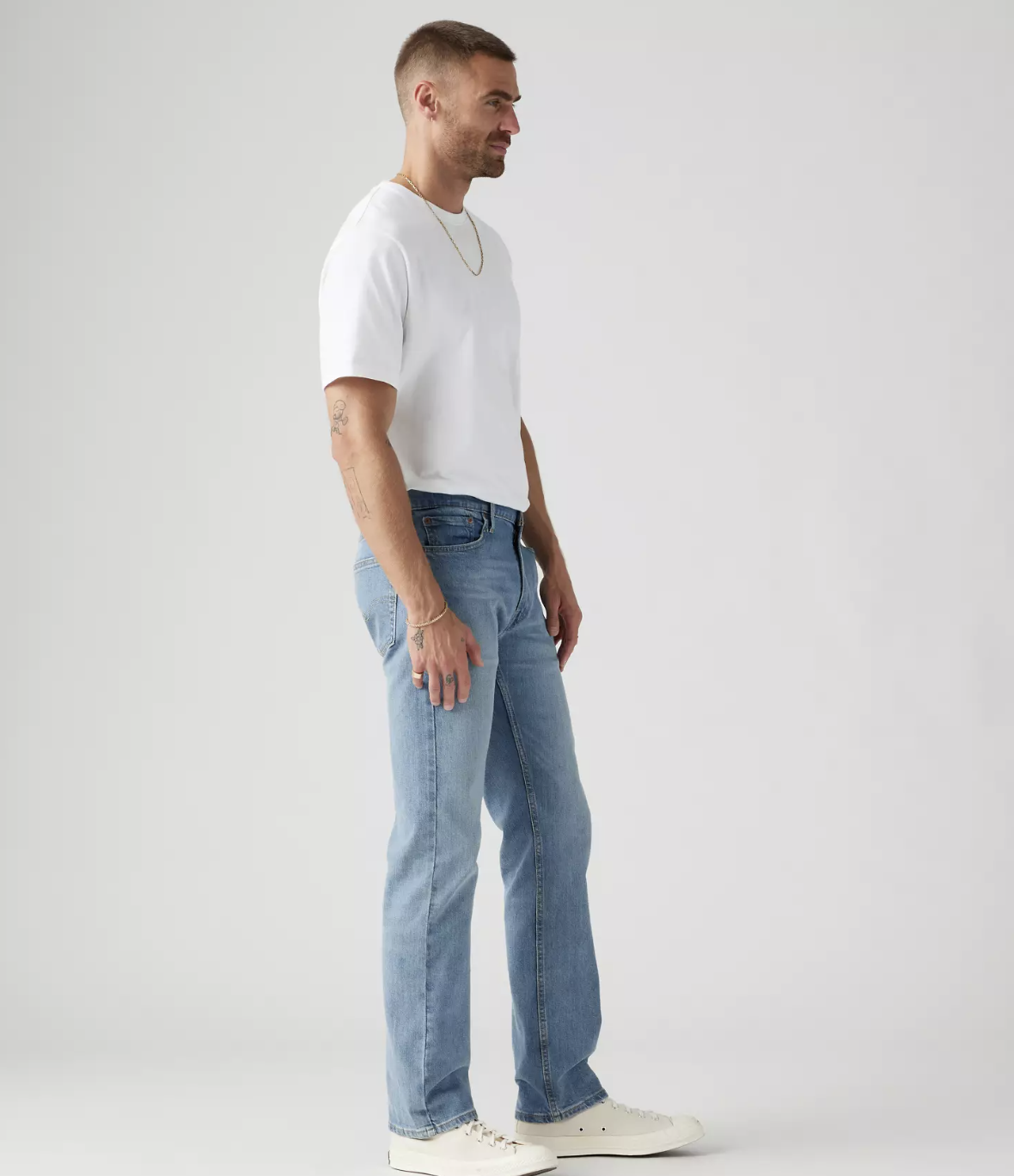
- Top block: slightly more forgiving in the thigh and seat.
- Leg: falls straighter from the knee to hem, with more air around the ankle.
- Overall effect: a balanced slim straight that looks relaxed without tipping into loose.
Which Fit is Best for Your Body Type?
The right Levi’s fit is the one that respects your proportions. Use these guidelines as a starting point, then refine based on your calves, shoes and personal taste.
Best for Slim Builds
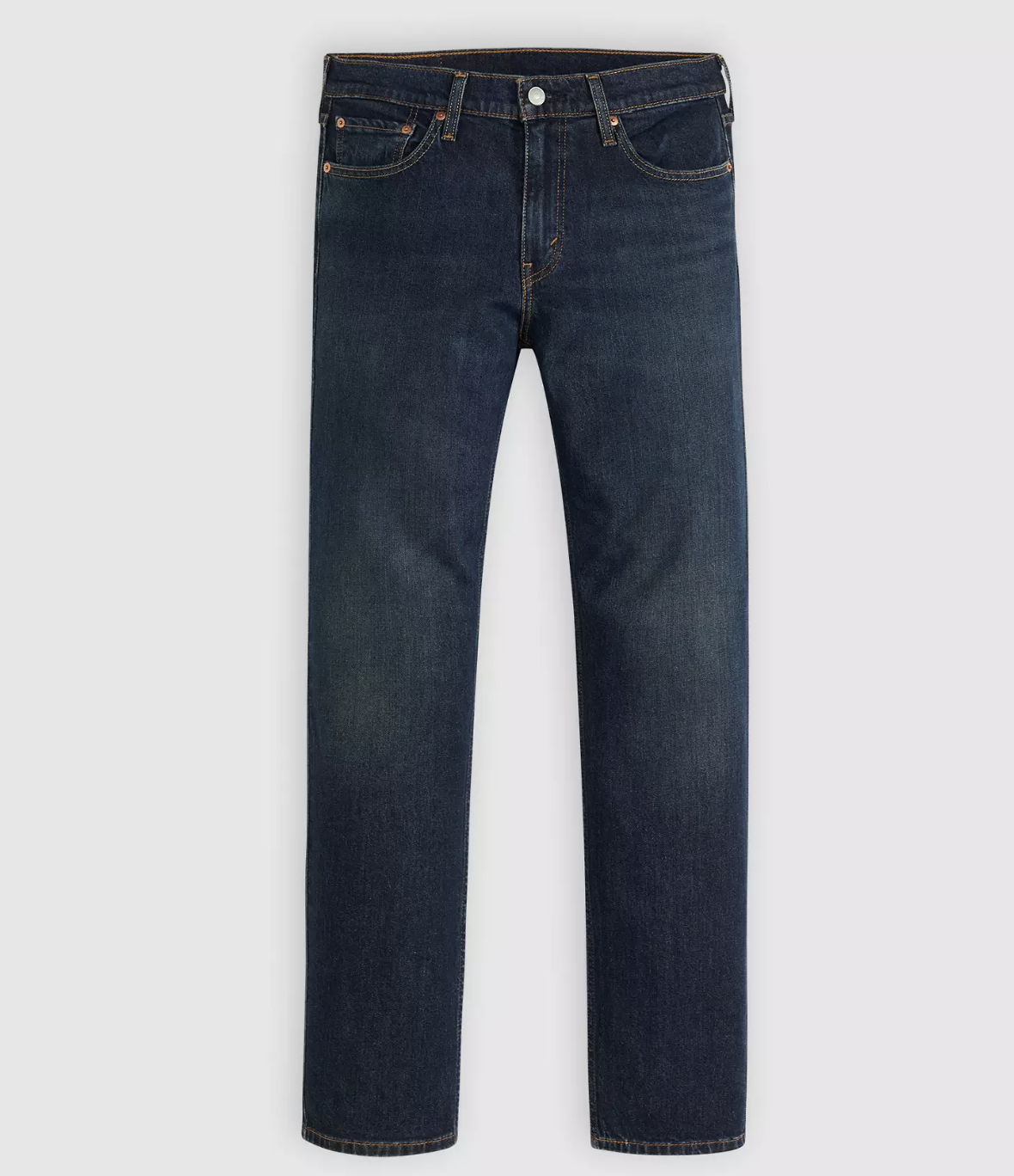
- 511: Ideal if you want a straightforward slim that traces the leg.
- 512: Great if you prefer a narrow ankle and wear low-profile sneakers or boots.
- 513: Works if you want a little more ease without leaving the slim category.
Best for Average Builds
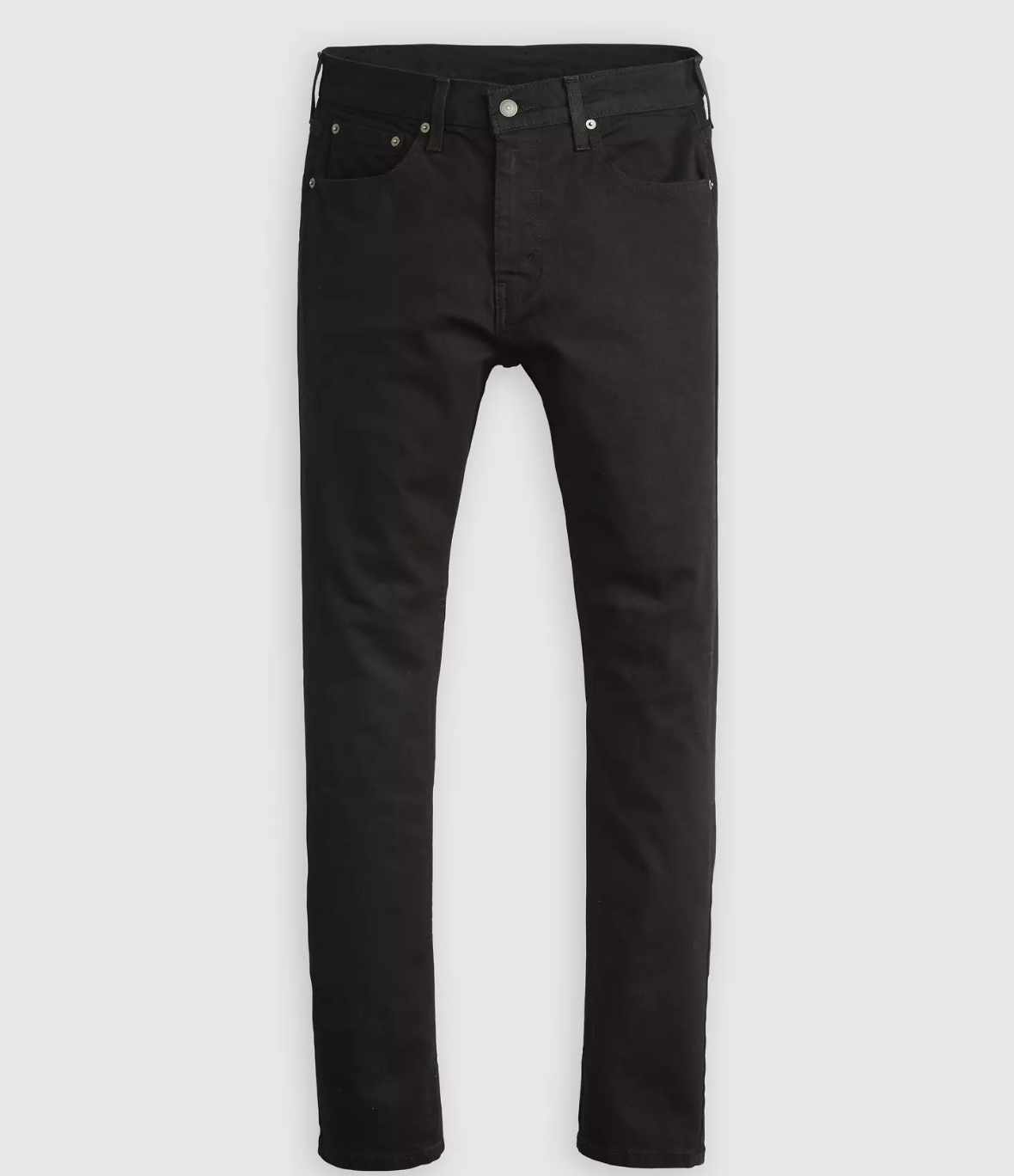
- 511: Works well if your thighs are not especially large; watch for pulling when you sit.
- 512: Choose only if you are comfortable with a close lower leg; the taper will highlight the ankle.
- 513: Safest bet if you want room for everyday movement and heavier sneakers or boots.
Best for Bigger Thighs or Athletic Legs
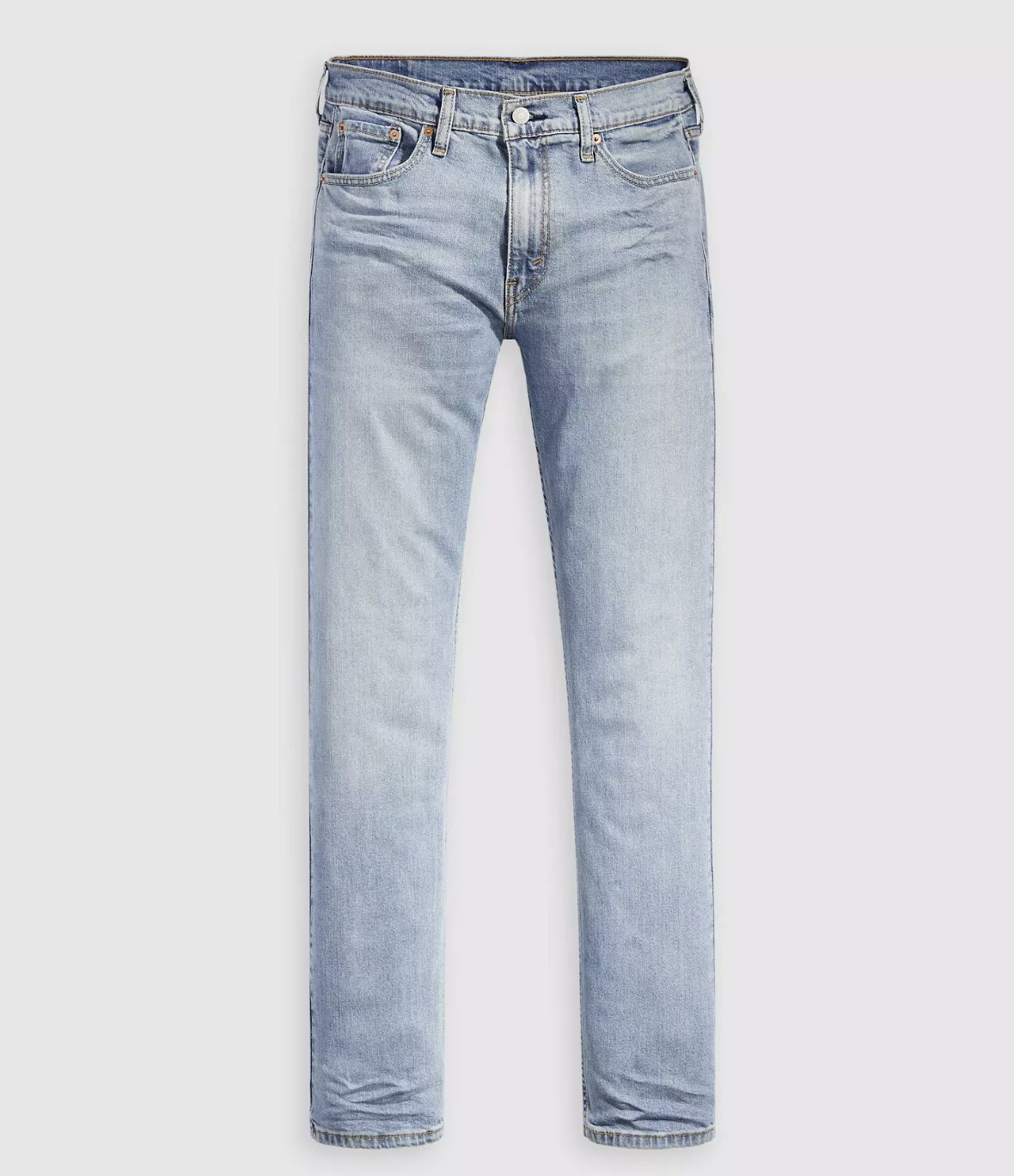
- 511: Can work in stretch fabrics, but rigid 511s often feel tight through the thigh.
- 512: Usually too close unless you prefer a very trim look and choose stretch.
- 513: Most forgiving of the three. The extra ease in the thigh plus straight leg makes it the best starting point.
Best for Different Footwear Choices
- 511: Versatile; balances with most sneaker and boot shapes.
- 512: Best with slim sneakers and sleek boots. Can look tight over chunky soles.
- 513: Handles chunkier trainers, work boots and high-tops without bunching awkwardly.
Fit Behavior Over Time: Break-In, Stretch and Shrinkage
Beyond the paper measurements, each fit behaves differently once you wash and wear it.
Levi’s 511 Over Time
- Rigid versions start stiff, relax at the seat and knees over the first weeks.
- Stretch versions give immediate comfort but can feel looser at the waistband and knees by the end of the day if you buy them too tight.
- Expect mild shrinkage after the first wash if you tumble dry; hanging to dry helps preserve the cut.
Levi’s 512 Over Time
- The taper makes stretch more important; rigid pairs can feel restrictive at the calf before breaking in.
- Stretch and advanced stretch options retain shape well if you choose a waist that is comfortable when standing and sitting, not just standing.
- Because of the narrow hem, even a small shrink in length will change how much ankle shows, so be precise with inseam choice.
Levi’s 513 Over Time
- Easier thigh and straight leg mean rigid 513s soften into a very wearable everyday jean.
- Stretch pairs can feel almost like a straight chino in motion, especially in midweight denim.
- The wider opening hides small shrinkage changes better than the 512 does.
Real-World Sizing: Tagged vs Actual Measurements
Levi’s, like most mass brands, does not cut every wash and every factory run to a single exact spec. Two pairs of 511s in the same tagged size can differ by a small but noticeable amount at the waist or thigh.
- Always measure your current best-fitting jeans flat (waist, thigh, knee, leg opening, front rise).
- Compare those numbers to any Levi’s size chart or product measurements you can find, rather than relying on the tag alone.
- If you are between sizes, prioritise a clean top block—no gaping, no hard pulling—rather than chasing a particular silhouette at the ankle.
Value and Price: Where 511, 512 and 513 Sit in the Range
All three fits live in the core Levi’s price band, with occasional premiums for selvedge, special collaborations or heavyweight denim. In practical terms:
- 511: One of the most common slim fits Levi’s makes, often on promotion. Easy to find in multiple washes and fabrics.
- 512: Slightly less common than 511, with more focus on modern washes and stretch fabrics. Priced similarly but sometimes skewing toward newer seasonal lines.
- 513: Available but less heavily pushed than 511, often a smart buy for anyone who likes a straight leg without going relaxed.
When you move into selvedge or premium lines, expect upgrades in denim weight, mill origin and construction details rather than a change to the underlying fit pattern.
Which Should You Buy: 511, 512 or 513?
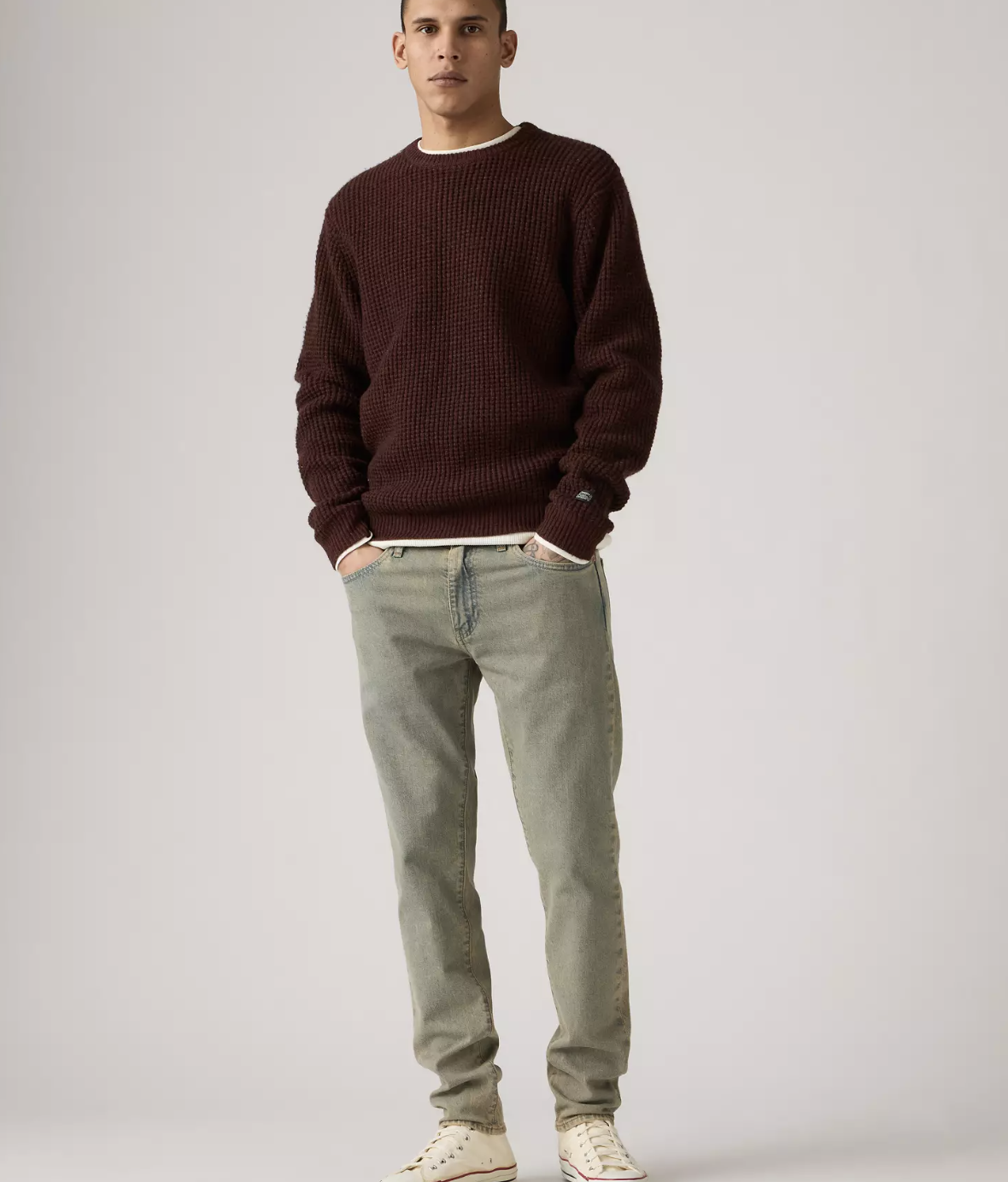
If you want a simple rule set to choose between them, use this checklist:
- Choose Levi’s 511 if: you want a classic slim jean that follows the leg without highlighting the ankle, and your thighs are on the slimmer or average side.
- Choose Levi’s 512 if: you like the idea of the 511 but want a narrower ankle and a sharper taper to show off slim footwear.
- Choose Levi’s 513 if: you want more thigh comfort, wear heavier shoes or boots, or prefer a straight leg that still feels modern.
Start with the top block that feels the best, then decide how much space you want below the knee. That choice will serve you better than chasing a cut that looks good in product photos but fights your body in real life.
Related Guides
FAQs: Levi’s 511 vs 512 vs 513
What is the difference between Levi’s 511 and 512?
Both are slim fits that sit below the waist with a low–mid rise. The main difference is the leg: the 511 is slim from hip to hem, while the 512 uses a sharper taper from the knee down and finishes in a narrower opening. In short, similar top block, narrower ankle on the 512.
Is Levi’s 512 tighter than 511?
Through the thigh and seat, they are similar when sized the same. The 512 feels tighter from the knee down because of the taper and smaller leg opening. If your calves are larger, you will notice the 512 more than the 511.
What is the difference between Levi’s 511 and 513?
The 511 is slim from hip to hem. The 513 is slim in the top block, then drops straighter from the knee down with a wider opening. On the body, the 513 feels slightly more relaxed in the thigh and ankle.
Which is best for bigger thighs, 511, 512 or 513?
Of these three, the 513 is usually the best starting point for bigger thighs or athletic legs. The straighter leg and extra ease in the thigh make it more comfortable, especially in rigid denim.
Are Levi’s 511 or 512 skinny jeans?
They are both slim fits, not true skinny jeans. The 512 looks closer to skinny because of the taper and narrow opening, but with the right waist size, both are still in the slim category rather than skin-tight.
Which Levi’s fit should I choose if I mostly wear chunky sneakers or boots?
The 513 is the easiest match for chunkier footwear because of its wider, straighter leg opening. The 511 can also work if you avoid very thick soles. The 512 is best kept for slimmer trainers and boots.
Disclaimer: This story is auto-aggregated by a computer program and has not been created or edited by menshealthfits.
Publisher: Source link
Publisher: Source link