

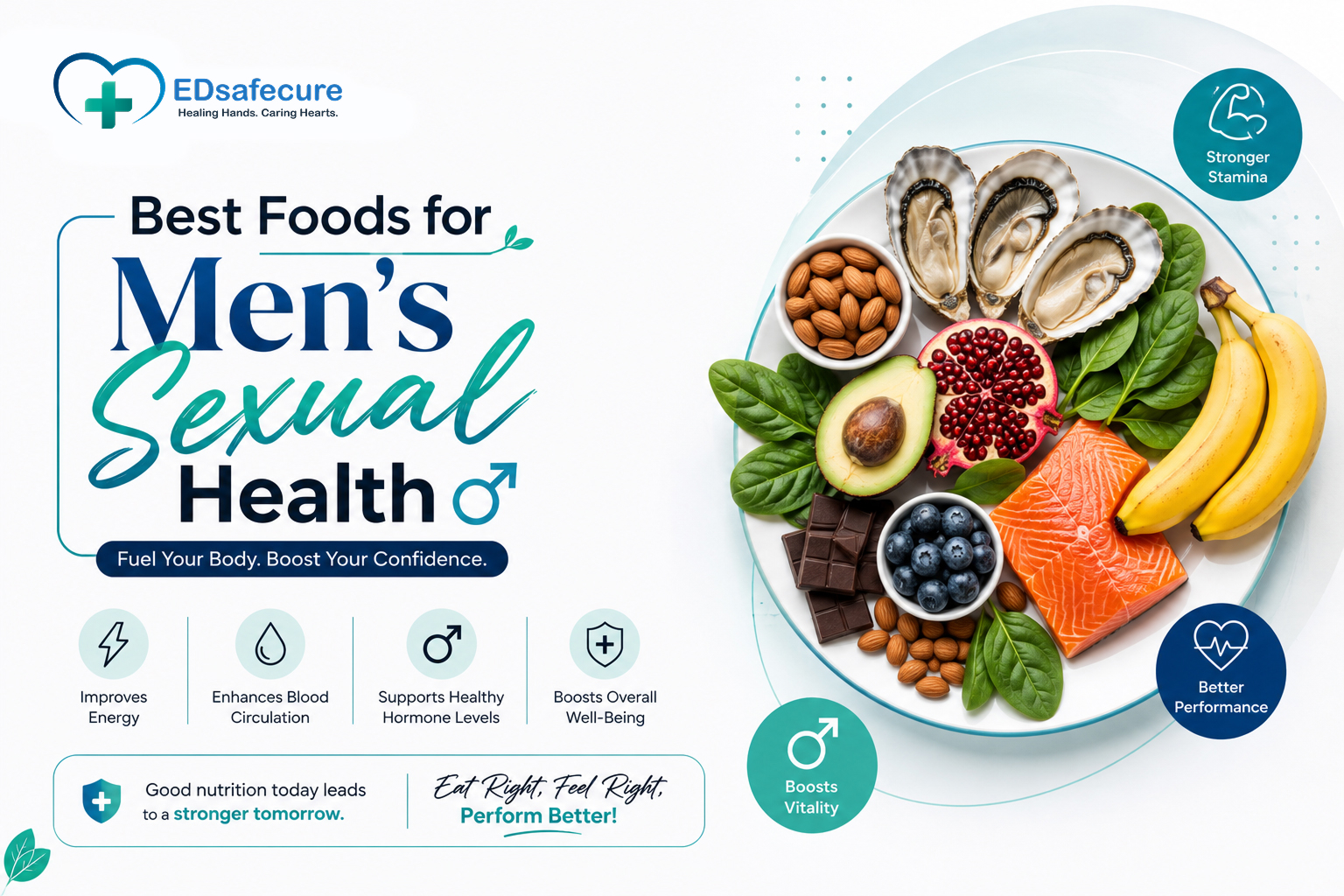


Best Foods for Men’s Sexual Health
Aug 25, 2026News
Erectile Dysfunction Explained: Expert Tips for Better Sexual Health
- Jul 7, 2026
- 0 Comments
296
Navigating the world of sexual health can be confusing, especially when terms are often used interchangeably. Two of the most common male sexual dysfunctions, Premature Ejaculation (PE) and Erectile Dysfunction (ED), are frequently mixed up. While both can cause distress and impact intimacy, they are distinct conditions with different causes, symptoms, and treatments.
Understanding the difference is the first step toward finding the right solution and reclaiming your confidence. In this guide, we’ll break down everything you need to know about Premature Ejaculation vs. Erectile Dysfunction.
What is Premature Ejaculation (PE)?
Premature Ejaculation is a condition where a man ejaculates sooner during sexual intercourse than he or his partner would like. The key characteristic of PE is a lack of control over ejaculation.
Clinically, it’s often defined by three main factors:
- Ejaculation always or nearly always occurs within one minute of penetration.
- An inability to delay ejaculation on all or nearly all penetrations.
- Negative personal consequences, such as distress, frustration, and avoidance of sexual intimacy.
Common Causes of PE
The causes of PE can be both psychological and biological. More often than not, psychological factors are the primary drivers.
- Psychological Causes: Performance anxiety, stress, depression, relationship problems, or a history of sexual repression can all contribute to PE. Early sexual experiences that were rushed may also establish a pattern that is difficult to change later.
- Biological Causes: In some cases, PE can be linked to physical issues like abnormal hormone levels, inflammation or infection of the prostate or urethra, or inherited traits.
What is Erectile Dysfunction (ED)?
Erectile Dysfunction is the consistent inability to get or keep an erection firm enough for sexual intercourse. It’s important to note the word “consistent.” Nearly every man will experience difficulty achieving an erection at some point in his life, but that doesn’t mean he has ED. The diagnosis is typically made when the problem becomes persistent.
ED is not about the timing of ejaculation; it’s about the ability to achieve and maintain the erection itself.
Common Causes of ED
While psychological factors like anxiety can cause ED, it is more commonly linked to underlying physical health conditions, particularly those affecting blood flow and the nervous system.
- Physical Causes: Heart disease, clogged blood vessels (atherosclerosis), high cholesterol, high blood pressure, diabetes, obesity, and Parkinson’s disease are common culprits. Lifestyle choices like smoking, excessive alcohol consumption, and lack of exercise also play a significant role.
- Psychological Causes: Depression, anxiety, stress, and relationship issues can interfere with the brain signals that lead to an erection. Performance anxiety, in particular, can create a vicious cycle where worrying about getting an erection prevents one from happening.
The Key Differences: PE vs. ED at a Glance
To put it simply, the core difference lies in the nature of the problem.
PE is a problem of TIMING. The man can typically get a firm erection, but he cannot control when he ejaculates.
ED is a problem of PLUMBING and WIRING. The man struggles to achieve or maintain an erection in the first place, regardless of how long he might last.
The Overlap: Can You Have Both PE and ED?
Yes, it is possible to experience both conditions, and they can sometimes influence each other. This is often driven by performance anxiety.
For example, a man who is anxious about ejaculating too quickly (PE) might become so stressed that he finds it difficult to get an erection at all (ED). Conversely, a man with ED might be so worried about losing his erection that he rushes to ejaculate, leading to a pattern of premature ejaculation.
This cycle of anxiety can make both conditions worse, highlighting the importance of addressing the root cause with a healthcare professional.
Seeking Help and Treatment Options
The good news is that both PE and ED are highly treatable. The first and most crucial step is to speak with a doctor. It can feel embarrassing, but remember that healthcare providers discuss these issues every day. They are professionals who can offer confidential, effective solutions.
Treatment for Premature Ejaculation
Treatment for PE often focuses on behavioral techniques and, in some cases, medication.
- Behavioral Techniques: The “start-stop” and “squeeze” techniques help you learn to recognize and control the sensations leading up to ejaculation.
- Topical Anesthetics: Numbing creams or sprays can reduce sensation to help delay ejaculation.
- Medication: Certain antidepressants (SSRIs) can be prescribed off-label as a side effect is delayed ejaculation.
- Counseling: Therapy can help address underlying anxiety, stress, or relationship issues.
Treatment for Erectile Dysfunction
ED treatment often starts with addressing underlying health conditions and lifestyle factors.
- Lifestyle Changes: Improving your diet, exercising regularly, quitting smoking, and reducing alcohol intake can significantly improve erectile function.
- Oral Medications: PDE5 inhibitors like sildenafil (Viagra), tadalafil (Cialis), and vardenafil (Levitra) are highly effective at increasing blood flow to the penis.
- Therapy: Counseling can help manage the anxiety and stress that contribute to ED.
- Treating Underlying Conditions: Managing conditions like diabetes or heart disease is essential for both your sexual health and overall well-being.
Conclusion: Taking Control of Your Sexual Health
Premature ejaculation and erectile dysfunction are two different conditions requiring two different approaches. PE is about a lack of control over the timing of ejaculation, while ED is about the inability to achieve or maintain an erection.
Both are common and treatable. By understanding the distinction, you can have a more productive conversation with your doctor and get on the right path to a more satisfying and confident sex life. Don’t let confusion or embarrassment stand in your way—seeking help is a sign of strength.
Disclaimer: This story is auto-aggregated by a computer program and has not been created or edited by menshealthfits.
Publisher: Source link
Publisher: Source link