



ED Pills and Nitrates: Why the Combination Is Dangerous
Oct 22, 2026Fashion & Style
Topcoat vs Overcoat: Why This Confusion Exists (And Which One You Actually Need)
- Feb 3, 2026
- 0 Comments
479
We independently evaluate all recommended products and services. Any products or services put forward appear in no particular order. if you click on links we provide, we may receive compensation.
You’re standing in a menswear store looking at two wool coats. The sales associate calls one a “topcoat” and the other an “overcoat.” They look similar—both are knee-length, both are wool, both cost about the same. You ask what the difference is, and you get a vague answer about formality and weight that doesn’t actually help you decide which one to buy.
The distinction between topcoats and overcoats has become so blurred that even luxury retailers use the terms interchangeably. Nordstrom’s “topcoats” are longer than Brooks Brothers’ “overcoats.” J.Crew calls everything a topcoat. Meanwhile, British brands use completely different terminology that adds another layer of confusion.
But before you give up and just buy a puffer jacket, there are genuine differences worth understanding—not as academic exercise, but because knowing what you’re actually looking at will help you buy the right coat for your climate, wardrobe, and lifestyle. By the end of this article, you’ll understand the traditional distinctions, why modern brands ignore them, and most importantly, how to choose the right coat regardless of what the label says.
So, What’s The Quick Verdict: Topcoat vs Overcoat?
If you’re in a rush, here’s the baseline. A topcoat is a lighter-weight coat that hits at or above the knee, designed to be worn over suits for business settings. An overcoat is heavier and longer (often mid-calf), meant for serious cold weather and capable of fitting over bulkier layers. A peacoat is a specific style—double-breasted, naval-inspired, and typically hip to mid-thigh length.
Key Differences at a Glance
| Characteristic | Topcoat | Overcoat | Peacoat |
|---|---|---|---|
| At or just above knee | Below knee to mid-calf | Hip to mid-thigh | |
| Lighter (10-16 oz wool) | Heavier (16-32 oz wool) | Heavy (24-32 oz wool) | |
| Tailored, follows body lines | Roomier, allows for layers | Structured, boxy through body | |
| Business formal, dressy | Very formal OR very casual | Casual to smart casual | |
| Over suits, business travel | Extreme cold, heavy layering | Weekend wear, nautical style | |
| Single-breasted, notch lapel | Single or double-breasted | Double-breasted, wide lapels | |
| Mild to moderate cold (35-50°F) | Severe cold (below 35°F) | Moderate cold (30-45°F) | |
| Office, business dinners, commuting in suits | Formal events, arctic commutes, European winter | Casual outings, sailing, preppy occasions |
What is a Topcoat?
The topcoat emerged in the 19th century as urban businessmen needed an outer layer that could be worn over their suits without adding excessive bulk or destroying the suit’s silhouette. The name is literal: it’s the “top” coat—the final layer you put on before heading out the door.
In traditional menswear terms, a topcoat is defined by several key characteristics. It’s made from lighter-weight wool (typically 10-16 ounces), which provides warmth without overheating in office buildings or during active commuting. The length hits at or just above the knee, which creates a balanced proportion when worn over a suit and allows for easier movement. The fit is tailored and follows the body’s lines rather than being roomy—when you’re wearing a suit underneath, you don’t want added volume.
Construction is typically single-breasted with a notch lapel, mimicking the formality of a suit jacket. The shoulder line is structured but not heavily padded, and the coat closes with buttons (usually 3-4) that create a clean, streamlined closure. Traditional topcoats feature welted pockets—either straight or slanted—rather than patch pockets, maintaining the formal aesthetic.
Topcoat Must-Have Colors
| Color | Why You Need It |
|---|---|
| Charcoal Grey | Most versatile business coat color. Works with navy and grey suits. Professional without being stark. Start here. |
| Camel/Tan | Classic American style. Pairs beautifully with navy suits and denim. Signals confidence and warmth. Second essential purchase. |
| Navy | Dressier than charcoal, works with grey suits and brown accessories. European sensibility. Your third coat if you wear suits daily. |
The modern reality is more complex. Today’s topcoats often incorporate performance materials—cashmere blends for luxury, technical fabrics for water resistance, even removable liners for temperature flexibility. Some contemporary brands make topcoats with unconstructed shoulders for a softer, more Italian feel. Others add hidden down insulation that doesn’t add bulk but provides more warmth than traditional wool.
What remains consistent with true topcoats: they’re designed to preserve the proportions and professionalism of the suit underneath. If you can’t comfortably wear it over a suit jacket without looking bulky, it’s probably not a topcoat by traditional standards.
What is an Overcoat?
The overcoat has a more complex identity because it serves two very different purposes depending on context. Historically, “overcoat” was an umbrella term for any coat worn over your other clothes—which technically includes topcoats. But in modern usage, when people say “overcoat,” they typically mean one of two specific things.
The Formal Overcoat: This is the longest, most dramatic option—often extending to mid-calf or even ankle length. Made from heavy wool (20-32 ounces), it’s designed for formal occasions in brutal cold. Think opera premieres in New York winters, diplomatic functions, or anywhere you need to arrive looking impeccable despite arctic temperatures. These often feature luxurious details like velvet collars, full silk linings, and genuine horn buttons. The fit is deliberately roomy to accommodate suit jackets and sweaters underneath.
The Casual Overcoat: This interpretation, popularized by workwear and military heritage, emphasizes ruggedness over refinement. These coats are still heavy and long, but the aesthetic is utilitarian—think wool army overcoats with large patch pockets, toggle closures, or rustic textures. Brands like Filson and Schott make overcoats in this tradition.
Overcoat Must-Have Colors
| Color | Why You Need It |
|---|---|
| Black | For formal overcoats destined for evening events. Dramatic, elegant, uncompromising. Essential if you attend formal functions. |
| Navy | More versatile than black for everyday wear. Works formal or casual depending on styling. Best all-around overcoat color. |
| Charcoal or Grey | Casual overcoat territory. Pairs with workwear, denim, and rugged aesthetics. Hides dirt better than navy for utility coats. |
Both types share common traits: they’re longer than topcoats (below the knee at minimum), made from heavier materials, and cut with more room in the body and shoulders. The length provides crucial warmth by protecting your legs from wind and cold—a game-changer if you’re walking blocks in a Chicago winter. The extra room allows for serious layering: suit jacket, vest, and sweater underneath if needed.
The confusion comes because “overcoat” can describe both the most formal coat you own and the most casual. Context matters enormously, and this is where brand labeling becomes completely unreliable.
What is a Peacoat?
Unlike the somewhat fluid definitions of topcoats and overcoats, the peacoat is a specific, recognizable garment with distinct features that rarely vary. It originated in the 18th century as standard issue for European navies, particularly the British Royal Navy and later the US Navy.
The defining characteristics are non-negotiable: double-breasted front with 6-10 buttons (usually in two vertical rows), wide notch lapels that can be turned up to protect the neck, and a length that hits between hip and mid-thigh. Traditional peacoats are made from heavy wool melton cloth (24-32 ounces)—a dense, almost felt-like fabric that resists wind and water. The fit is boxy and structured rather than tailored, with a straight silhouette that doesn’t follow body contours.
Peacoat Must-Have Colors
| Color | Why You Need It |
|---|---|
| Navy | The original, the classic, the standard. This is THE peacoat color. Anything else is a variation. Only buy this color. |
| Charcoal (acceptable alternative) | If you already own navy or want something slightly less nautical. Still maintains the military aesthetic. |
| Black (not needed) | If you’re looking to find the ‘one,’ we prefer navy colors, but we understand wanting a universal color if you’re looking to make this your primary coat. |
Classic details include slash hand-warmer pockets (sometimes with interior vertical pockets), anchor-embossed buttons (on genuine naval-issue coats), and a back vent or half-belt. The collar is designed to be worn popped—not as a fashion statement, but as functional protection when you’re on a ship in freezing spray.
Modern peacoats have evolved while maintaining these core features. Fashion brands make slimmer versions that taper at the waist, use lighter wool blends, or add trendy details. But if it doesn’t have the double-breasted front and wide lapels, it’s not really a peacoat—it’s just a short wool coat.
The peacoat sits in an interesting middle ground: too casual for business formal settings, too specific in style for true versatility, but undeniably practical and visually striking when worn correctly. It’s the coat equivalent of a leather jacket—a statement piece that works in specific contexts but won’t serve as your everyday office coat.
Topcoat vs Overcoat vs Peacoat: What Traditional Menswear Says
Setting aside the chaos of modern retail for a moment, traditional menswear has clear rules about how these coats differ and when to wear each.
Length and Proportion: This is the most obvious distinction. Topcoats end at or just above the knee, creating a balanced proportion with suits and maintaining mobility. Overcoats extend below the knee—often to mid-calf—providing maximum coverage and warmth. Peacoats are the shortest, hitting between hip and mid-thigh, which makes them practical but less formal.
Weight and Warmth: Topcoats use lighter wool (10-16 oz) because they’re meant for moderate cold and because you’re likely moving between heated spaces. You’re commuting from your warm apartment to a heated subway to your climate-controlled office—you need some protection but not Arctic gear. Overcoats employ heavy wool (16-32 oz) for genuine cold weather protection. Peacoats also use heavy wool but in a shorter format, which means they’re warm but don’t provide the leg coverage of overcoats.
Fit Philosophy: Topcoats are tailored to complement a suit’s silhouette—they should look like a natural extension of your suit jacket, not a separate entity. Overcoats are cut roomier to accommodate heavy layering underneath. If you can’t fit a suit jacket and a sweater under your overcoat, it’s not serving its purpose. Peacoats have a structured, boxy fit that’s neither tailored nor oversized—it’s a deliberate military aesthetic.
Formality Hierarchy: This is where it gets interesting. Topcoats are business formal—they’re what you wear when you need to look professional and polished. They signal “I’m going to or from the office.” Overcoats can be either the most formal coat you own (black overcoat to the opera) OR very casual (surplus military overcoat for weekend errands). Peacoats sit firmly in casual to smart casual territory—they’re too distinctive and casual for conservative business environments but work perfectly for weekend city exploring or preppy college campuses.
Construction and Details: Topcoats typically feature single-breasted closures with notch lapels, welted pockets, and clean, minimal design that doesn’t compete with your suit. Overcoats might be single or double-breasted, often have more dramatic collars or added features (velvet collars, ticket pockets), and make more of a statement. Peacoats are always double-breasted with wide lapels—this isn’t optional.
When to Wear Each: Traditional wisdom says topcoats for business days when temperatures are 35-50°F, overcoats for extreme cold below 35°F or formal evening events regardless of temperature, and peacoats for casual weekend activities in moderate cold. The topcoat preserves your professional appearance. The overcoat either makes a grand formal statement or provides maximum utility. The peacoat announces you’re off-duty and embracing a nautical or preppy aesthetic.
Men’s Topcoat vs Overcoat in Real Life: Why Brands Ignore the Rules
Walk into any department store or browse online retailers, and you’ll discover that the traditional distinctions mean almost nothing in practice. Brands use “topcoat,” “overcoat,” and sometimes “peacoat” based on marketing decisions, SEO optimization, or simply what their competitors are calling similar products.
J.Crew labels almost everything a “topcoat” regardless of length or weight—their “topcoats” range from 28 to 38 inches long, which by traditional standards puts many firmly in overcoat territory. Banana Republic uses “overcoat” for what other brands call topcoats. Brooks Brothers, supposedly a bastion of traditional menswear, sells both “topcoats” and “overcoats” that are nearly identical in specifications but differ in styling details.
Luxury brands add another layer of confusion by using international terminology. Italian brands might call something a “cappotto” (which means any coat), British brands use “greatcoat” or “ulster” for specific overcoat styles, and these terms get translated inconsistently into American retail.
Part of this chaos is practical: modern consumers search for “topcoat” or “overcoat” without knowing the technical differences, so brands optimize for search volume rather than accuracy. If more people Google “men’s topcoat,” every brand wants their products to show up in those results, even if technically they’re selling overcoats.
Quick Shopping Checklist
| What to Check | Details to Evaluate |
|---|---|
| Measure from collar to hem. At or above knee = topcoat territory. Below knee = overcoat. Hip to mid-thigh = peacoat range. | |
| Check garment tag for oz/weight. Under 16 oz = topcoat. Over 20 oz = overcoat or peacoat. Feel the thickness yourself. | |
| Try on over a suit jacket. Tailored fit with minimal excess = topcoat. Roomy with space for layers = overcoat. | |
| Brand names are unreliable. Trust measurements, weight specs, and how it fits over your actual clothes. |
But there’s a deeper issue: modern manufacturing and materials have genuinely blurred these categories. Lightweight overcoats made with high-tech insulation provide overcoat warmth at topcoat weight. Stretch wool blends allow topcoats to fit closer to the body while still accommodating suit jackets. Removable liner systems let one coat serve multiple temperature ranges. When a single coat can be a lightweight topcoat in October, add a liner for January overcoat duty, and work for both business and weekend wear, traditional categories start to break down.
The result is a market full of “hybrid” coats that borrow features from multiple categories. These might be topcoat length with overcoat weight, or overcoat length with topcoat styling. For most men in most climates, these hybrids are actually more practical than strictly traditional coats.
How to Shop Smart: What Actually Matters
Since brand labels won’t reliably tell you what you’re buying, you need to evaluate coats based on objective factors and your specific needs.
Start with your climate: If you live in a mild winter climate (San Francisco, Los Angeles, Atlanta), a topcoat is probably all you need—an overcoat would be overkill. If you’re in a cold climate with real winters (Chicago, Boston, Minneapolis), you need the warmth of an overcoat. Moderate climates (New York, Seattle, Denver) could go either way depending on your cold tolerance and whether you walk or drive everywhere.
Consider your actual lifestyle: Do you wear suits to work daily? A topcoat makes sense. Is your commute mostly car-based? You might not need either—a shorter jacket might be more practical. Do you take public transit and walk multiple blocks? Length and warmth become crucial. Are you attending formal events? An elegant overcoat becomes worth the investment.
Evaluate the fit with your real clothes: Bring a suit jacket when shopping for coats—or if buying online, try it on over your actual work clothes. The coat should button comfortably over your suit without pulling or creating bulk. Check shoulder seams (they should align with or slightly extend past your natural shoulder), sleeve length (should be about 1 inch longer than your suit jacket), and overall length (should cover most of your suit jacket).
Don’t obsess over perfect accuracy: If a coat fits well, works with your wardrobe, suits your climate, and falls within your budget, it doesn’t matter if it’s “technically” a topcoat or overcoat. The traditional categories are useful as guidelines, not rigid requirements.
Where to Buy: Brand Recommendations by Tier
Fashion advice without shopping guidance is useless. Here’s where to actually spend your money across three price tiers for each style.
The Value Play (Under $300)
This Canadian menswear brand punches way above its weight. Their topcoats use 100% wool, feature half-canvassed construction (not common at this price), and come in multiple fits. The fabric weight is appropriate for true topcoat use, and the styling is classic without being boring. Made in Canada with attention to detail that rivals brands charging double.
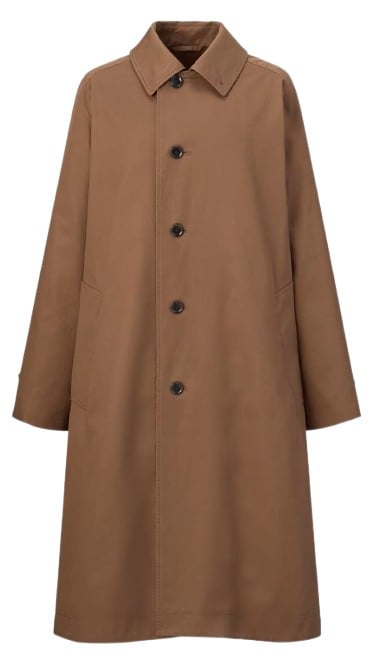
Designed by former Hermès designer Christophe Lemaire, the Uniqlo U overcoat delivers excellent proportions and a modern aesthetic at an unbeatable price. Yes, it’s a synthetic blend rather than pure wool, but the drape is good and it’ll keep you warm in real-world conditions. Not a traditional choice, but practical and stylish for most men.
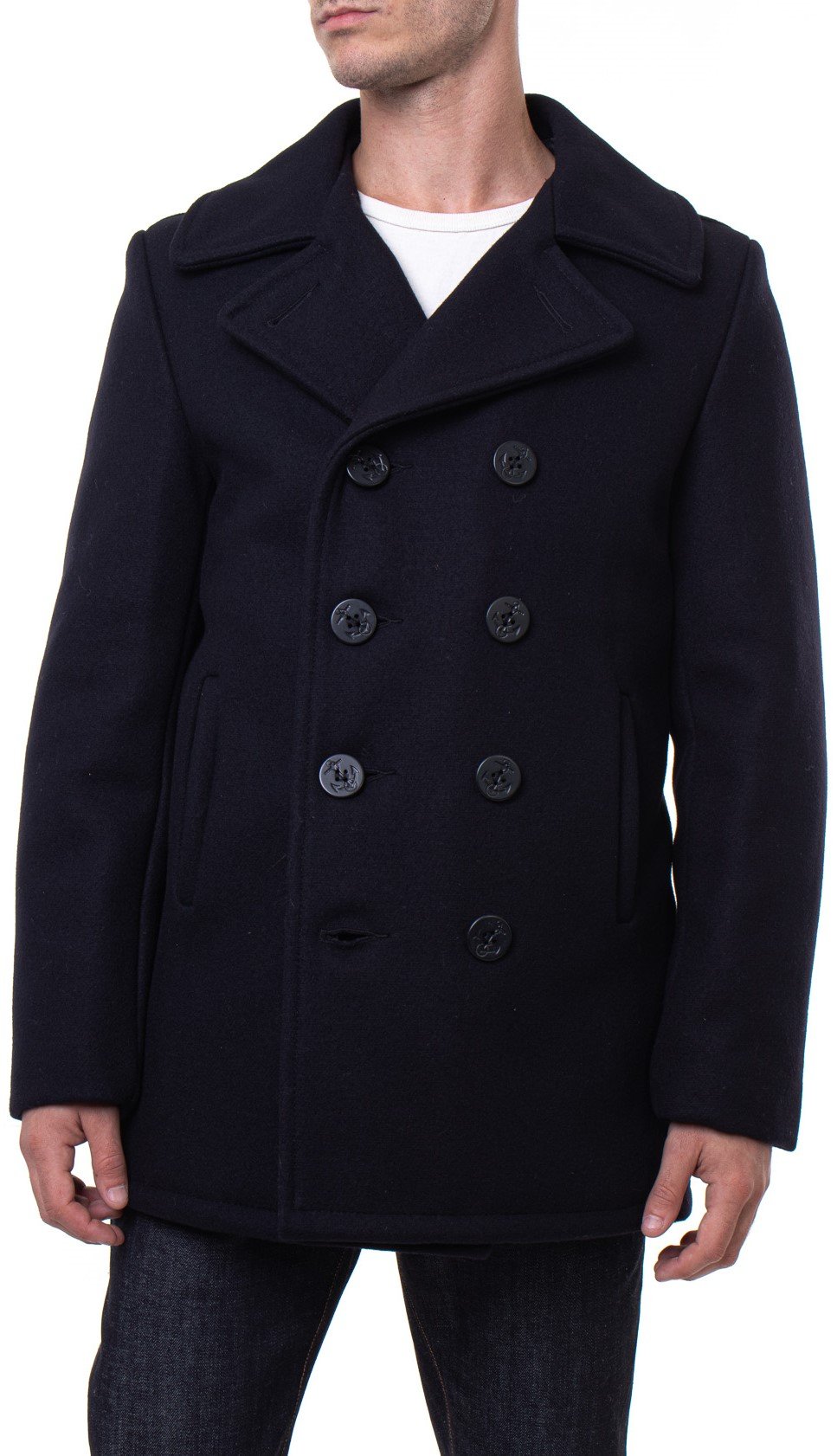
Schott has been making peacoats since 1913, including official US Navy contracts. Their 740N is authentic naval specification: 32 oz Melton wool, proper anchor buttons, correct proportions. While brands like J.Crew charge similar prices for fashion peacoats, this is the real thing at half what “heritage” brands charge.
The Sweet Spot ($300-800)
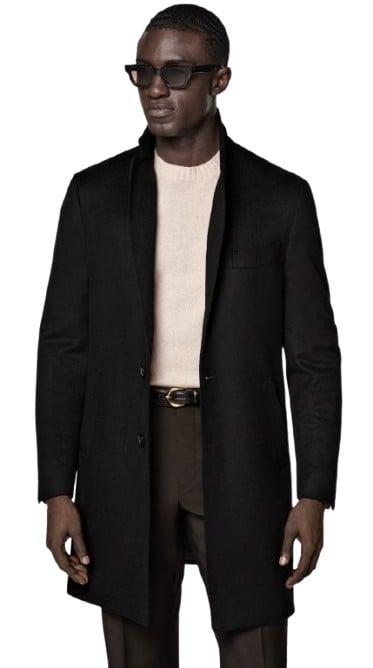
European styling meets accessible pricing. Suitsupply’s topcoats feature quality Italian fabrics, proper construction, and fits that actually work for American body types. They understand tailored clothing, so the topcoat proportions complement suits perfectly. Available in multiple colors and fabrics each season.
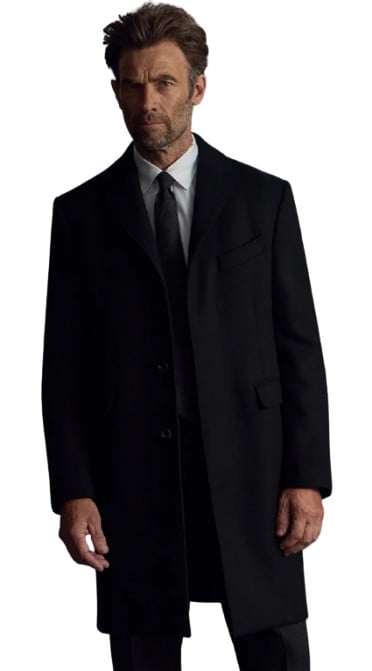
This British brand makes proper overcoats with military heritage credibility—they’ve supplied the British military for decades. Heavy wool, genuine durability, and length that actually protects in cold weather. The aesthetic splits the difference between formal and rugged, making these versatile beyond just extreme cold.
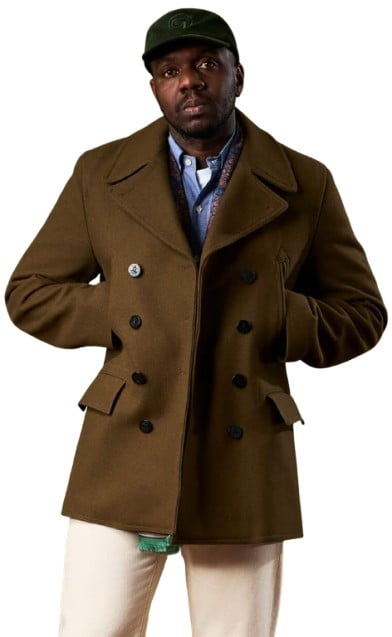
Gloverall has been making peacoats for the British Royal Navy since 1951. Their peacoats are authentic in every detail: proper Melton wool, correct double-breasted configuration, and proportions refined over 70+ years. This is the peacoat every other brand is trying to copy.
The Investment ($800+)
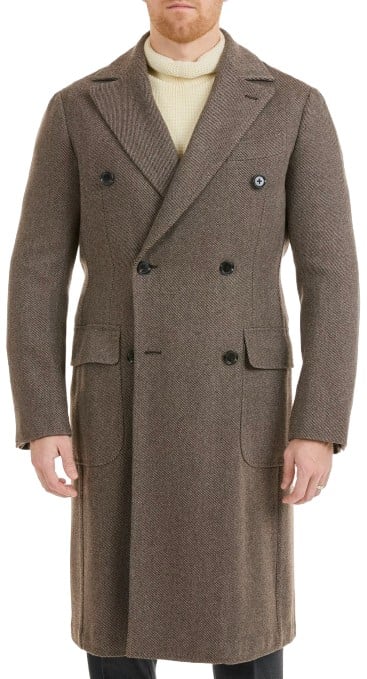
Japanese tailoring houses take coat-making as seriously as suit-making. Ring Jacket’s topcoats are hand-finished, use exceptional fabrics, and will last decades with proper care. The fit is immaculate, the construction is visible in every detail, and the proportions are refined to perfection. Worth saving for if you wear suits regularly.
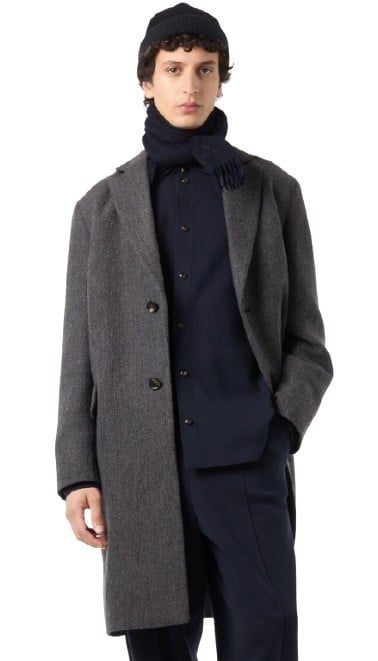
When you want the absolute finest, Loro Piana delivers. Their Storm System fabric is technical yet luxurious, providing weather protection without looking like outerwear. Some styles incorporate vicuña or cashmere for ultimate softness. This is opera-premiere, diplomatic-function, once-in-a-lifetime investment territory.
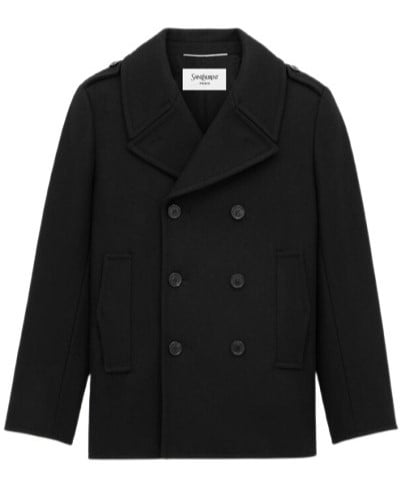
Saint Laurent transforms the military peacoat into high fashion with an extremely slim, modern silhouette and luxury finishing. This isn’t for authenticity seekers—it’s for style-conscious buyers who want the peacoat aesthetic refined to fashion-house standards. Wears more like a tailored jacket than traditional peacoat.
Overcoat vs Topcoat vs Peacoat: Styling and Occasions
Understanding when and how to wear each style matters more than memorizing definitions.
Topcoat Situations
The topcoat is your professional armor. It’s what you wear when you need to arrive looking polished despite weather. Office commutes where you’re wearing a suit underneath. Business travel when you need to go from airport to hotel to meeting. Client dinners where you’ll be checking your coat but want to make a good impression walking in. Job interviews in cold weather. Any situation where the dress code is business professional or business formal.
Style it with: Suits (obviously), dress shoes (oxfords, brogues, Chelsea boots), leather briefcase or professional bag, dress gloves, and a scarf if needed. The entire look should be coordinated and intentional.
Colors that work: Charcoal grey for maximum versatility, camel/tan for American classic style, navy for European elegance. Black works but can feel severe—save it for evening events.
Overcoat Situations
Overcoats serve two distinct purposes. For formal occasions: opera, symphony, formal weddings, diplomatic or high-level business events where you need maximum elegance. The long, dramatic silhouette makes a statement. You’re likely wearing a tuxedo or your finest suit underneath.
For utility: Brutally cold commutes where warmth trumps everything. Weekend errands when you need serious protection but don’t care about professional appearance. Traveling to genuinely cold climates (Scandinavia, Eastern Europe, northern US/Canada in winter). Any time you’re outside for extended periods in freezing temperatures.
Style it with: For formal versions—tuxedos or dark suits, formal shoes, silk scarves, leather gloves. For casual versions—chunky sweaters, jeans, work boots, rugged accessories. These are opposite ends of the spectrum, both valid.
Colors that work: Black for formal evening overcoats. Navy for versatility between formal and casual. Charcoal or grey for casual overcoats with workwear aesthetics. Avoid camel in overcoats—the length makes it overwhelming.
Peacoat Situations
Peacoats are weekend warriors. They’re too distinctive and casual for conservative business environments but perfect for everything else. Weekend city exploring. Casual dates. Coffee shop working sessions. College campuses (peacoats are preppy staples). Sailing or waterfront activities. Holiday shopping. Brewery visits. Anywhere you’d wear nice jeans or chinos but not a suit.
Style it with: Jeans (this is the natural pairing), chinos, sweaters, oxford shirts, boots (Chelsea, chukka, or work boots), casual scarves, watch caps or beanies. The aesthetic should lean into the military-nautical heritage.
Colors that work: Navy is non-negotiable for your first peacoat—it’s THE peacoat color. Charcoal works as a second option if you want something different. Avoid black (tries too hard), tan (reads costume-y), or any other colors (you’re not in prep school anymore).
Modern Length and Fit Considerations
Just as the slim-fit era ended for pants, coat silhouettes have evolved in the 2020s.
For Topcoats: The current sweet spot is a relaxed but still tailored fit. Avoid the ultra-slim topcoats from the 2010s that required size-up struggles—they date badly and don’t allow for proper layering. Modern topcoats have slightly softer shoulders, a touch more room in the body (but still defined waist suppression), and sleeves that don’t cling. Think Italian rather than British cutting. Length remains consistent—at or just above the knee works for most men, preserving suit proportions.
For Overcoats: Length is experiencing a renaissance—longer coats are back after years of everything trending shorter. Mid-calf overcoats no longer look costume-y; they look intentional and elegant. The fit should be relaxed through the body with proper room for layering, but not so oversized that you look like you’re wearing your father’s coat. Clean shoulders (not too wide, not too narrow) and sleeves that show about an inch of shirt cuff create the right proportions.
For Peacoats: The biggest mistake is buying peacoats too slim. Peacoats should have their traditional boxy, structured fit—when brands make them too fitted, they lose the military aesthetic that makes them distinctive. The current preference leans slightly boxier than 2010s fashion peacoats, embracing the authentic naval proportions. Length should hit mid-thigh for proper peacoat proportions; anything shorter looks like a jacket, anything longer looks confused.
Topcoat vs Overcoat: Final Verdict
| Priority | What Matters Most |
|---|---|
| Buy for your actual weather. Mild winters need topcoats. Brutal winters need overcoats. Don’t buy what looks cool online. | |
| Daily suit-wearing = topcoat essential. Casual lifestyle = peacoat more useful. Long winter walks = overcoat justified. | |
| If it fits well over your actual clothes and suits your needs, the label doesn’t matter. Trust measurements, not names. | |
| A good coat lasts 10-20 years. Spending $500-800 on the right coat beats buying $200 coats every 3 years. |
So does the distinction between topcoats and overcoats actually matter? Yes and no.
It matters when you’re making purchase decisions and need to understand what you’re actually buying. It matters when evaluating whether a coat serves your climate and lifestyle needs. It matters when you’re trying to explain to a tailor what you want or researching styles online.
It doesn’t matter when you’ve found a coat that fits perfectly, works with your wardrobe, matches your climate, and falls within your budget. It doesn’t matter when brands have already given up on accurate labeling. It doesn’t matter in day-to-day life when you’re just trying to stay warm and look good.
What You Actually Need
Most men in moderate-to-cold climates need one good topcoat or mid-weight coat that handles the bulk of fall and winter. This is your 35-50°F workhorse. If you wear suits regularly for work, make it a proper topcoat. If your life is more casual, a peacoat or shorter overcoat works better.
If you experience genuine cold (below 35°F regularly) or attend formal events, add a proper overcoat. This might take years to justify—don’t rush it. But when you need it, nothing else works.
Skip the peacoat unless you genuinely love the aesthetic. It’s the most style-specific option, which makes it the hardest to justify if you’re building a minimal coat wardrobe. But if you love the look and have the budget, peacoats are incredibly satisfying to own and wear.
The Investment Strategy
Start with one excellent coat that matches your primary need. For most men, that’s a charcoal or camel topcoat in the $400-600 range. Wear it for two years. Evaluate whether you need additional options based on actual experience, not theoretical scenarios. Maybe you discover you need something warmer. Maybe you realize you never wear suits and should have bought a peacoat instead.
Real-world use teaches you what gaps exist.
Then add strategically: a second coat in a different color if your first is well-worn, a heavier option if you’re consistently cold, a peacoat if casual weekends dominate your life. Building a coat collection takes years, and that’s fine. Quality over quantity always wins with outerwear.
The topcoat-versus-overcoat debate is interesting from a menswear history perspective, and understanding the distinctions helps you shop more effectively. But in your actual wardrobe decisions, focus on climate match, lifestyle reality, and proper fit over terminology. The best coat is the one that keeps you warm, makes you look good, and actually gets worn—regardless of what the label calls it.

The editorial team at FashionBeans is your trusted partner in redefining modern men’s style. Established in 2007, FashionBeans has evolved into a leading authority in men’s fashion, with millions of readers seeking practical advice, expert insights, and real-world inspiration for curating their wardrobe and lifestyle.
Our editorial team combines over 50 years of collective experience in fashion journalism, styling, and retail. Each editor brings specialized expertise—from luxury fashion and sustainable style to the latest grooming technology and fragrance science. With backgrounds ranging from GQ and Esquire to personal styling for celebrities, our team ensures every recommendation comes from a place of deep industry knowledge.
Disclaimer: This story is auto-aggregated by a computer program and has not been created or edited by menshealthfits.
Publisher: Source link
Publisher: Source link