




ED Pills and Nitrates: Why the Combination Is Dangerous
Oct 22, 2026Fashion & Style
Why the Levi’s 501 Fit Feels So Different on Everyone
- Jan 8, 2026
- 0 Comments
792
We independently evaluate all recommended products and services. Any products or services put forward appear in no particular order. if you click on links we provide, we may receive compensation.
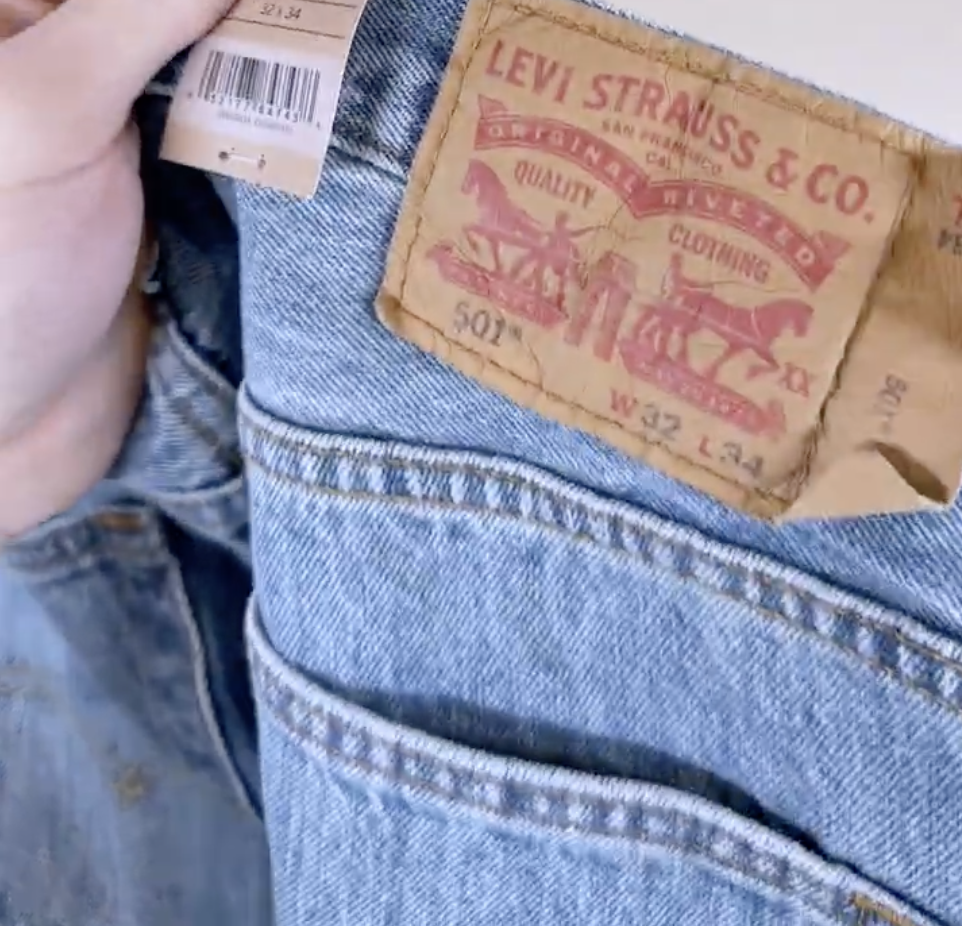
The Levi’s 501 is treated like a universal classic, but its fit is far more specific than most people realize. This guide breaks down how the 501 actually wears, using clear, technical markers instead of nostalgia or brand shorthand. We’ll look at rise height, seat and thigh ease, leg shape, and how fabric choice affects the feel—so you can judge whether the 501 block suits your build before comparing it to other Levi’s fits or settling on a wash.
Throughout this guide, fit refers to the top block: waist, rise, seat, and thigh. Style describes the leg shape below that point—straight, slim, tapered, or athletic. The 501 is Levi’s original at-waist, straight-leg jean, built with a regular seat and thigh and finished with a button fly, a combination that behaves very differently on different body types.
Levi’s 501: Fit Overview
The 501 is a straight-leg jean with an at-waist rise, a regular seat and thigh, and a button fly. It is the reference block for many other Levi’s fits, and almost every comparison (501 vs 505, 501 vs 511, 501 vs 514, and so on) is really a question about how other models differ from this pattern.
| Attribute | Levi’s 501 Original Fit | Relative Notes |
|---|---|---|
| Fit type | Original / regular fit | Regular seat and thigh, straight leg |
| Rise position | At waist | Higher than 502/511/512/513/514 |
| Seat | Regular, with depth | More depth than 511/512/513/514; similar or less than 541 |
| Thigh | Regular | More room than 511/512/513/514; less than relaxed fits |
| Knee | Straight | Similar width to opening; no taper |
| Leg opening | Straight | Wider than 511/512/513/514; similar to 505/514 |
| Leg shape | Straight from knee to hem | No narrowing; vertical line over footwear |
| Fly | Button fly | Structural difference from zipper models |
| Common fabrics | Rigid, stretch, selvedge, STF | Block is the same; fabric changes drape and shrinkage |
Top-Block Fit Analysis
When it comes to jeans, the top block does the real work. Waist, rise, seat, and thigh determine whether a pair fits your body at all. Everything below that point is secondary. The Levi’s 501 lives or dies by its at-waist rise, deeper seat, and regular thigh; get those right, and the straight leg becomes a deliberate style decision rather than a compromise.
Waist and Rise
- Rise height: The 501 uses an at-waist rise. The waistband sits at or very close to the natural waistline on most body types.
- Front rise: Higher than most modern slim and tapered fits, which allows more room between waistband and crotch.
- Rear rise: Deeper than 511/512/513/514/502; this provides more coverage and support around the seat.
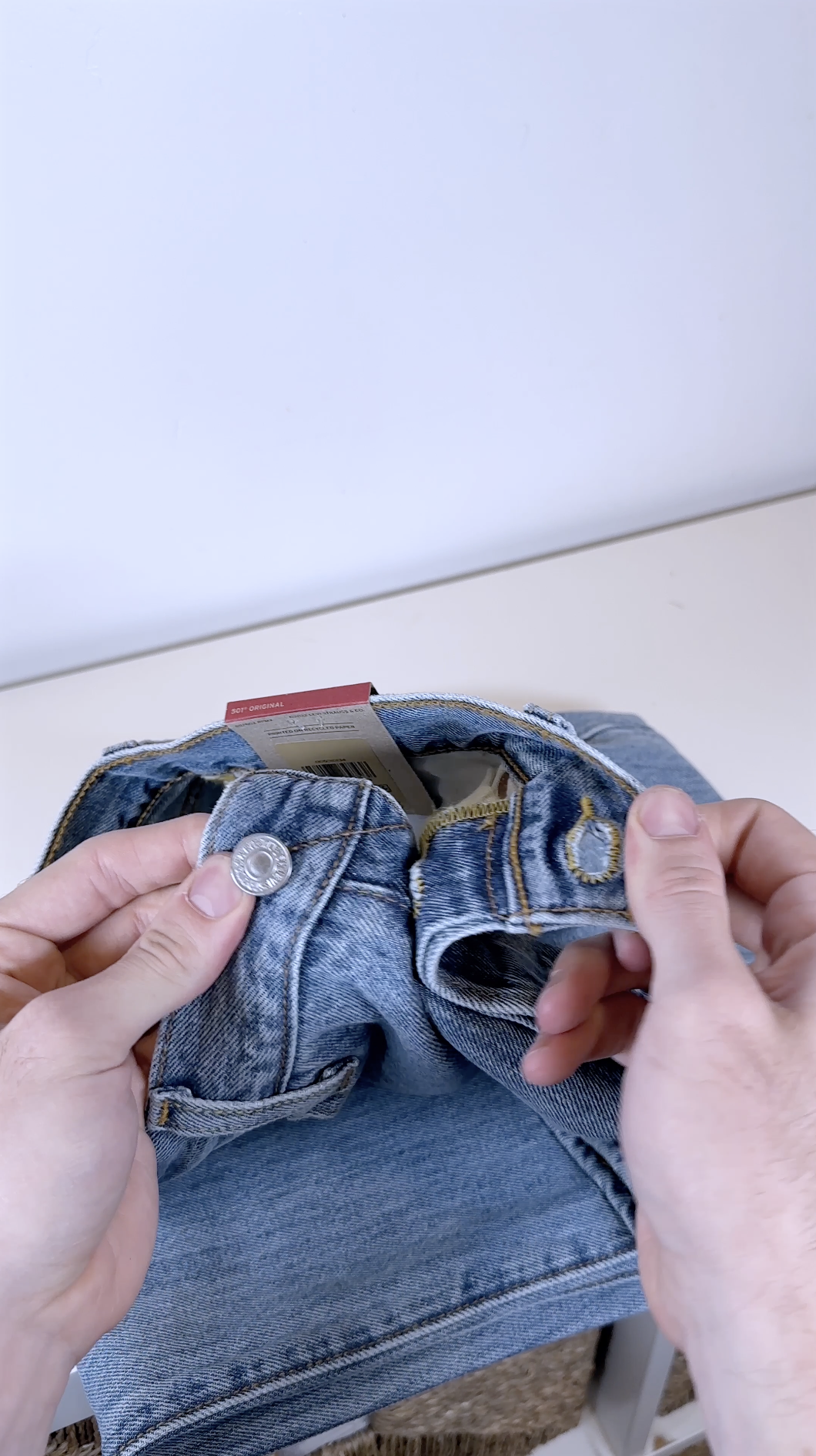
- Fly structure: The button fly influences how the front rise feels and adds structure to the rise area.
- Sizing rule: Choose the tagged waist that closes comfortably without digging and without relying on a belt to hold the jeans up. Do not size down.
Seat
- The 501 seat is regular, with noticeable depth compared to most lower-rise, slim fits.
- This depth supports fuller glutes and hips without pulling or creating hard tension lines under the back pockets.
- On flatter seats, the 501 can leave some extra fabric if the waist is sized too large; correct waist sizing is important.
- The deeper seat helps the waistband stay level when sitting or bending, rather than dipping at the back.
Thigh
- The thigh is regular, not slim and not relaxed.
- There is more room than in 511, 512, 513, and 514, which makes the 501 friendlier to average and muscular thighs.
- There is less room than in explicitly relaxed or loose fits, so the leg still follows the body instead of ballooning outward.
- Proper thigh ease means fabric sits smoothly without pulling over the front of the quads or bunching excessively at the inner thigh.
Leg Shape: Straight from Knee to Hem
The 501’s leg is genuinely straight, with the knee and hem cut at almost the same width. As a result, the silhouette carries straight down without narrowing through the calf or ankle.
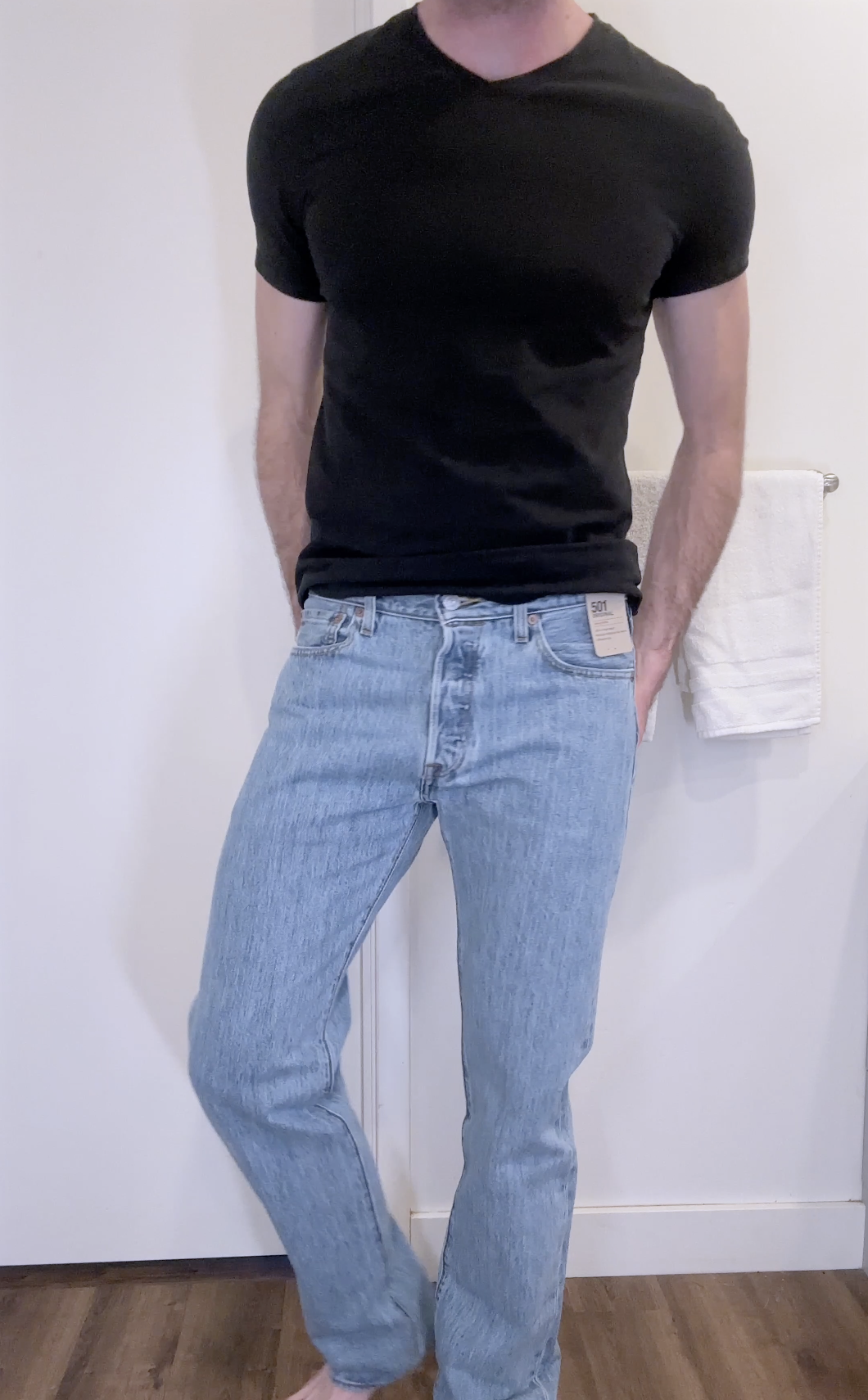
- Knee and opening relationship: Knee width ? leg opening width; this creates a true straight profile.
- Visual effect: The leg falls in a simple vertical line over shoes or boots when the inseam is correct.
- Footwear compatibility: The opening comfortably covers most casual footwear, including chunkier sneakers and boots, without gripping the ankle.
- Stacking and break: If the inseam is slightly long, the fabric stacks in wider folds, not tight stacks, due to the straight opening.
Fabric, Weight and Stretch Variants
The 501 pattern is consistent across Levi’s various fabrics and constructions. The underlying block remains largely unchanged, but differences in weight, stretch, and shrinkage meaningfully affect how the jean feels on the body and how it evolves over time.
Rigid 501
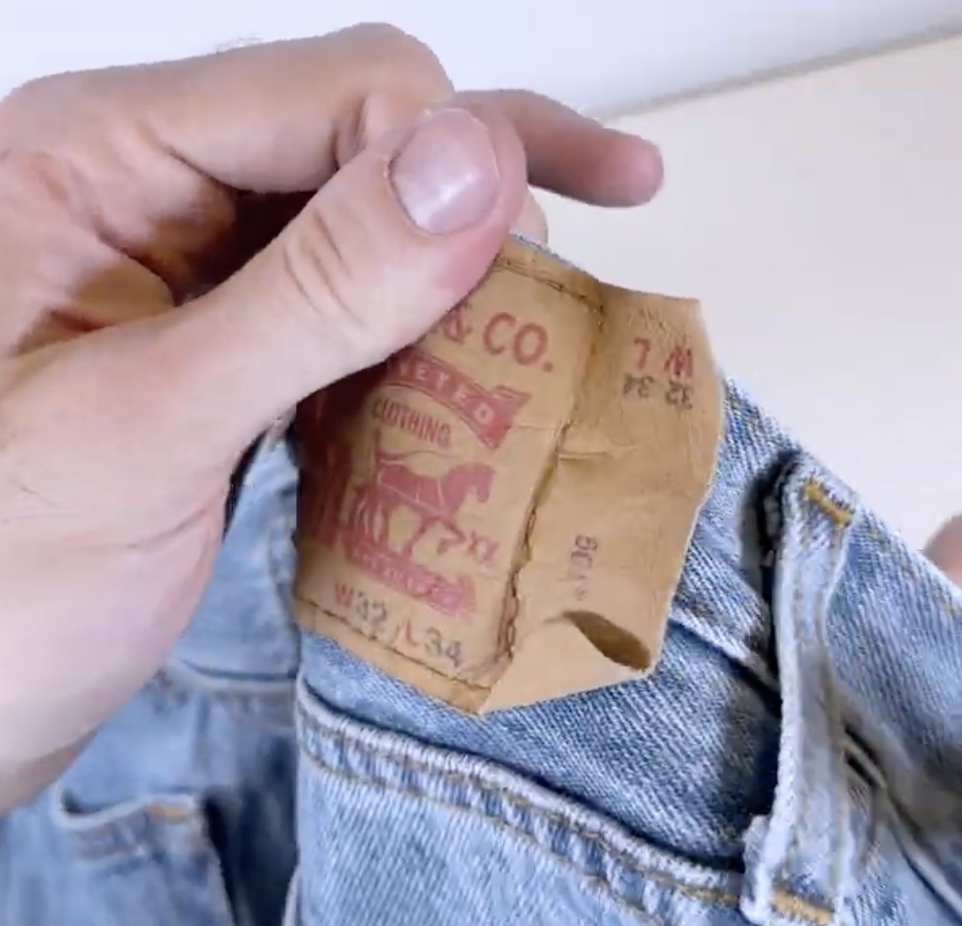
- Traditional expression of the 501: non-stretch denim with a firm hand.
- Shows the underlying pattern clearly; there is little initial give.
- Break-in takes time, with the denim gradually conforming to the seat, thigh and knee.
- Vertical fading and whiskering follow the natural stress points of the block.
Stretch 501
- Modern 501 runs often include a small percentage of elastane.
- Stretch improves comfort at the thigh and seat, especially for average or slightly fuller builds.
- The waistband and knees can relax modestly after repeated wear.
- Despite stretch, the 501 still feels more regular than slim, thanks to its block geometry.
Selvedge 501
- Selvedge versions commonly use heavier, denser denims from shuttle looms.
- Hardware, pocket-bag fabric, and stitching can be upgraded compared with mass-market 501s.
- The pattern is still 501; the difference lies in rigidity, drape, and fade behavior.
501 Shrink-to-Fit (STF)
- STF 501s are designed to shrink with an initial soak or wash.
- Shrinkage affects waist, rise, seat, thigh, and inseam, with the final fit depending on soak temperature and drying method.
- After shrinkage, the jeans gradually mold to the wearer’s body, forming pronounced creases and fades.
- Because STF has its own behavior pattern, buyers should consult specific shrink-to-fit guidance in addition to this general 501 fit guide.
How Levi’s 501 Fits by Body Type
Using the FashionBeans body-type framework (rise, colour, shape, break), the 501 can be mapped onto different builds based on measurable traits and structural needs.
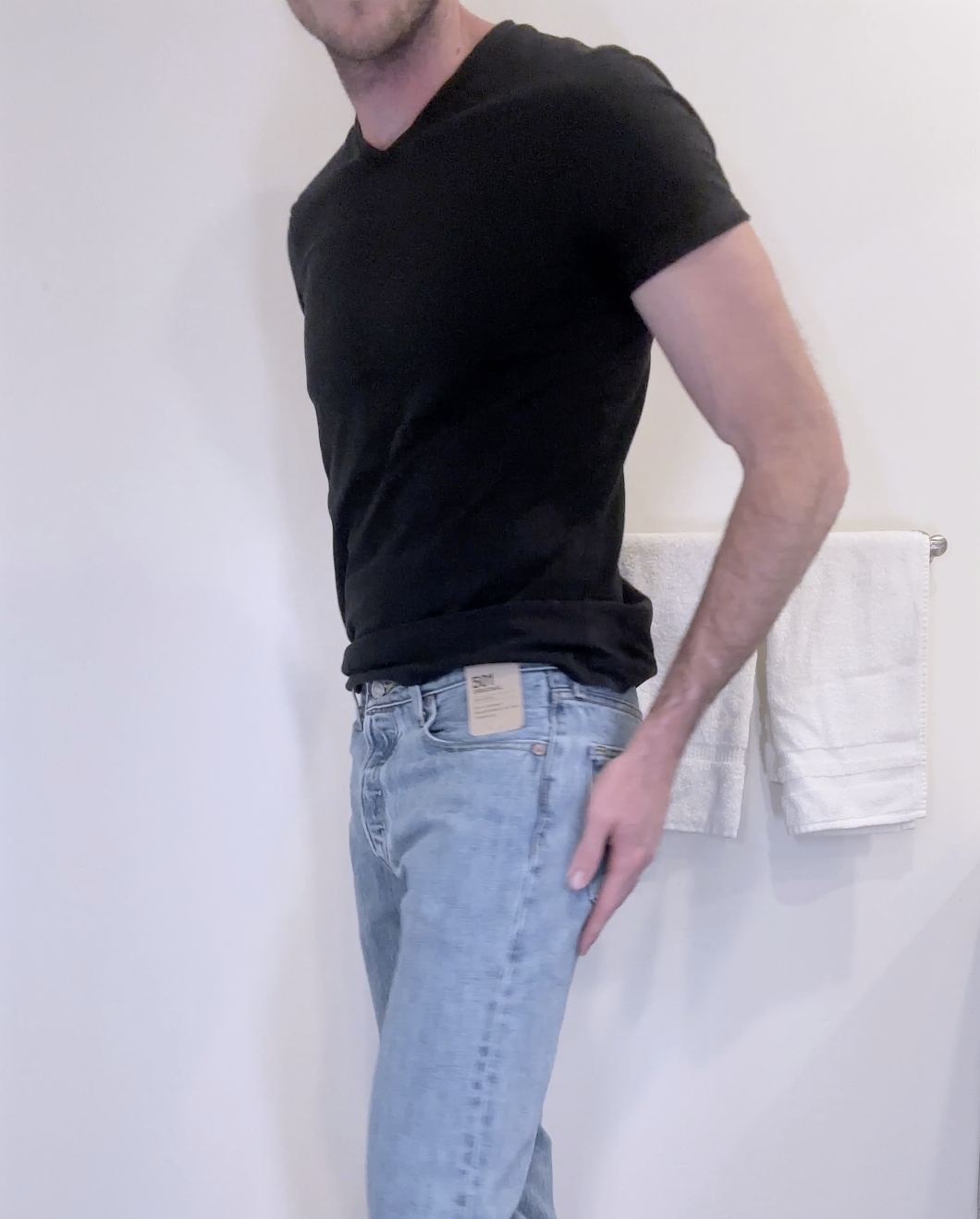
Slim Legs
Average Build
- The 501 is a strong match for average proportions.
- Rise height, seat depth, and thigh ease align well with balanced torso-to-leg ratios.
- The straight leg works as a reliable everyday shape for casual outfits and simple smart-casual combinations.
Muscular Thighs / Athletic Build
- The regular thigh and deeper seat handle muscular legs better than the 511/512/513/514 family.
- Quads and hamstrings have more space, which reduces strain lines at the front and back of the thigh.
- For very large thighs and a strong seat, the 541 athletic taper can still offer more room and a tapered leg, but many athletic builds can use the 501 comfortably.
Bigger Men / Larger Midsection
- The at-waist rise and deeper rear rise provide structural stability for bigger men.
- The waistband sits higher, which can distribute weight more evenly and reduce rolling.
- The straight leg balances larger upper bodies without narrowing too aggressively at the ankle.
Taller Men
- Tall men benefit from the 501’s straight profile, which drapes cleanly when the inseam is correct.
- The larger opening pairs well with boots and substantial footwear, keeping proportions balanced.
- Excess inseam length creates broader, softer stacks rather than tight folds because the hem is not narrow.
Shorter Men
- Shorter men can wear the 501 successfully if the inseam is tailored to avoid large pools of fabric at the ankle.
- A straight leg with minimal stacking helps keep lines clean.
- Men who want more taper to reduce visual width at the hem may prefer 512 or 502.
Flat vs Full Seat
- Full seat: The 501’s deeper rear rise and regular seat handle fuller glutes well and reduce strain between waistband and thigh.
- Flat seat: The same depth can produce slight folding beneath the pockets if the waist is too loose; a precise waist size is important to keep the seat clean.
Break-In, Shrinkage and Long-Term Behavior
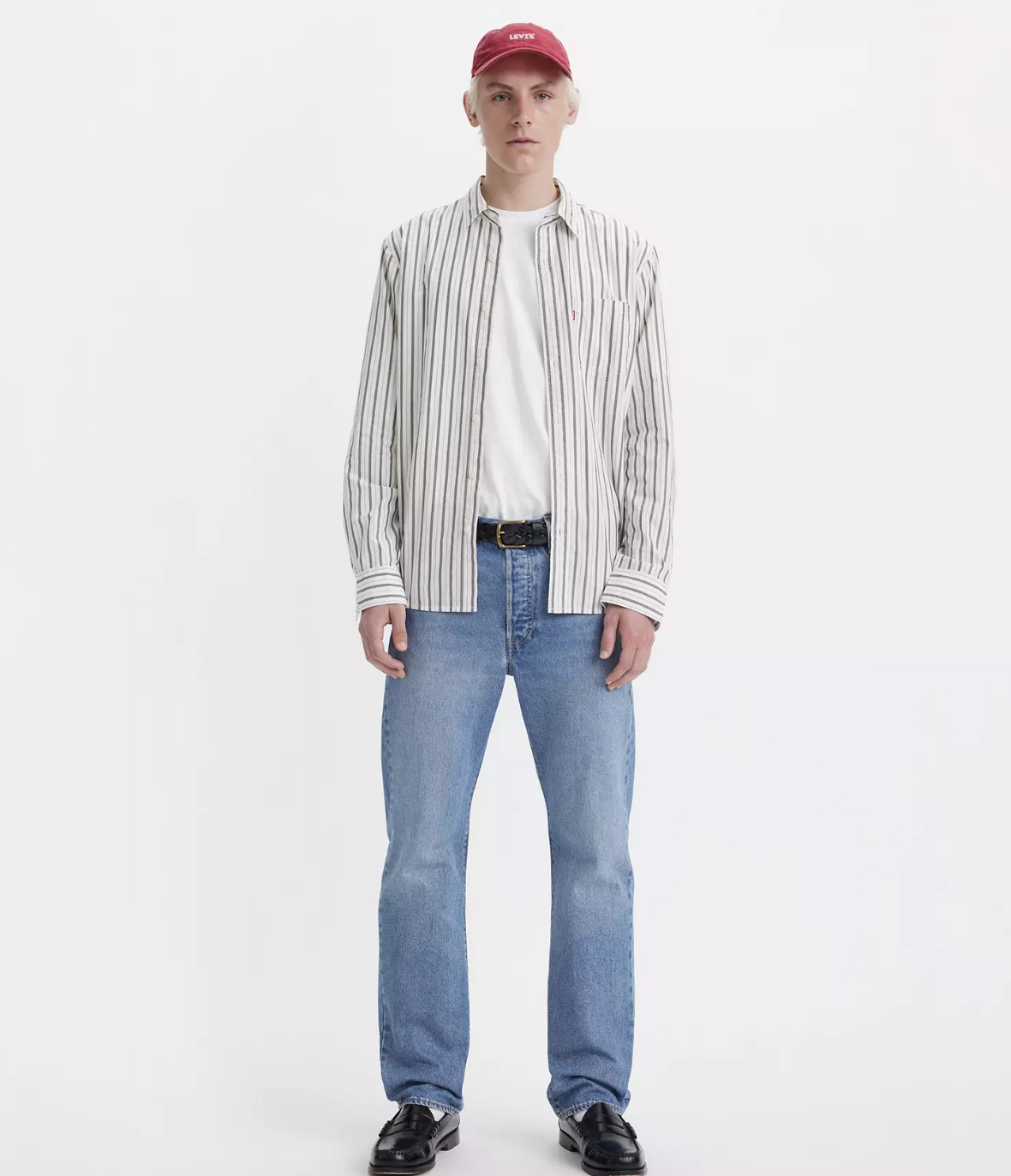
- Rigid 501: feels firm at first, softens with regular wear, and develops clear whiskers, honeycombs, and vertical fades that reflect the block geometry.
- Stretch 501: is comfortable from day one and relaxes modestly at the waistband and behind the knees, while staying structurally regular rather than slim.
- STF 501: shrinks after the first soak or wash, then slowly conforms to the wearer’s body, producing strong shape retention around the seat and thigh.
- Heavier weights: resist knee bagging better than lighter denims and keep the straight leg looking consistent over time.
Common Levi’s 501 Fit Questions
How do Levi’s 501 fit?
They sit at the waist, have a regular seat and thigh, and fall straight from knee to hem with a button fly and a structured top block.
Are Levi’s 501 baggy?
They are regular fit, not relaxed. They appear baggy only when sized too large in the waist and top block, or when compared directly to slim or skinny fits.
Do Levi’s 501 stretch?
Stretch 501s relax modestly at the waistband and knees. Rigid 501s soften and form to the body but do not expand dramatically beyond their original measurements.
What is Levi’s 501 Original Fit?
It is an at-waist, regular seat and thigh, straight-leg jean with a button fly. This is Levi’s core men’s pattern and the reference point for many other fits.
How do 501s compare to slimmer fits like 511 or 512?
The 501 has a higher rise, more seat depth, more thigh room, and a straight leg. The 511 and 512 have lower rises, slimmer top blocks, and tapered legs.
Comparison to Adjacent Levi’s Fits
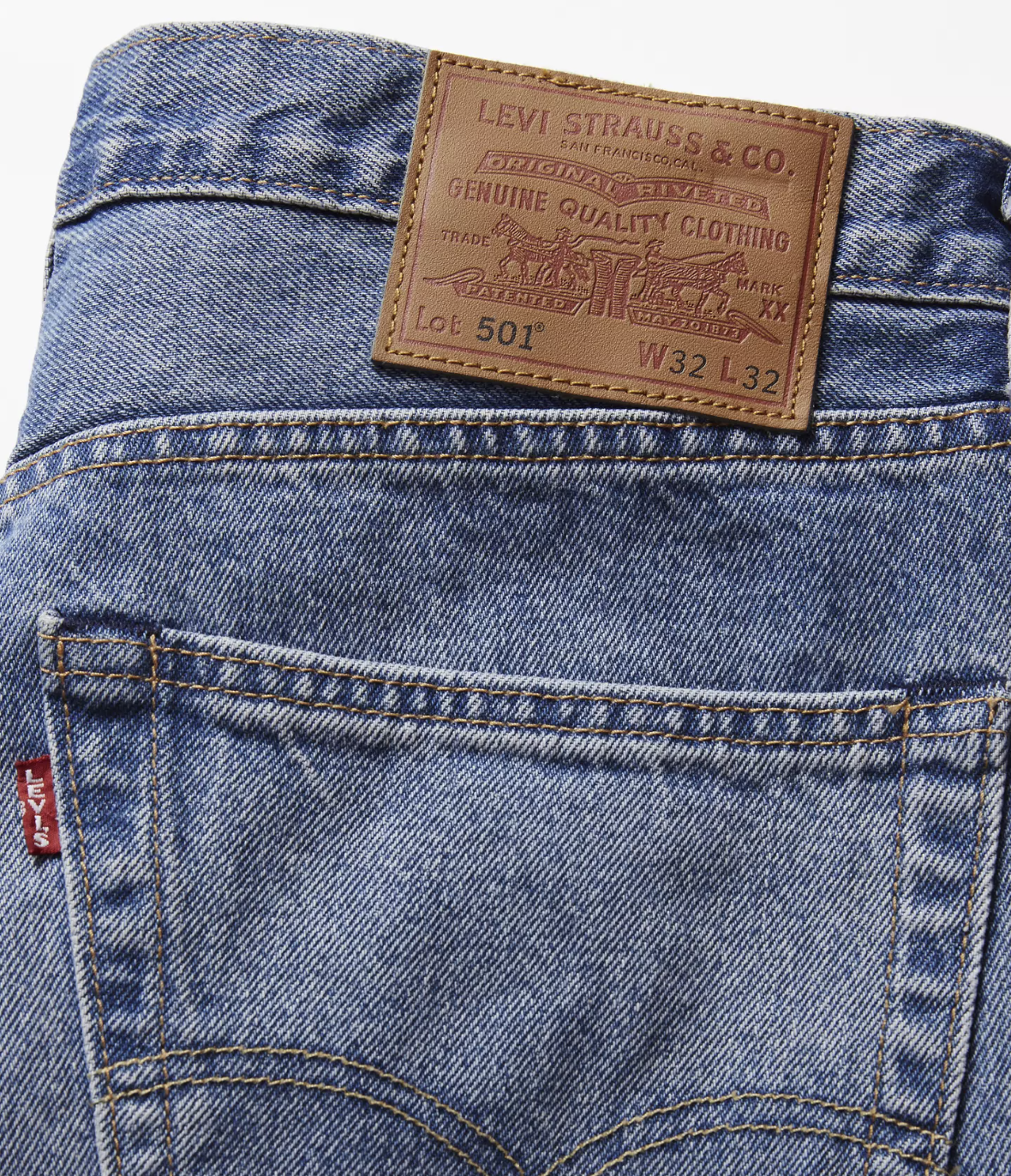
501 vs 505
- 501: at-waist rise, button fly, straight leg.
- 505: below-waist rise, zipper fly, straight leg with a slightly different hip line.
501 vs 514
- 501: higher rise, deeper seat.
- 514: lower rise, modern straight leg, less seat depth.
501 vs 511
- 501: regular top block, straight leg.
- 511: slim top block, mild taper, narrower thigh and opening.
501 vs 512
- 501: straight leg with a larger opening.
- 512: slim top block with a strong taper and narrower hem.
501 vs 502
- 501: straight from knee to hem.
- 502: regular thigh with a taper for a narrower opening.
501 vs 541
- 501: regular seat and thigh with straight leg.
- 541: deeper seat and fuller thigh with an athletic taper and narrower hem.
Who Should Buy Levi’s 501?
- Men who want an at-waist rise with stable, predictable support around the midsection.
- Men with average to fuller thighs and seats who prefer a regular, not slim, fit.
- Men who like a straight leg that works with a wide range of footwear, including boots.
- Men who want a reference fit for comparing other Levi’s models.
Who Should Avoid Levi’s 501?
- Men who prefer low rises and closer-fitting top blocks.
- Men with very slim legs who want a narrow ankle and sharp taper (511, 512, or 502 work better).
- Men who dislike button flies and want only zipper closures.
Verdict
Levi’s 501 is an at-waist, regular-fit, straight-leg jean with a button fly and a balanced top block. It offers a deeper seat and more thigh room than most modern slim and tapered fits while maintaining a clean, simple leg shape. For many men, the 501 remains the most stable and predictable starting point in the Levi’s lineup: once you understand how it fits your body, every “501 vs X” comparison becomes easier to interpret.

The editorial team at FashionBeans is your trusted partner in redefining modern men’s style. Established in 2007, FashionBeans has evolved into a leading authority in men’s fashion, with millions of readers seeking practical advice, expert insights, and real-world inspiration for curating their wardrobe and lifestyle.
Our editorial team combines over 50 years of collective experience in fashion journalism, styling, and retail. Each editor brings specialized expertise—from luxury fashion and sustainable style to the latest grooming technology and fragrance science. With backgrounds ranging from GQ and Esquire to personal styling for celebrities, our team ensures every recommendation comes from a place of deep industry knowledge.
Disclaimer: This story is auto-aggregated by a computer program and has not been created or edited by menshealthfits.
Publisher: Source link
Publisher: Source link