




ED Pills and Nitrates: Why the Combination Is Dangerous
Oct 22, 2026Fashion & Style
Levi’s Fits Explained for Anyone Choosing Between Core Fits
- Dec 18, 2025
- 0 Comments
3353
We independently evaluate all recommended products and services. Any products or services put forward appear in no particular order. if you click on links we provide, we may receive compensation.
Levi’s jeans are defined by specific rises, thigh widths, and leg shapes, but the numbers on the tag rarely explain how those differences translate in real wear. Two fits can look interchangeable on a product page yet behave very differently once you factor in top-block structure, leg geometry, and fabric choice. This guide breaks down the entire men’s lineup using clear measurements, technical fit criteria, and body-type context so you can understand what each model is actually designed to do.
Levi’s uses a numbered fit system to indicate how each pattern is drafted through the waist, seat, thigh, knee, and hem. Those numbers represent distinct pattern families rather than minor style variations. While washes, fabric weights, and stretch content change from release to release, the underlying block for each fit remains consistent. That consistency makes it possible to compare models objectively once you understand how the system works.
This page serves as the foundation. It explains every major men’s fit from 501 through 569 using shared technical language and side-by-side measurement ranges. For deeper, model-specific analysis, it links out to dedicated comparison guides such as 511 vs 512 vs 513, 501 vs 505 vs 511 vs 514, and 502 vs 511 vs 512, where each fit is examined in detail.
You’ll also find a complete comparison chart, individual fit guides, fabric and construction notes, and body-type recommendations. Taken together, these resources provide a clear, technical framework for choosing the Levi’s fit that matches your proportions rather than relying on trial and error.
Fit Philosophy: Objective Rules Based on the Top Block
Fit is defined by the top block. The top block includes the waist, front rise, back rise, seat depth, and thigh width.
These measurements determine whether the jeans feel comfortable, stable, and secure.
The leg shape—slim, straight, taper, or relaxed—affects visual appearance but does not change the foundational fit.
Two jeans may both have a slim leg, yet fit entirely differently due to rise height or thigh volume.
In our opinion, the natural waist measurement is the only reliable method for selecting the correct size. Again, personally, we do not recommend sizing down because artificial tension in the top block reduces comfort and moves stress to the seat, crotch, and thigh seams. Once the correct waist is established, consumers can choose the leg shape that matches their preferences.
This guide separates top-block fit from leg shape for every model. Each fit description explains rise category, seat depth, thigh allowance, knee transition, and hem width. It also notes when patterns change significantly in stretch denim versus rigid, or when selvedge or Premium line variants use different weights or construction details.
How the Levi’s Fit Numbering System Works
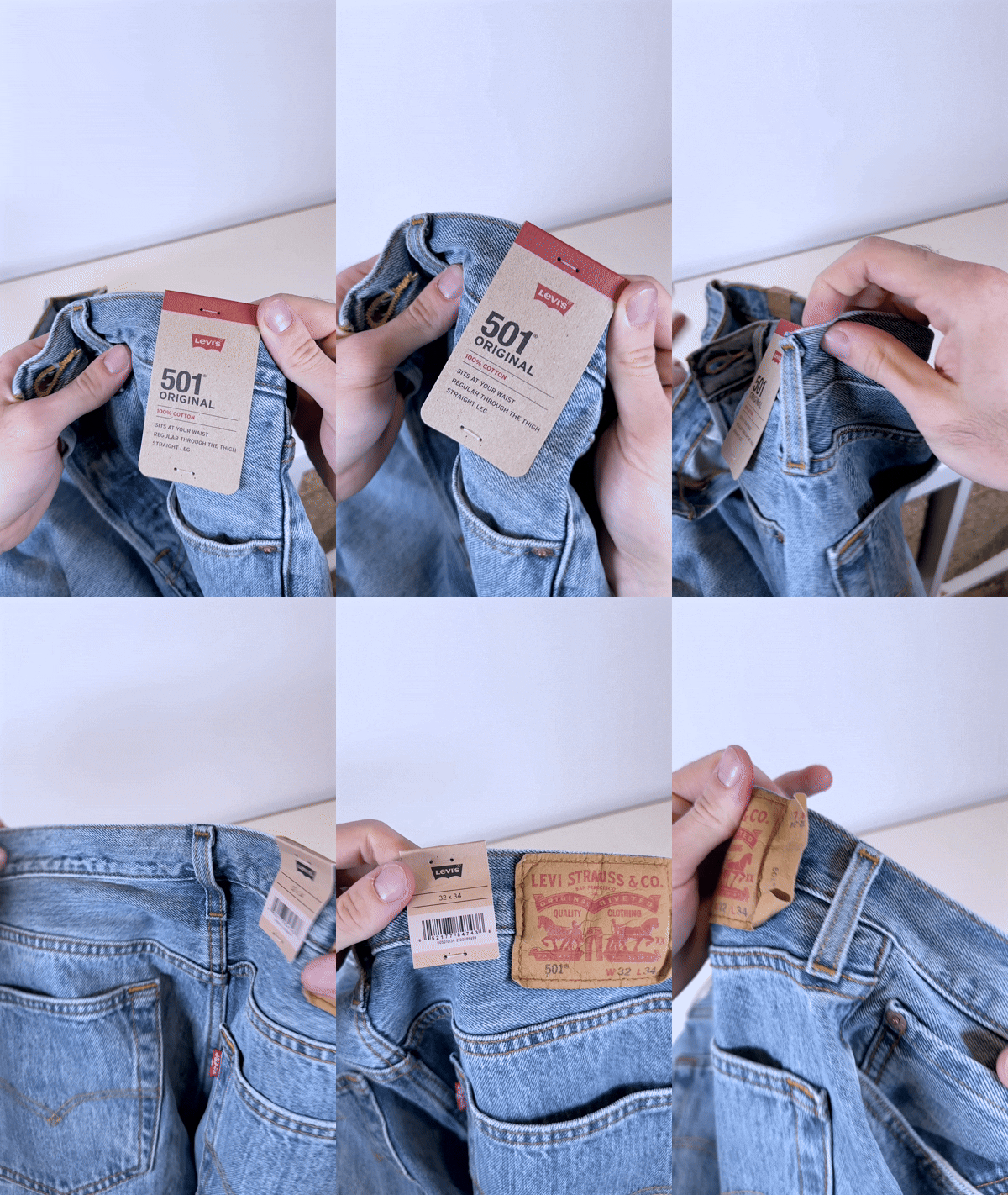
Levi’s assigns numbers to pattern families. These numbers describe the relationship between rise, seat geometry, thigh room, and leg shape. The numbering does not indicate wash, fabric treatment, or season.
For example, the 511 is always a slim fit with a consistent top block, regardless of whether the fabric is rigid, stretch,
selvedge, or a lightweight summer blend.
The major number groups align with the following structural patterns:
- 500 Series (501, 502, 505, 514, 550, 569): Classic and modern straight or relaxed fits with varying rises and thigh allowances.
- 511 Family (511, 512, 513): Slim and slim-adjacent fits with different taper or straight configurations.
- Athletic Fits (531, 541): Patterns designed with increased seat depth and thigh volume while maintaining a taper.
The number identifies the pattern, not the aesthetic. A dark 511 and a light-wash 511 use the same geometry. A 501 shrink-to-fit version uses the same pattern as the non-STF version, but shrinkage changes the post-wash dimensions. Selvedge versions of certain models may use heavier denim or different tension settings, which affects drape but not the underlying fit logic.
What the Numbers Mean in Practical Terms
Queries such as “what does 511 mean,” “what does 502 mean,” or “what is the difference between 511 and 512”
are resolved through structural differences:
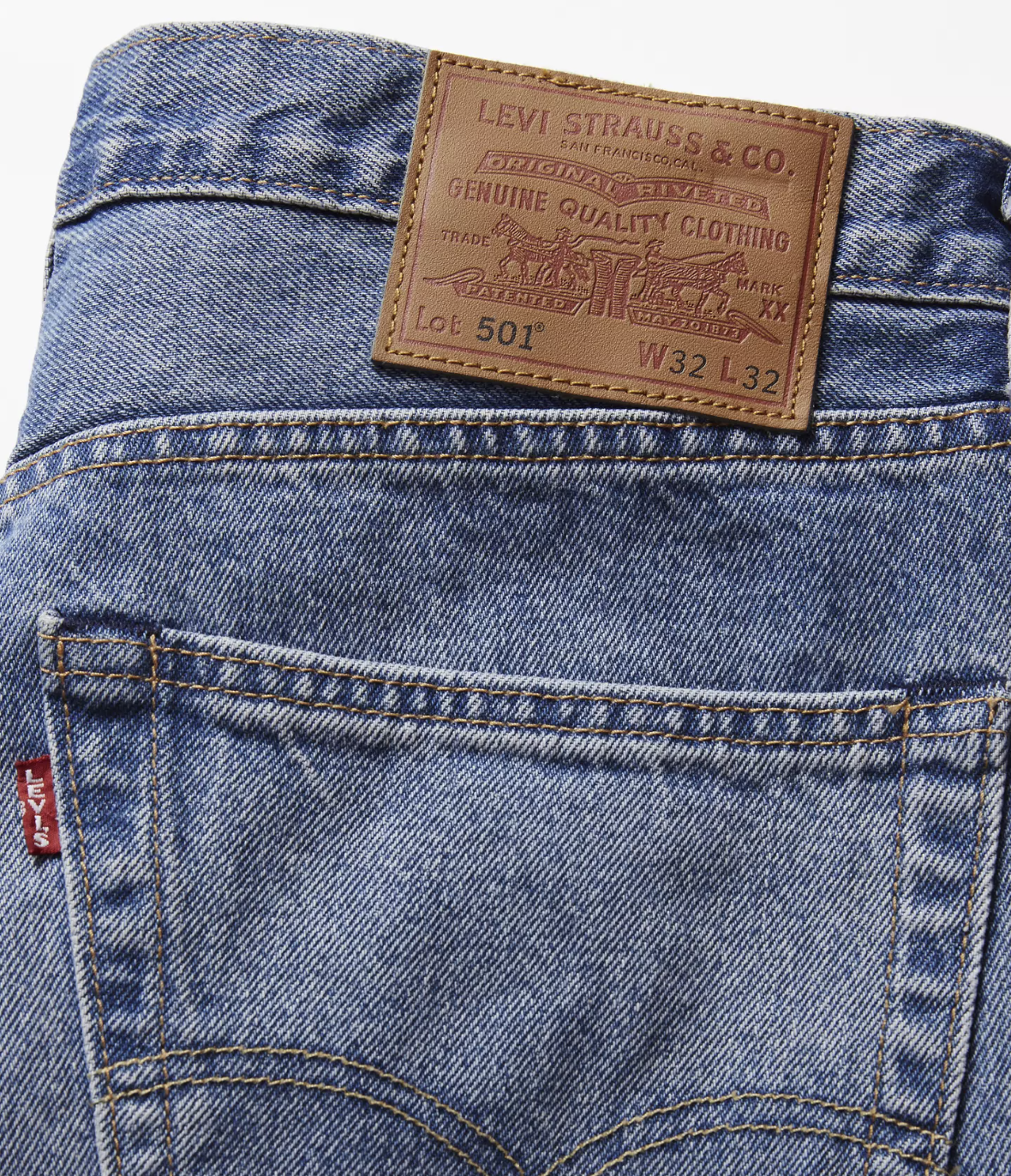
- 501: Original fit with a regular rise, regular thigh, and straight leg.
- 505: Regular rise, more room in the thigh than 501, straight leg.
- 511: Slim top block, slim leg, no taper.
- 512: Same top block as 511, tapered from knee to hem.
- 513: Slim top block, straight leg for a more open hem.
- 502: Regular rise, moderate thigh room, with a tapered leg.
- 541: Increased seat depth and thigh volume for muscular builds, tapered leg.
These structural definitions allow consumers to compare fits on objective terms rather than subjective impressions.
The rest of the guide expands each fit category with detailed measurements, body-type matching, fabric behavior,
and comparison logic.
Master Levi’s Fit Comparison Chart (501–569)
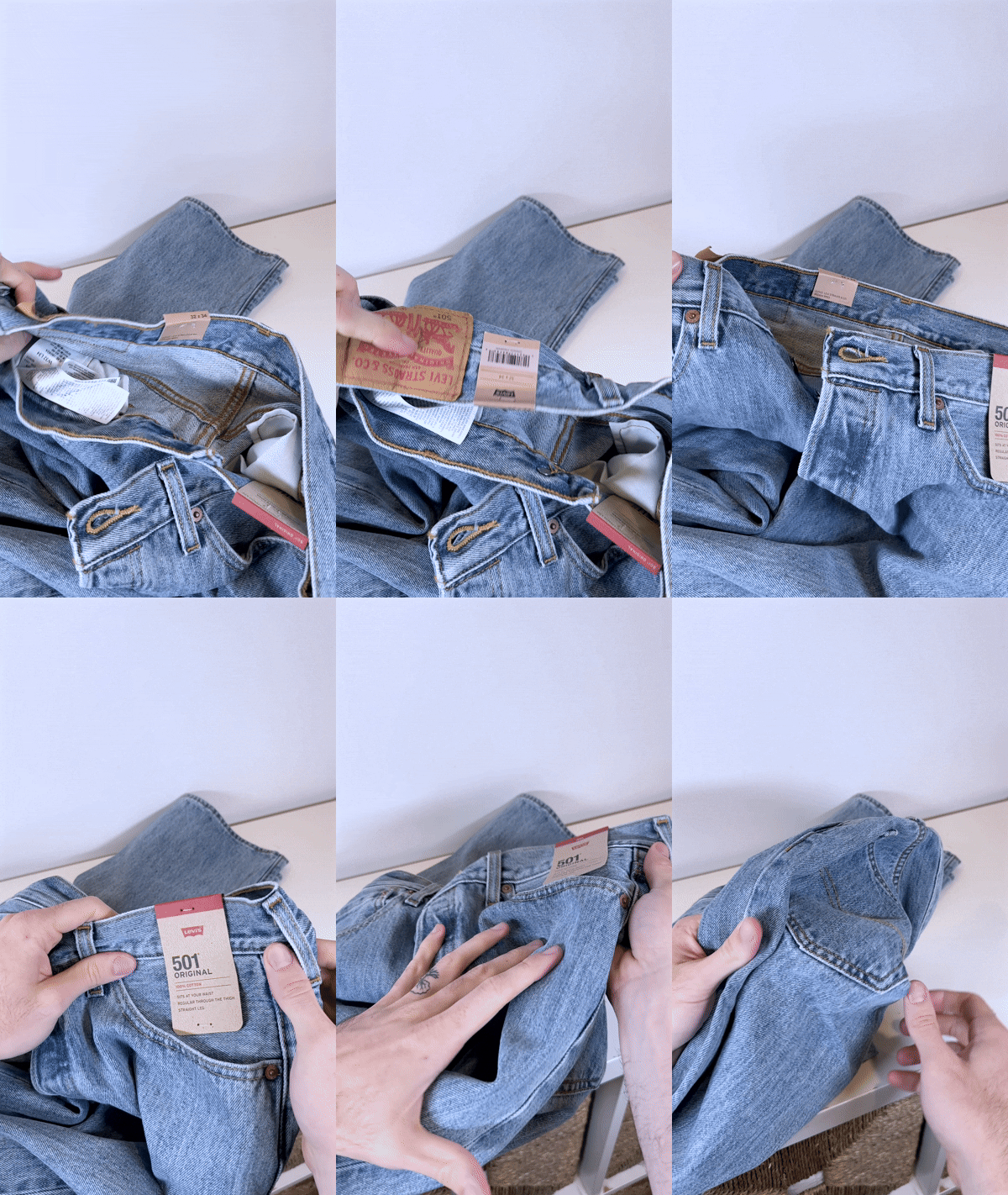
This chart provides a technical overview of Levi’s most common men’s fits and how they differ at the pattern level. It outlines rise height, seat and thigh volume, leg shape, and typical hem width ranges so you can compare models side by side using consistent criteria.
The measurements shown reflect standard ranges across regular production runs rather than one-off factory values. While exact numbers can vary slightly by tagged size, fabric weight, and stretch content, the underlying block for each fit remains stable. For ease of use, the table is formatted to scroll horizontally on mobile devices, allowing all data points to remain visible without sacrificing clarity.
| Fit Number | Rise | Seat / Thigh Volume | Leg Shape | Leg Opening (approx.) | Sits At / Below Waist |
|---|---|---|---|---|---|
| 501 (Original Fit) | Regular rise | Regular thigh | Straight | ~16″ | At waist |
| 502 (Regular Taper) | Regular rise | Regular thigh | Tapered | ~14.5″ | Below waist |
| 505 (Regular Straight) | Regular rise | More room than 501 | Straight | ~16″ | At waist |
| 511 (Slim) | Lower-mid rise | Slim thigh | Straight slim | ~14.5″ | Below waist |
| 512 (Slim Taper) | Lower-mid rise | Slim thigh (same top block as 511) | Tapered | ~12.75″ | Below waist |
| 513 (Slim Straight) | Lower-mid rise | Slim thigh | Straight | ~15.25″ | Below waist |
| 514 (Straight) | Lower-mid rise | Regular thigh | Straight | ~16.5″ | Below waist |
| 531 (Athletic Slim) | Mid rise | More room than 511/512 | Slim leg with gentle taper | ~14.5″ | At or slightly below waist |
| 541 (Athletic Taper) | Mid rise | High thigh volume, deeper seat | Tapered | ~15″ | At waist |
| 550 (Relaxed) | Regular rise | Roomy thigh | Tapered | ~16″ | At waist |
| 569 (Loose Straight) | Lower-mid rise | Full thigh | Straight | ~18″ | Below waist |
This table forms the structural baseline for understanding how each Levi’s model is drafted. It establishes the core measurements that define fit, including rise height, thigh width, and leg geometry. These elements work together to determine how a jean sits on the body and how it moves during wear.
The comparisons that follow build on this foundation by explaining how changes in those measurements affect comfort, proportion, and mobility. For deeper analysis, the individual fit guides expand on construction details, stretch behavior, selvedge options, and body-type suitability, providing the context needed to move from general comparison to precise fit selection.
Technical Glossary of Levi’s Fit Terms
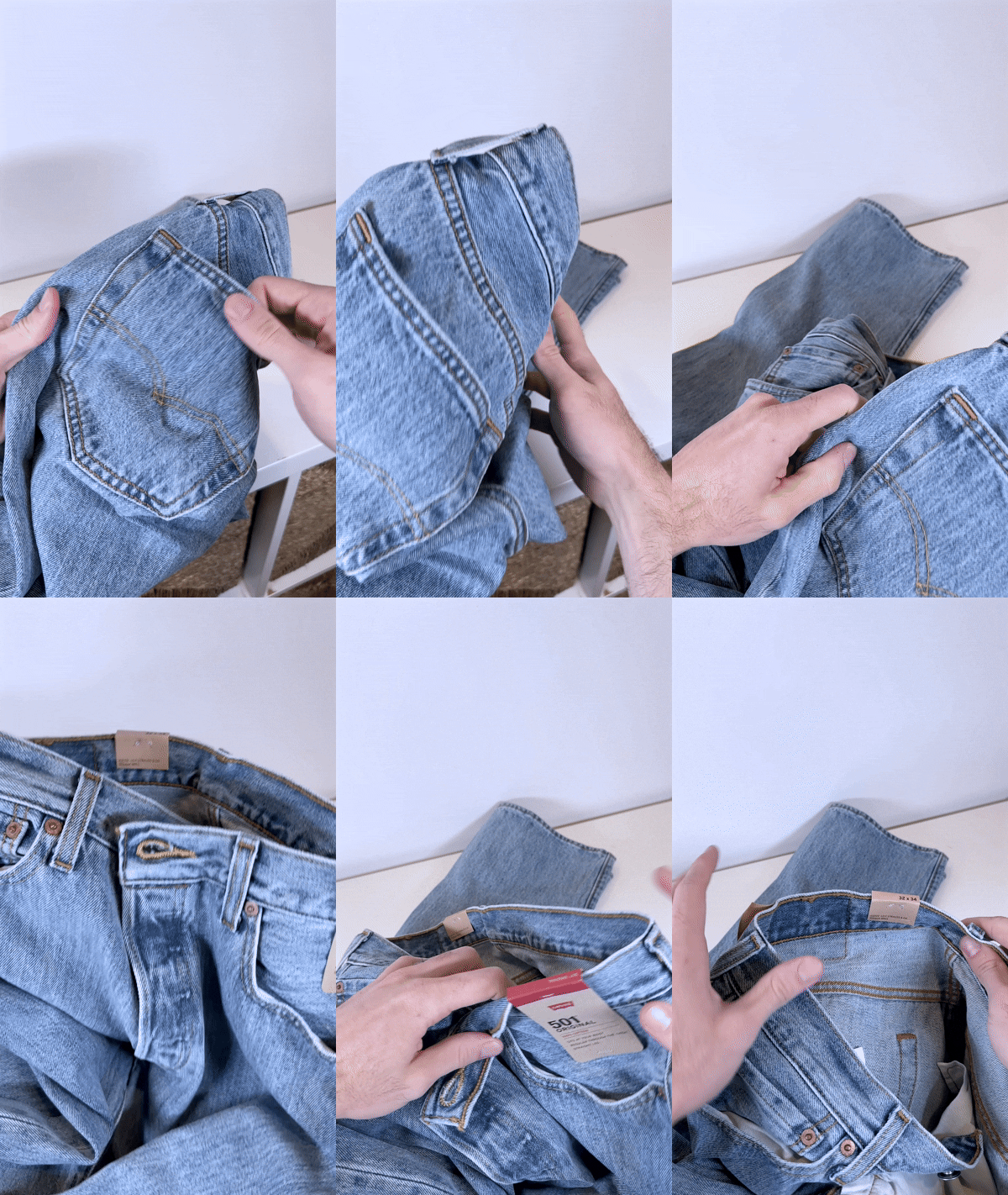
Levi’s uses a consistent set of terms to describe how each fit is drafted through the waist, seat, thigh, knee, and hem. These terms are not marketing language. They describe measurable aspects of the pattern and allow different fits to be compared objectively across the lineup. Understanding this vocabulary makes it possible to evaluate how a jean will behave on the body before you try it on.
Rise
Rise measures the vertical distance from the crotch seam to the top of the waistband. Levi’s typically categorizes rise as low, mid, or regular, though exact measurements vary slightly by model and fabric. Rise determines where the waistband sits in relation to the natural waist and how the top block interacts with the torso.
Higher rises provide greater stability and tend to sit closer to the natural waist. Lower rises sit below the waist and shift how the waistband engages with the hips and pelvis. This change affects comfort, posture, and how the jean feels when seated.
Seat Depth
Seat depth refers to the amount of space created by the rear rise. A deeper seat increases room for the glutes and upper thigh, which improves mobility for individuals with fuller builds. A shallower seat produces a closer fit through the back of the jeans and is better suited to slimmer or straighter body types.
Seat depth plays a significant role in comfort. Insufficient seat depth creates diagonal stress lines and restricts movement, while excessive depth can lead to excess fabric and instability at the waistband.
Thigh Width
Thigh width is measured flat across the upper leg and is one of the primary determinants of comfort. Slim fits reduce thigh width to create a closer profile. Athletic fits increase thigh width to accommodate muscular legs. Straight fits maintain a more consistent width through the upper leg without narrowing aggressively.
Thigh width influences how much tension the fabric experiences during walking and sitting. Even small changes in this measurement can significantly affect long-term comfort, especially in rigid denim.
Knee Width and Leg Opening
Knee width determines how the leg transitions from the thigh toward the hem. Leg opening refers to the circumference of the hem itself. Together, these measurements define whether a fit remains straight, tapers, or opens up.
Straight fits maintain similar measurements at the knee and hem. Tapered fits reduce width from knee to hem. Relaxed fits increase both knee and hem width relative to slim or straight patterns. These dimensions affect how the fabric moves around the lower leg and how the jean breaks over footwear.
Leg Shape
Leg shape describes the overall silhouette of the jeans below the thigh. Common categories include slim, straight, tapered, and loose. Leg shape affects the visual line of the jean but does not change the underlying fit of the top block.
A slim leg narrows through the thigh and knee. A tapered leg narrows more aggressively from knee to hem. A straight leg maintains consistent width throughout. Understanding leg shape helps distinguish style preference from structural fit.
Sits at, Below, or Above the Waist
This terminology describes where the waistband sits relative to the natural waist. “At the waist” indicates the waistband aligns closely with the anatomical waistline. “Below the waist” places the waistband lower on the body and changes how the rise interfaces with the torso. “Above the waist” increases coverage and stability but appears infrequently in modern Levi’s fits.
Where a jean sits affects balance, comfort, and how securely the waistband stays in place during movement.
Rigid Denim
Rigid denim contains no elastane or stretch fibers. It loosens gradually with wear as the cotton fibers respond to movement and body heat. The rate at which rigid denim adapts depends on fabric weight, weave, and finishing.
Rigid denim highlights the underlying pattern more clearly than stretch fabrics. Fits with sufficient seat and thigh room tend to perform better in rigid constructions.
Stretch Denim
Stretch denim incorporates elastane to improve mobility and reduce resistance during movement. The amount of stretch influences how the thigh, seat, and knee areas respond to motion.
Stretch does not alter the pattern itself. Instead, it changes how closely the fabric follows the body and how forgiving the fit feels, particularly in slimmer cuts.
Selvedge Denim
Selvedge denim is woven on shuttle looms, producing a closed edge that prevents fraying. Selvedge versions of Levi’s fits use the same patterns as standard models but often employ heavier, denser fabrics with different tension settings.
These differences affect drape, stiffness, and break-in behavior without changing the geometry of the top block or leg shape.
Fabric Weight
Denim weight is measured in ounces per square yard. Lightweight denim increases mobility and breathability. Midweight denim balances durability with comfort. Heavyweight denim maintains structure and resists collapse over time.
Fabric weight directly influences how a jean hangs on the body, how it breaks in, and how consistently it maintains its shape with repeated wear.
Fit Families: How Levi’s Organizes Its Men’s Patterns
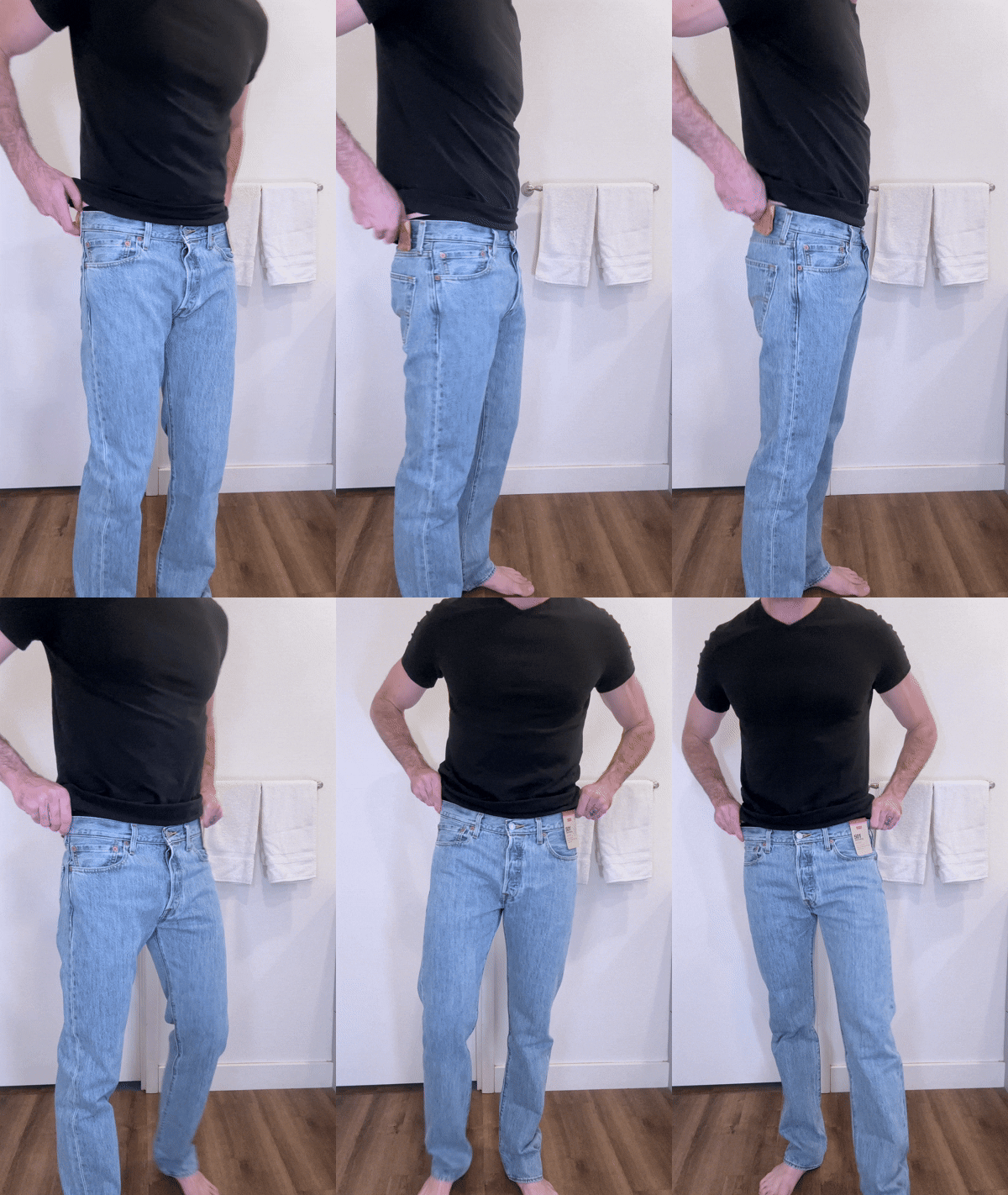
Levi’s men’s fits are easier to understand when viewed as a system rather than a long list of model numbers. Each fit is built from a small number of underlying pattern principles—rise height, seat depth, thigh volume, and leg geometry. Grouping the lineup into structural families highlights how these core patterns relate to one another and why certain fits behave similarly on the body.
A. Original and Classic Fit Family
501, 502, 505, 514, 550, 569
This family contains the foundational patterns that define Levi’s long-standing approach to men’s denim. These fits are characterized by mid or regular rises, stable waist anchoring, and leg shapes that remain straight or gently shaped rather than tapered. Thigh and seat volume increases progressively across the range, moving from balanced profiles to relaxed and loose configurations.
Because these patterns do not rely on narrow knees or aggressive tapers, they accommodate rigid and heavyweight fabrics particularly well. As a result, most selvedge and heavier-denim options appear within this group. The open leg geometry allows stiffer fabrics to drape consistently and break in without creating pressure points through the knee or calf.
B. Slim and Slim-Adjacent Fit Family
511, 512, 513
The slim family shares a lower-mid rise and a narrower top block through the seat and thigh. All three models are built on closely related patterns, with differences driven primarily by leg geometry. The 511 maintains a slim straight leg, the 512 introduces a pronounced taper from knee to hem, and the 513 opens the hem to create a straight profile below the knee.
These fits are intended for individuals who prefer a closer upper-leg fit without moving into skinny denim. Fabric choice plays a larger role in comfort within this family, particularly in rigid versions, as the slimmer top block allows less margin for movement.
C. Athletic Fit Family
531, 541
The athletic family increases seat depth and thigh volume while retaining controlled leg shapes. These patterns are designed to support fuller thighs and glutes without forcing excess fabric into the waistband or relying on stretch to compensate for tightness.
Within this group, the 531 offers a more streamlined profile with moderate taper, while the 541 provides the greatest top-block room of any tapered Levi’s fit. Both models maintain structural balance by pairing expanded upper-leg dimensions with leg shapes that avoid excessive narrowing below the knee.
Model-by-Model Technical Fit Breakdowns
The following entries summarize how each Levi’s men’s fit is constructed. These descriptions outline the pattern geometry and explain how the top block and leg interact to create each fit profile.
For detailed reviews, comparison charts, and selvedge-specific notes, the linked model guides provide expanded analysis.
Levi’s 501 – Original Fit
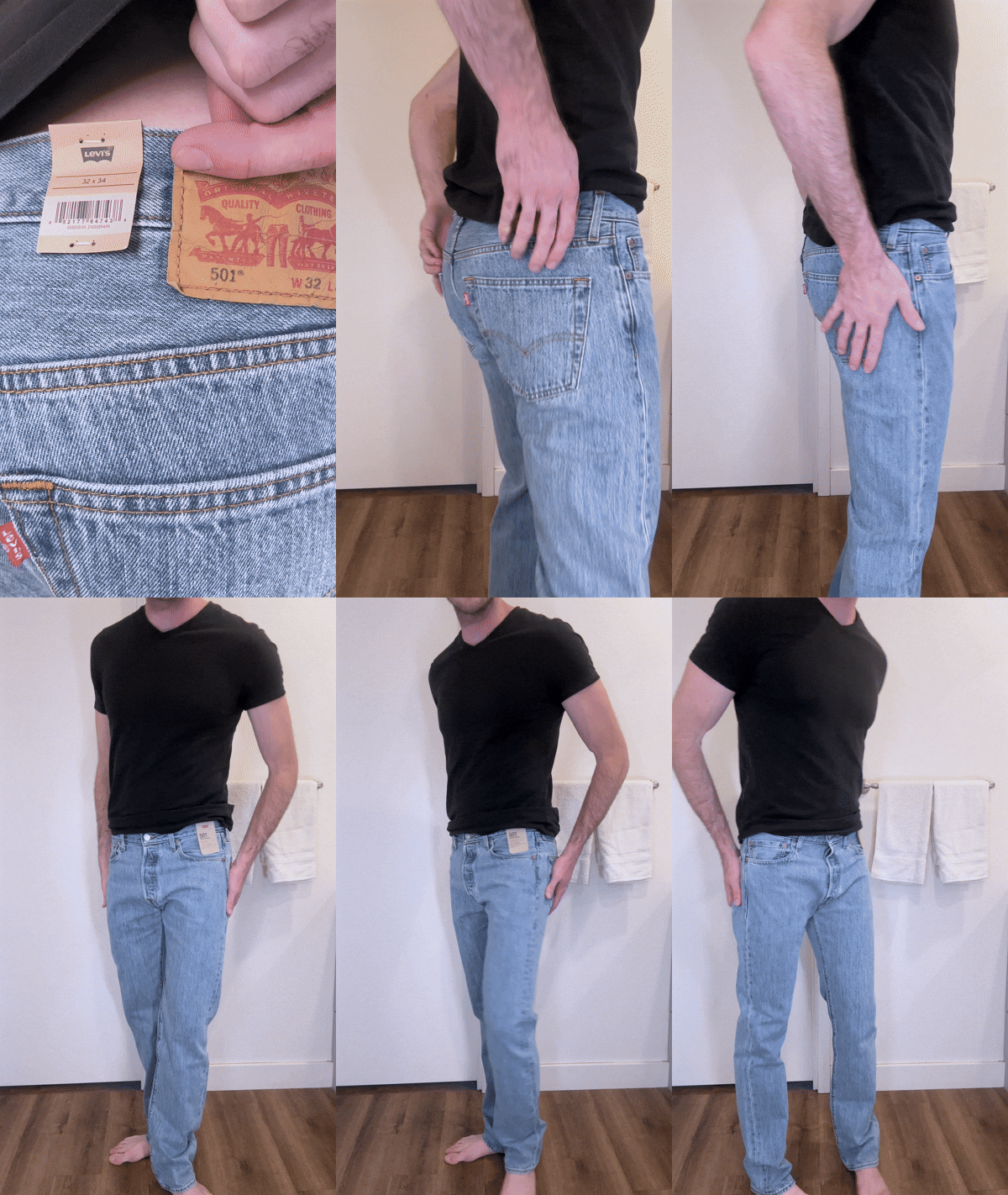
The 501 is built around a regular rise with a balanced seat and thigh that defines Levi’s original straight fit. The waistband sits at the natural waist, providing a stable anchor point that keeps the top block consistent during wear. From the knee down, the leg runs straight to the hem, creating a uniform vertical line without taper or flare.
This model is produced across a wide range of fabrics, including rigid, stretch, and selvedge denim. Selvedge versions typically use heavier cloth, which holds structure longer and develops a more pronounced change in drape as the fabric breaks in. Shrink-to-Fit variants follow the same base pattern but reduce in size after washing, altering final measurements through the waist, thigh, and inseam once the fabric contracts.
Overall, the 501 is best suited to individuals who want a classic straight-leg profile, moderate thigh room, and a rise that behaves predictably at the waist across different fabric types.
Levi’s 502 – Regular Taper
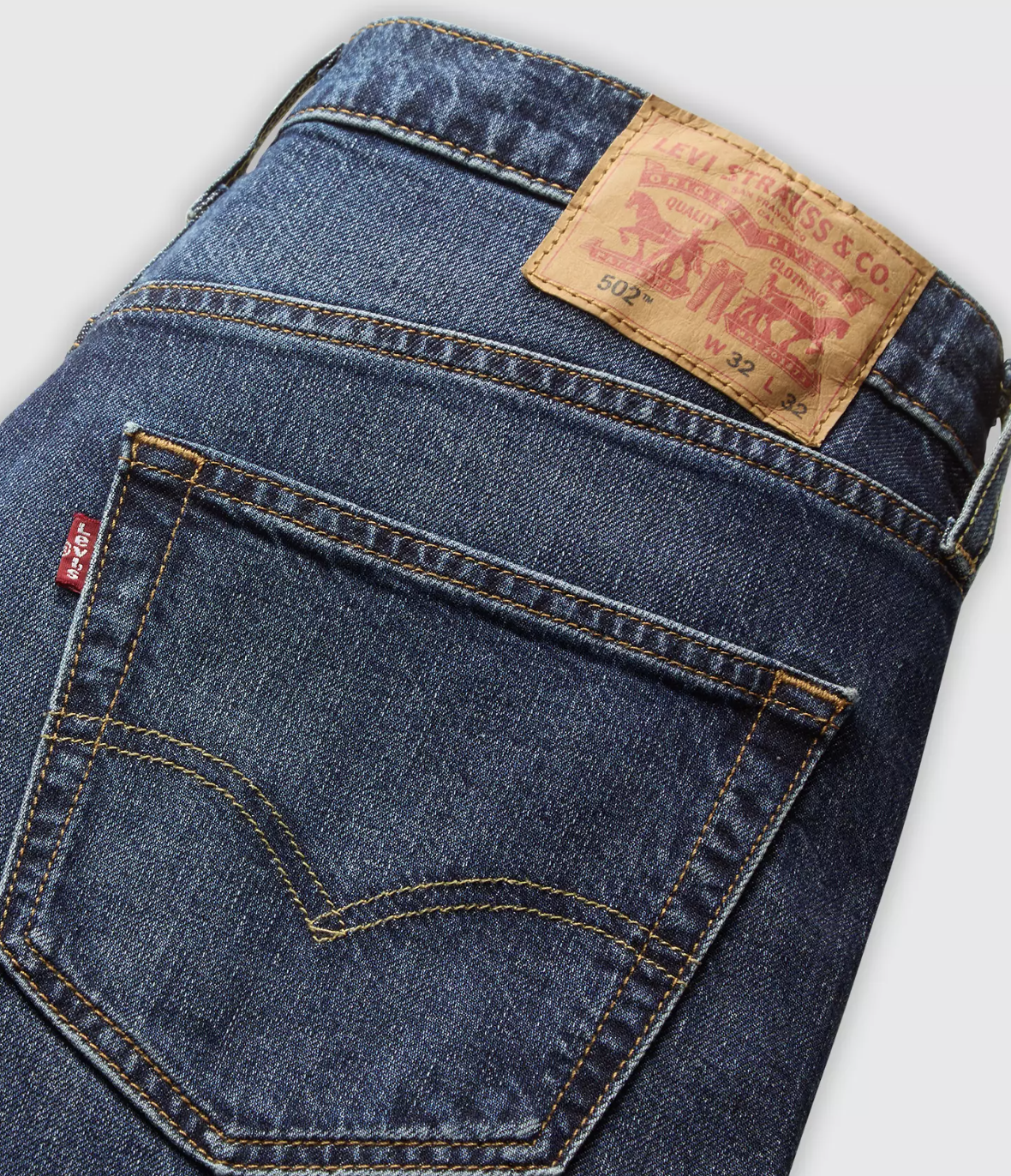
The 502 is drafted with a regular rise and a regular thigh, creating a top block that closely mirrors the proportions of the 501. The difference appears below the knee, where the leg narrows progressively toward the hem. This taper introduces a more modern leg shape while preserving space through the upper leg.
The waistband is designed to sit below the natural waist, which lowers the overall fit position compared to traditional straight models. Because the thigh volume remains unchanged, the taper does not rely on compression for shape. As a result, the 502 works well for individuals who want a cleaner leg line without sacrificing comfort or mobility through the top block.
Levi’s 505 – Regular Straight
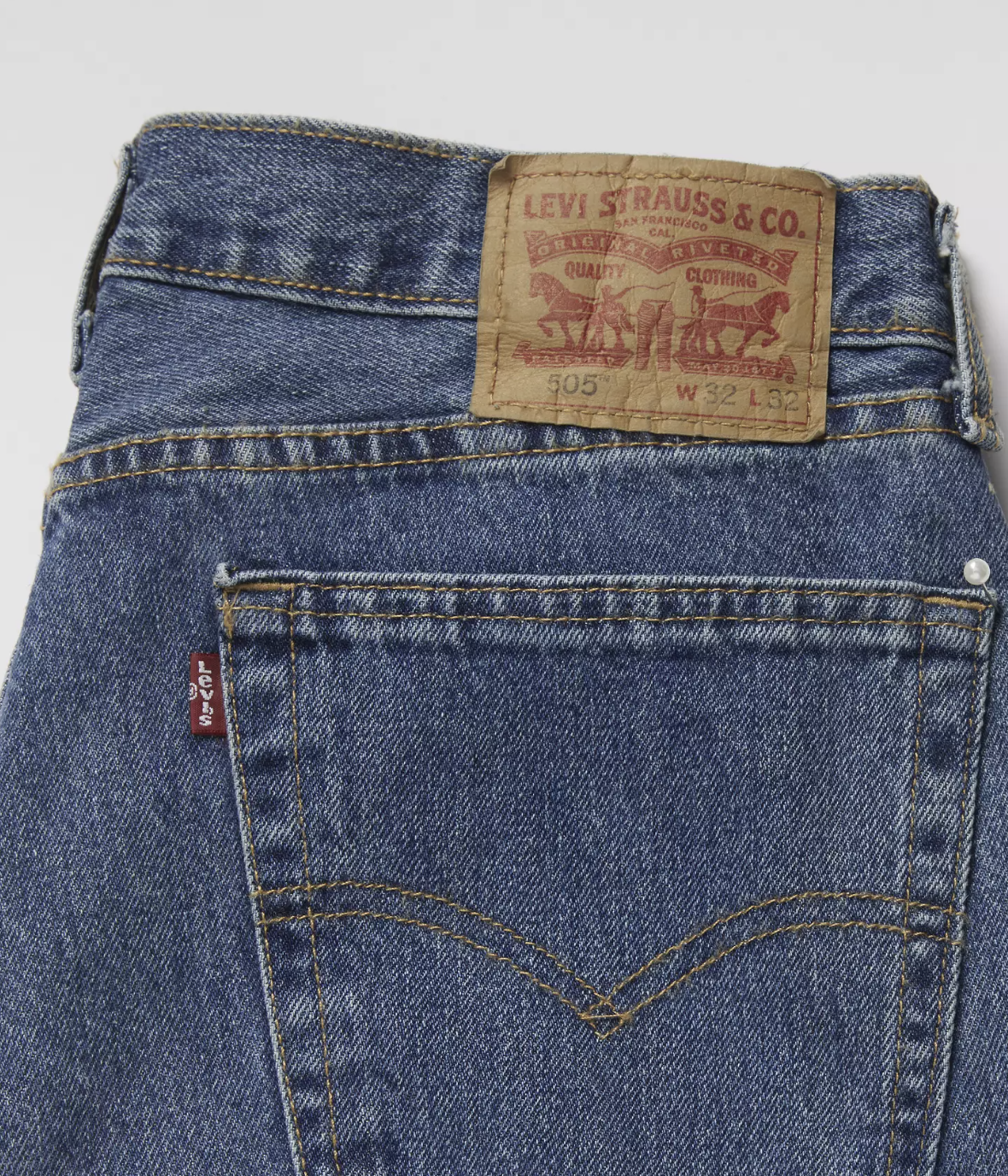
The 505 is built around a regular rise with greater thigh volume than the 501, creating a more accommodating top block through the hips and upper leg. The waistband sits at the waist and holds its position consistently, which contributes to a stable fit that does not shift during movement.
The leg runs straight from knee to hem without introducing taper, preserving uniform space through the lower leg. This geometry allows the pattern to perform particularly well in rigid denim. With no narrowing at the knee or calf, the fabric can move freely and settle naturally over time, avoiding the tension points that often appear in slimmer straight or tapered fits.
Levi’s 511 – Slim Fit
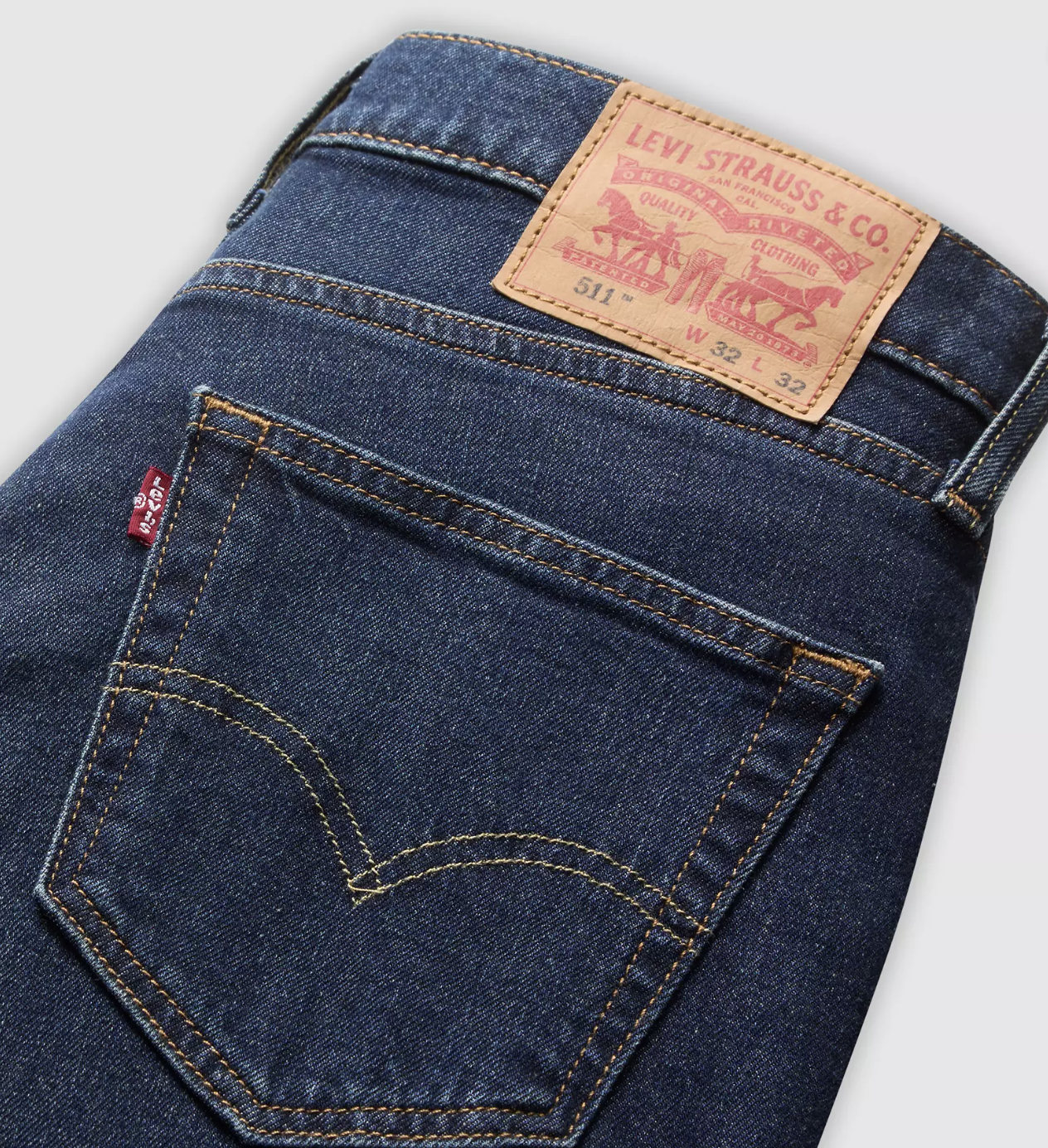
The 511 is drafted with a lower-mid rise and a slim top block that stays consistent through the seat and thigh. The waistband is designed to sit below the natural waist, creating a secure but unobtrusive fit through the hips. From the knee down, the leg maintains a slim straight profile rather than tapering, which keeps the silhouette narrow without compressing the calf.
Across Levi’s product range, the 511 uses the same underlying top-block pattern regardless of fabric. Differences in comfort are primarily driven by material choice rather than changes to the cut itself. Stretch denim reduces perceived tightness and improves mobility, while rigid versions emphasize the closeness of the fit through the thigh and knee. As a result, the 511 works best for individuals who want a clean, slim line through the upper leg without moving into a sharply tapered hem.
Levi’s 512 – Slim Taper
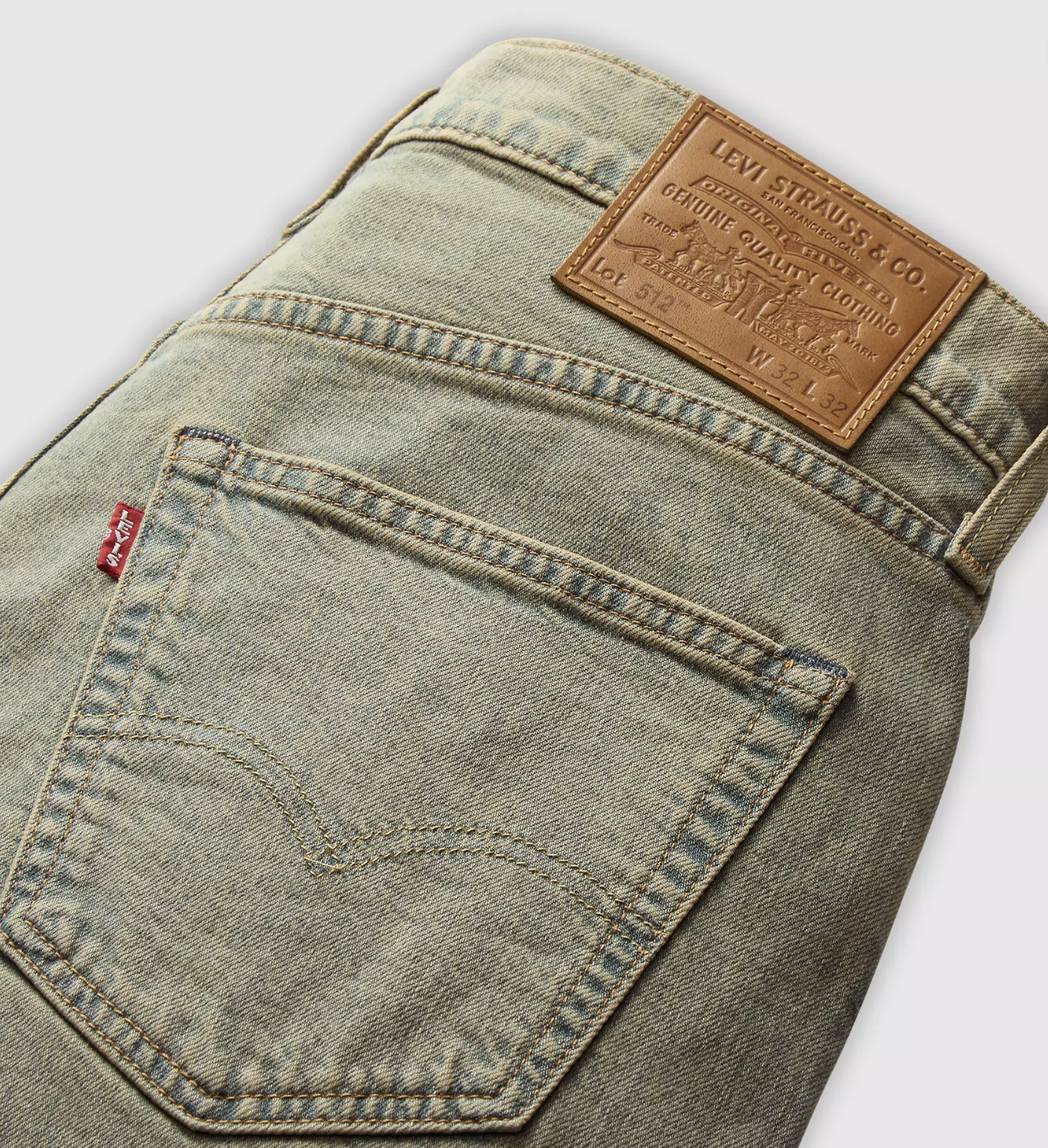
The 512 is built on the same top-block pattern as the 511, sharing identical rise height, seat depth, and thigh width. Through the waist and upper leg, the two fits behave the same. The distinction appears below the knee, where the 512 introduces a more aggressive taper toward the hem.
This narrower leg opening creates a sharper taper profile and a more defined lower-leg shape. Because the cut reduces space through the calf and ankle, fabric choice plays a larger role in comfort. Stretch denim increases mobility and reduces restriction during movement, while rigid denim emphasizes the taper and can feel firmer through the lower leg until broken in.
Levi’s 513 – Slim Straight
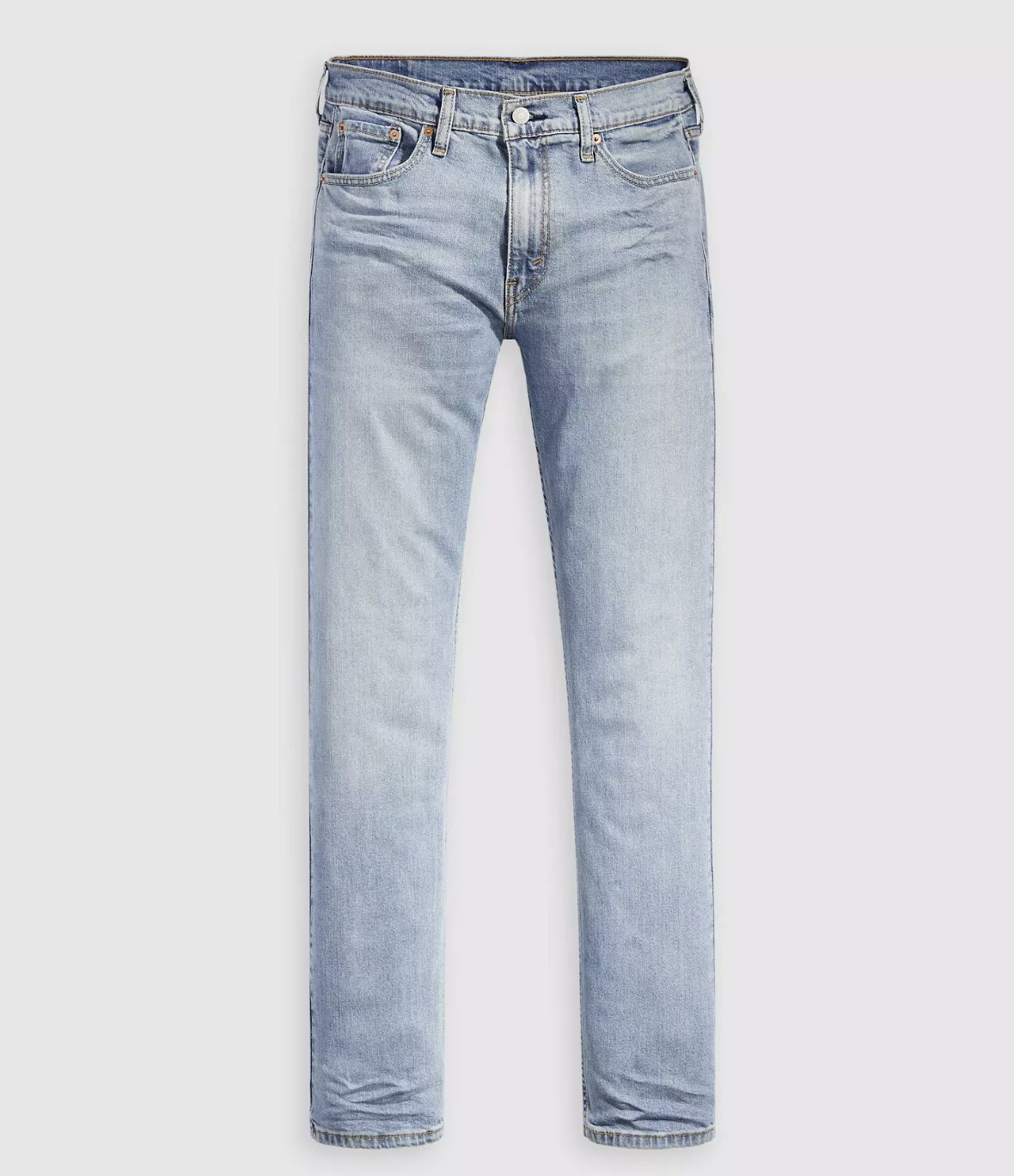
The 513 shares the same lower-mid rise and slim top-block structure as the 511 and 512, but it changes the leg geometry below the knee. Instead of maintaining a slim straight or tapered profile, the hem opens to create a true straight leg. This adjustment increases space through the knee and calf while preserving a clean, slim fit through the waist and thigh.
The result is a pattern that balances a close upper fit with improved lower-leg comfort. For individuals who prefer the feel of a slim top block but find narrow hems restrictive, the 513 provides a more stable and forgiving alternative without moving into regular or relaxed territory.
Levi’s 514 – Straight Fit
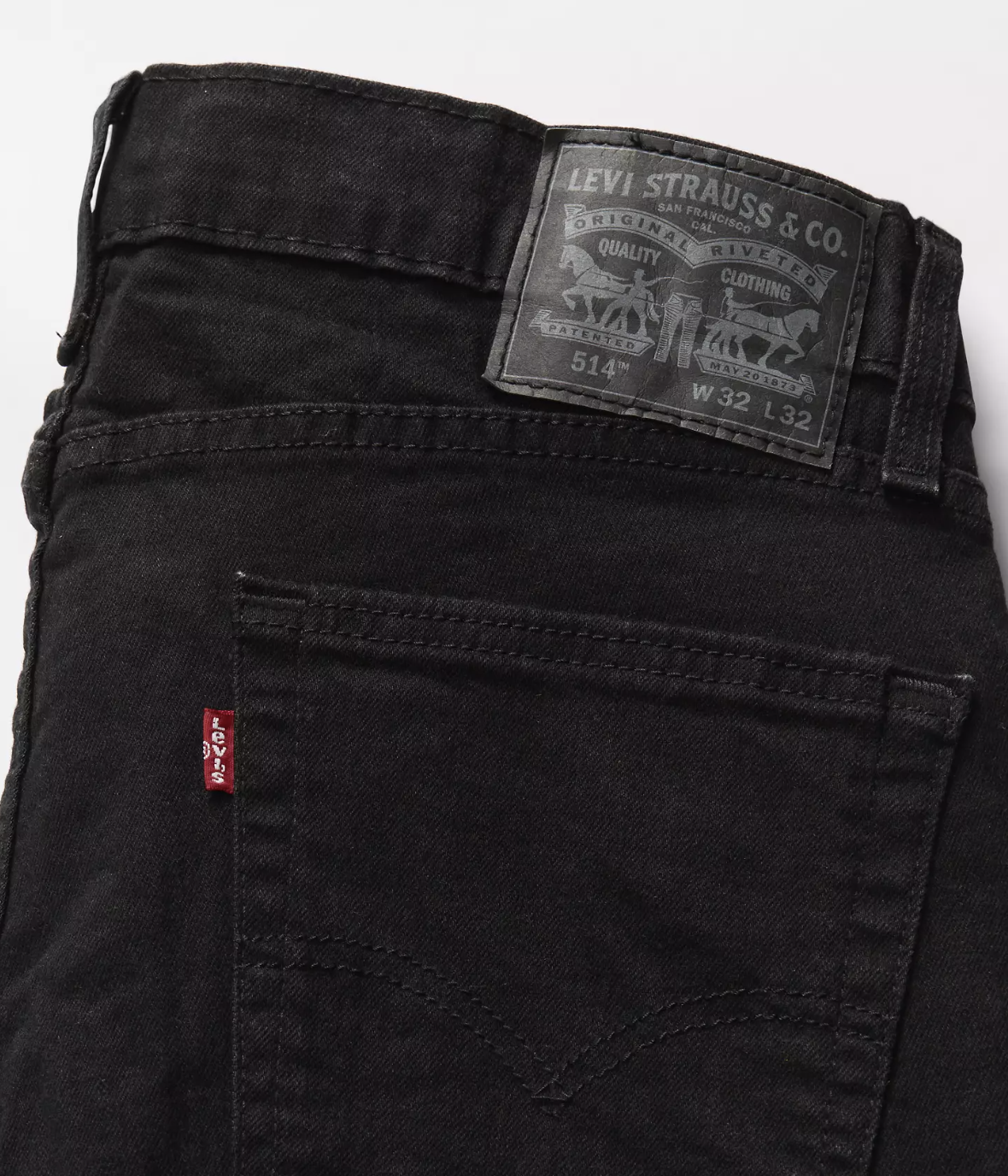
The 514 is built on a lower-mid rise with a regular thigh and a straight leg that runs cleanly from knee to hem. Within the lineup, it sits between Levi’s slimmer straight fits and the more traditional regular cuts. It provides noticeably more room than the 511 and 512 through the thigh and knee, but remains more controlled than the 505 in overall volume.
The hem opening is typically wider than the 501 or 505, depending on size, which gives the lower leg a more open profile without pushing into relaxed territory. Because the leg remains straight rather than tapered, the pattern avoids pressure points through the knee and calf. This allows the 514 to perform reliably in both rigid and stretch fabrics, maintaining comfort and consistent drape without relying on elastane to compensate for a narrow cut.
Levi’s 541 – Athletic Taper
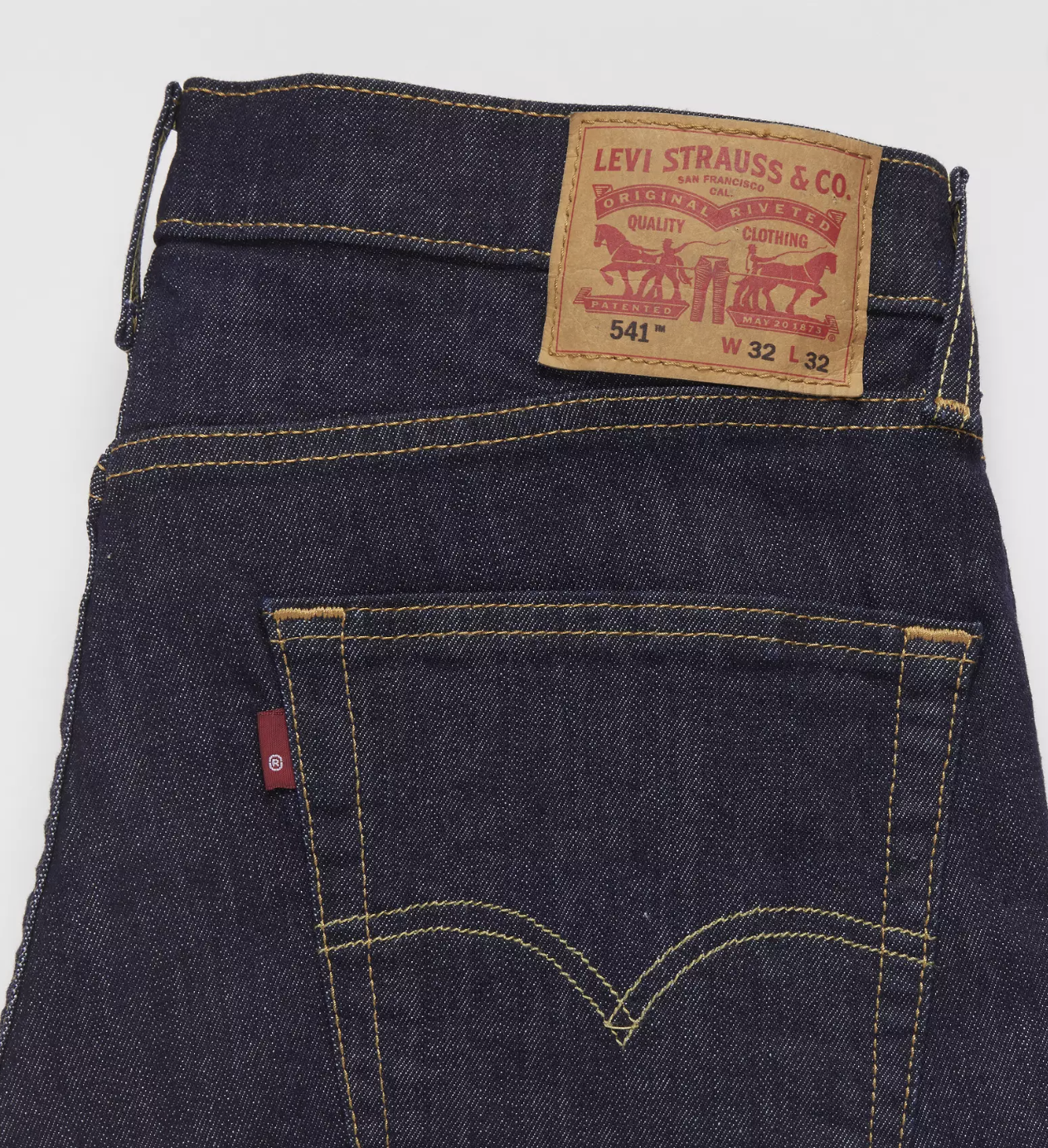
The 541 is built around one of the deepest seats in the Levi’s lineup and offers the greatest thigh volume among the tapered fits. The mid rise anchors the waistband securely and supports the larger top block without relying on compression. This creates stability through the waist and hips while allowing unrestricted movement in the upper leg.
From the knee down, the leg tapers in a controlled manner rather than aggressively narrowing toward the hem. This preserves proportion and prevents the lower leg from feeling constricted, even as the fit maintains a tapered profile. In rigid denim, the open top block reduces tension across the thighs, while stretch versions further improve mobility without altering the underlying shape.
As a result, the 541 consistently performs best for men with athletic proportions who need substantial room through the seat and thighs but still want a tapered leg rather than a straight or relaxed silhouette.
Levi’s 550 – Relaxed Taper
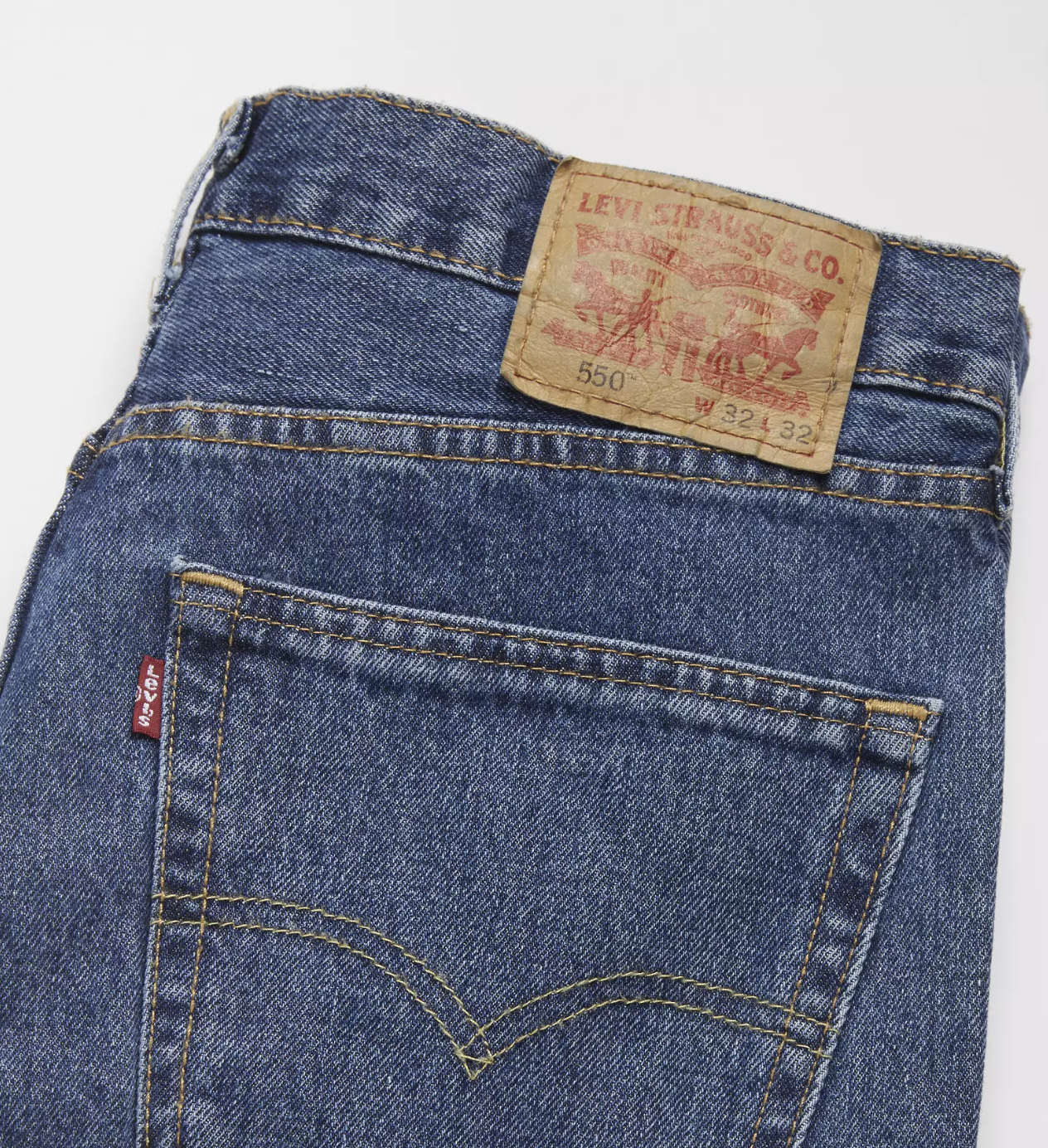
The 550 is drafted with a regular rise and a relaxed top block that provides additional room through the seat and thigh. Rather than carrying that volume straight to the hem, the leg introduces a mild taper to keep the overall proportion balanced. This prevents the fit from feeling oversized while still preserving mobility through the upper leg.
The added thigh and seat ease make the 550 particularly effective in rigid denim. With less tension across the top block, the fabric is able to settle naturally during movement instead of pulling at the hips or thighs. Over time, this results in more consistent wear patterns and improved comfort, especially for men who find slimmer straight fits restrictive in non-stretch fabrics.
Levi’s 569 – Loose Straight
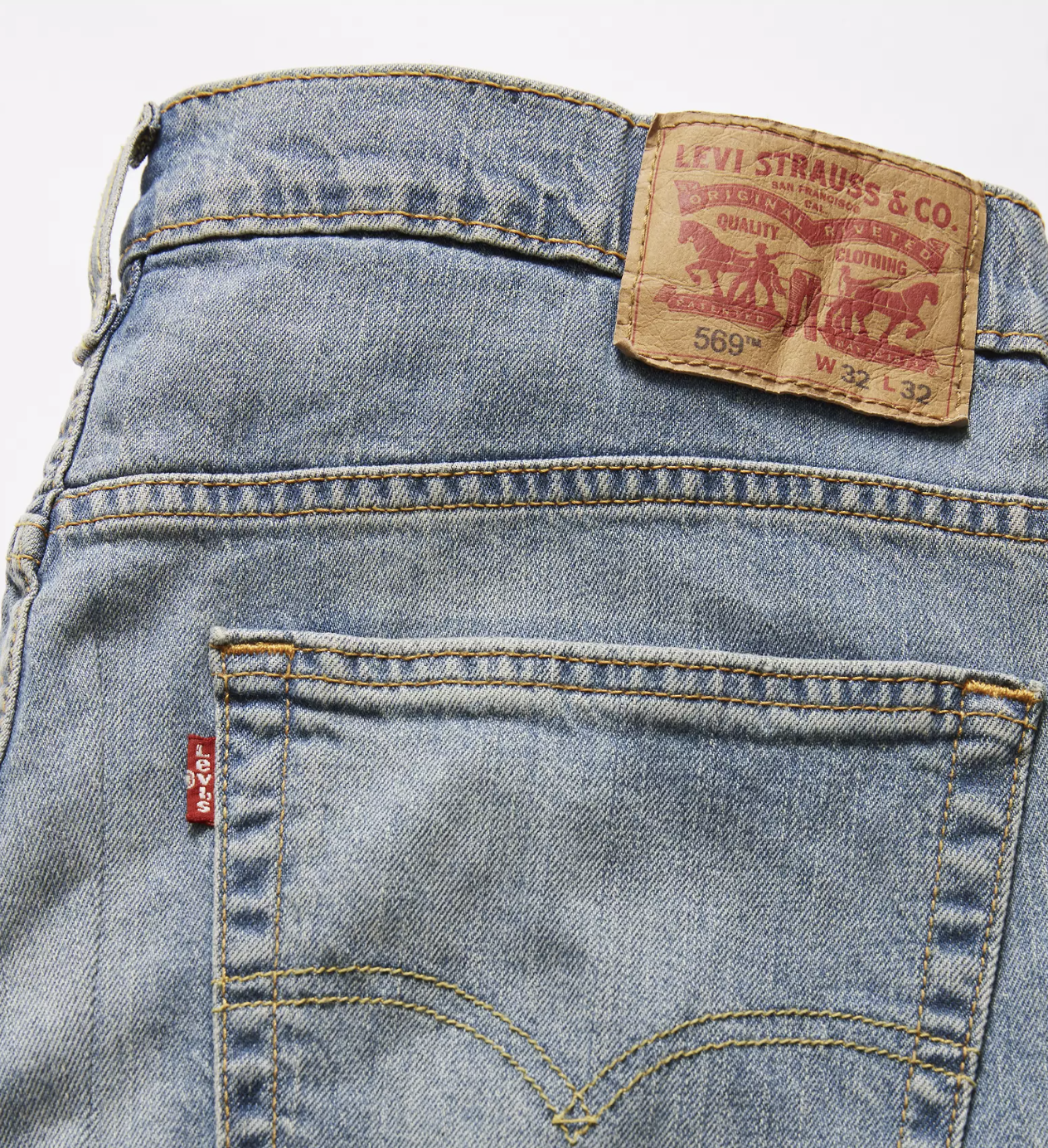
The 569 is built around a lower-mid rise combined with the most generous seat and thigh in Levi’s men’s range. Unlike tapered or relaxed straight models, the leg stays wide and consistent from the knee through the hem, creating the most open lower-leg profile in the lineup. This geometry reduces restriction through the calf and ankle, which allows heavier and stiffer denim to hang cleanly rather than pulling or stacking unevenly.
Because the pattern does not rely on taper to control shape, the 569 maintains its structure even in rigid or heavyweight fabrics. That makes it one of the few Levi’s fits where fabric weight has less impact on comfort and mobility, particularly for men who need space through the upper leg and prefer a straight, uncompressed fall to the hem.
Best Levi’s Fits by Body Type: Technical Selection Criteria
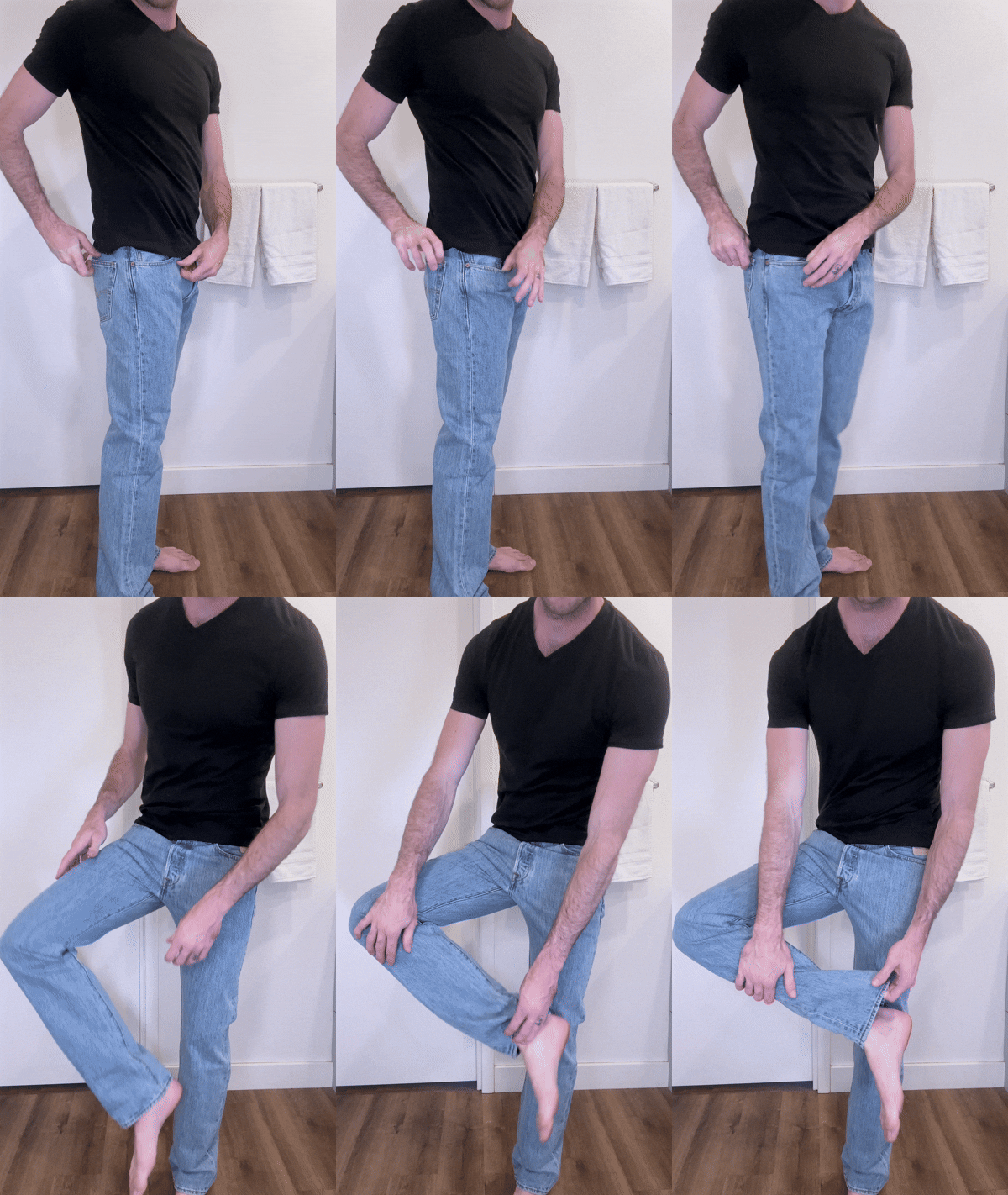
Selecting the correct Levi’s fit depends on rise height, seat depth, thigh volume, and leg shape. These factors determine how the jeans interact with different body proportions. The guidance below uses objective fit criteria rather than subjective aesthetic preferences.
A. Shorter Men
- Shorter men benefit from mid-rise or lower-mid-rise patterns because these rises align more consistently with their torso proportions.
- Excessively high rises can shorten the visual distance between waistband and chest, while low rises reduce stability.
- Fits such as the 511, 512, 513, and 502 provide balanced rise behavior and moderate to slim thigh profiles.
- Straight or gentle taper legs maintain clean lines without excessive stacking when hemmed correctly.
B. Taller Men
- Taller men require patterns with adequate rise and inseam availability.
- Models such as the 501, 505, 514, and 569 provide consistent rise height without lowering excessively when seated.
- Straight legs maintain proportional balance along the extended lower body.
- For individuals who prefer tapering, the 502 and 513 offer controlled leg narrowing without restricting mobility.
C. Men with Fuller Thighs or Glutes
- Individuals with fuller thighs or glutes require increased seat depth and thigh width to avoid tension in the upper block.
- The 531 and 541 are designed for these proportions and maintain mobility through the upper leg while controlling the hem profile.
- Classic fits such as the 501 and 505 also provide adequate thigh allowance in rigid fabrics.
- Slim fits such as the 511 or 512 may restrict mobility unless stretch percentages are higher, but the underlying patterns remain narrow.
D. Men with Slim Builds
- Slim individuals often prefer fits with reduced thigh and seat volume.
- The 511, 512, and 513 provide consistent top-block behavior for this body type.
- The 511 maintains a narrow but stable leg profile, while the 512 adds taper for more shape through the calf.=
- The 513 increases hem width while keeping the top block slim.
E. Men with Larger Midsections
- Men with larger midsections typically require mid-rise or regular-rise patterns that anchor securely at the waist.
- The 501, 505, 514, and 502 offer stable rise positions and adequate top-block space without relying on tight waistband tension.
- The 541 is suitable for individuals whose larger midsection is accompanied by fuller thighs, as the seat and thigh patterns prevent downward slide during motion.
F. Questions Related to Seat Appearance and Structure
- Seat shape is determined by seat depth, rear-rise angle, and pocket placement.
- Fits with deeper seats, such as the 541 and 505, accommodate fuller builds without creating tension points.
- Slimmer patterns such as the 511 maintain closer top-block contact but require accurate waist sizing to prevent diagonal stress lines.
- For individuals who want more defined seat structure, patterns with balanced rise and moderate thigh volume provide the most consistent results.
Fabric Weight, Stretch, and Construction: How They Change Fit
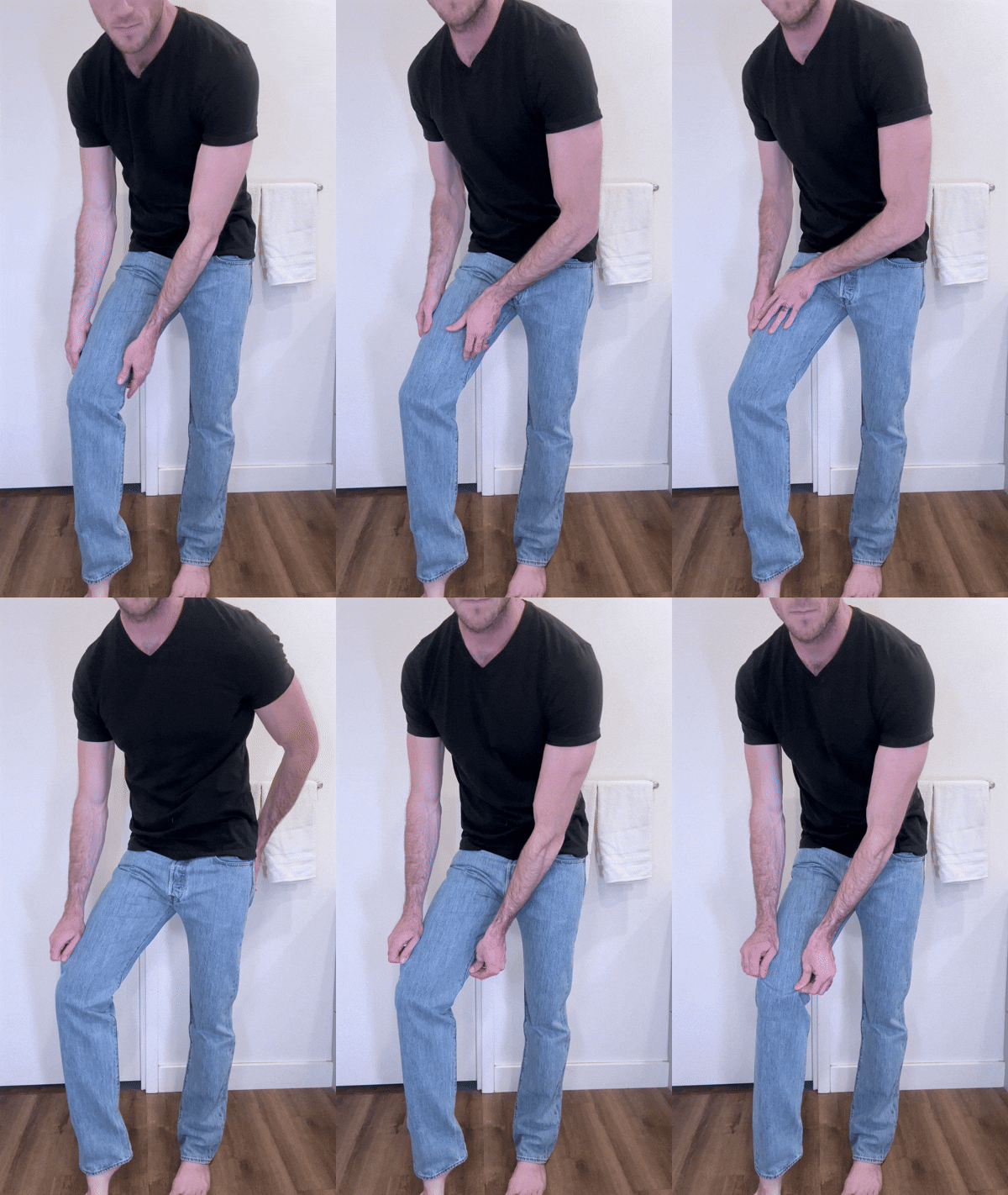
Fit is determined by the pattern, but fabric weight and composition influence how the jeans feel and behave during wear.
Denim choice affects mobility, break-in time, drape, and long-term stability.
The notes below outline how rigid, stretch, selvedge, and heavyweight denims interact with Levi’s core fits.
A. Rigid Denim
- Rigid denim contains no elastane. It maintains the intended shape of the pattern and gradually relaxes as the cotton fibers respond to movement.
- Rigid versions of the 501, 505, 514, and 569 preserve their structural leg lines because they rely on straight or wide hem geometry.
- Rigid slim fits such as the 511 or 512 feel firmer due to narrow thigh and knee measurements.
- Break-in typically improves comfort in the top block without altering the essential silhouette.
B. Stretch Denim
- Stretch denim incorporates elastane to increase mobility.
- Stretch affects how thigh and knee areas accommodate movement and how the waistband returns to shape after wear.
- Slim patterns such as the 511 and 512 rely on stretch to reduce tension in the thigh and knee.
- Stretch versions of the 541 allow muscular builds to maintain mobility while keeping the taper controlled.
C. Selvedge Denim
- Selvedge denim is woven on shuttle looms that produce a finished edge.
- Selvedge versions of core fits maintain identical pattern geometry but often use heavier and denser fabrics.
- This influences drape and increases break-in time.
- Selvedge is most common in the 501 and 511 families and occasionally in 502 variants.
- Heavy selvedge responds slowly to movement but maintains shape over long periods of wear.
D. Denim Weight
- Denim weight affects comfort, mobility, and silhouette.
- Lightweight denim increases ease of motion and is often paired with stretch.
- Midweight denim provides a balanced structure suitable for most body types.
- Heavyweight denim maintains rigid shape, emphasizes the leg pattern, and is commonly found in selvedge versions.
- Heavier fabrics function effectively in straight-leg fits that do not rely on aggressive tapering.
E. Shrink-to-Fit (STF) Behavior
- STF denim follows the same pattern as the standard 501 but shrinks after washing.
- Shrinkage alters inseam, thigh width, and waistband measurements.
- The top block becomes more fitted as the fabric contracts, and the leg maintains a straight profile.
- STF requires accurate measurement before and after shrink to ensure proper fit.
FAQ
-
-
Fits such as the 501, 505, 514 (varies by production year), 550, and 541 typically sit at the waist.
These patterns use regular-rise blocks that align with the natural waistline. -
The 511, 512, 513, and 569 use lower-mid-rise blocks designed to sit below the natural waist.
The 502 also sits below the waist but maintains a regular thigh. -
The 511 is the core slim fit.
The 512 and 513 share the slim top block but differ by taper or straight leg geometry. -
The 501, 505, 513, and 514 use straight-leg patterns with varying rise and thigh volumes.
-
No. The 511 is a slim fit with a slim straight leg, not a skinny pattern.
It maintains more thigh and knee room than Levi’s skinny designs. -
The 512 is a slim taper with a narrower hem than the 511. The top block remains the same as the 511, but the taper reduces hem width significantly.
-
Both share the same rise, seat depth, and thigh width.
The difference is in leg shape: the 512 tapers from knee to hem, while the 511 maintains a straight slim profile. -
The 502 uses a regular rise and regular thigh, while the 512 uses a lower-mid rise with a slim thigh.
Both taper, but the 512 has a narrower hem. -
The 541 provides the most thigh and seat room among tapered fits.
The 531 offers a slimmer alternative with increased thigh allowance. -
The 541 and 550 offer the most top-block room.
Straight options such as the 505 and 514 also provide reliable structure. -
The 512, 502, 531, and 541 are all tapered patterns.
The 512 is the narrowest, and the 541 is the most spacious. -
Straight patterns such as the 501, 505, and 514 handle rigid denim well because they avoid knee and calf restriction.
Rigid versions of slim fits provide less mobility until break-in.
-

The editorial team at FashionBeans is your trusted partner in redefining modern men’s style. Established in 2007, FashionBeans has evolved into a leading authority in men’s fashion, with millions of readers seeking practical advice, expert insights, and real-world inspiration for curating their wardrobe and lifestyle.
Our editorial team combines over 50 years of collective experience in fashion journalism, styling, and retail. Each editor brings specialized expertise—from luxury fashion and sustainable style to the latest grooming technology and fragrance science. With backgrounds ranging from GQ and Esquire to personal styling for celebrities, our team ensures every recommendation comes from a place of deep industry knowledge.
Disclaimer: This story is auto-aggregated by a computer program and has not been created or edited by menshealthfits.
Publisher: Source link
Publisher: Source link